How cinematographer Corey Waters shot 'The Chronology of Water' in 16mm to depict fragmented memories and imperfection

Photo courtesy of Corey C Waters. © CG Cinema International, Forma Pro Films, Nevermind Productions and Scott Free Productions.
For cinematographer Corey Waters, there were many challenges in capturing the raw subjectivity of The Chronology of Water, adapted from Lidia Yuknavitch's non-linear, fragmented memoir. Marking the directorial debut of actress Kristen Stewart, it stars Imogen Poots as the titular protagonist, who therapeutically overcomes a series of traumas (childhood abuse, addiction, her stillborn daughter) through competitive swimming and writing.
The imperfect look of 16mm (shot at 1.66:1) was one method for visually conveying Lidia's complex mindscape and its connection to water. Being reactive to Poots' intense, unpredictable performance, however, was Waters' north star.
"I come from a music background, playing in bands and doing music videos [including Troye Sivan's Lucky Strike], and there's a certain level of being reactive to things that I think served us well," Waters explains. ""Because many times we let the camera roll as long as we could. There was a certain amount of natural change that we allowed the camera to go through, where you're reacting to performance. And that played a large role in how I see my relationship to an actor on screen and what it all means."
Is the camera too close? Is it too far away? These were Waters' favorite questions about his approach to cinematography. "Obviously, lighting is very exciting, and composition and lensing are the most emotionally charged decisions for me," he continues. "But there's so much to consider, especially when you're dealing with handheld on an actor, and you're in a scene and you're not letting go. You're holding onto your breath as much as they are. And, with Imogen, who just bears it all, she goes in so deep that there's a change that happens. And it's something that Kristen and I would talk about after so many of her scenes."

Photo courtesy of Corey C Waters. © CG Cinema International, Forma Pro Films, Nevermind Productions and Scott Free Productions.
Part of that came from the surprises the actress often provided: startling bursts of laughter, letting water come out of her mouth suddenly, or hanging on tense pauses. "Those pauses are so exciting to see," Waters says, "because you're waiting for what happens next, and she might dip around, and I'm really holding this tight frame. But this performance-driven approach to camera, where it's maybe not able to keep up, helps sell this feeling [of unpredictability] more than the camera being locked on them, and we're not skipping a beat."
One of Waters' favorite aspects about 16mm is reliability. Aesthetically, though, he likes to use it for underexposure if he needs to milk something or lean into a silhouette. "I just have an impossible time trying to replicate the feeling of what that does digitally," he remarks. "But skin tones from film feel the most real. There's something that 16 does automatically for me, emotionally, that's more handmade than 35. We were looking for those mistakes, where you're more susceptible to different undulations in exposure and development, for this patchwork of a story."
Speaking of reliability, Waters shot with a package that he's very comfortable with: the Arriflex 416 camera with Arri Ultra 16 Primes and Zeiss 11-110 mm S16 zooms. The 16mm film stocks were KODAK VISION3 500T Color Negative Film 7219 and VISION3 250D Color Negative Film 7207.
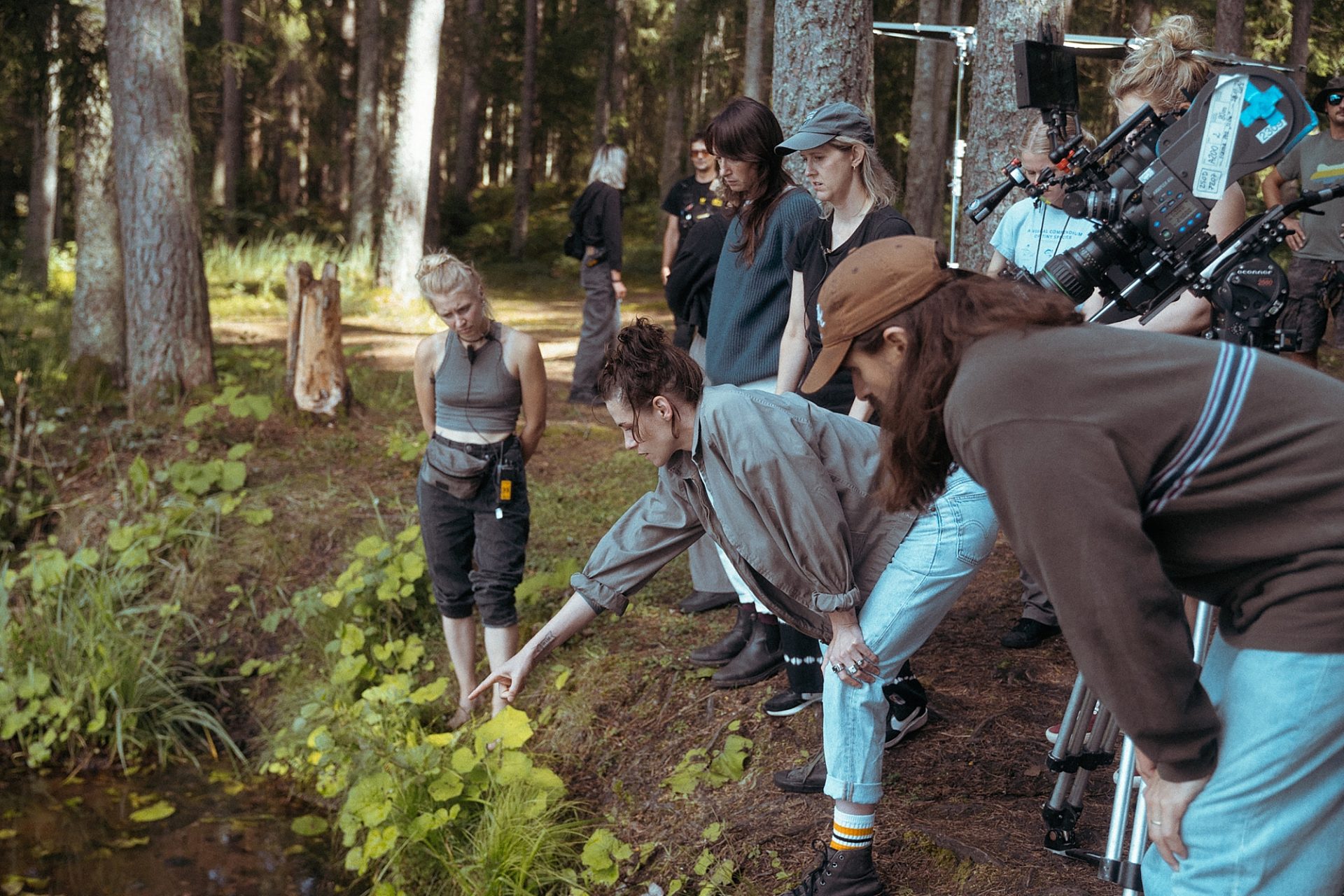
Photo by Andrejs Strokins. © CG Cinema International, Forma Pro Films, Nevermind Productions and Scott Free Productions.
"The 416 is such a workhorse and a camera that I've had success with," Waters suggests. "It was the only camera that felt appropriate, and just being able to invert it if we were going to be doing anything where the camera needed to be upside down was important.
"With the Arri Ultra 16 Primes, I love how they render skin tone and how they project space," he continues. "They have the speed of a Master Primes, but they kind of remind me of what the Ultra Primes do, which is they're a bit rounder and they push a background further away and they bring things closer to the camera in their optical design. We used the Zeiss zooms a lot and that's the closest match color-wise to the Ultras.
"And those 500 tungsten and 250 daylight stocks are old reliables," Waters emphasizes."I know what happens if I underexpose the 500 tungsten two stops, or if I push the 250 daylight two stops, which would happen a lot when we had cloud coverage that was shifting all the time. Instead of ride the iris, I'd rather find where it's going to be in the sweet spot. And with film, I know I can bring it all back in the grade and get it to match that way versus having to open up and close my aperture."
Waters found working with Stewart, who wrote 500 drafts of the script, very cohesive. She previsualized the entire film in her head and their collaboration was successful in thwarting normal narrative expectations. "Our conversations about how close we wanted to be, how far we wanted to be, and what that meant was such a nice thing to think about," Waters recalls.
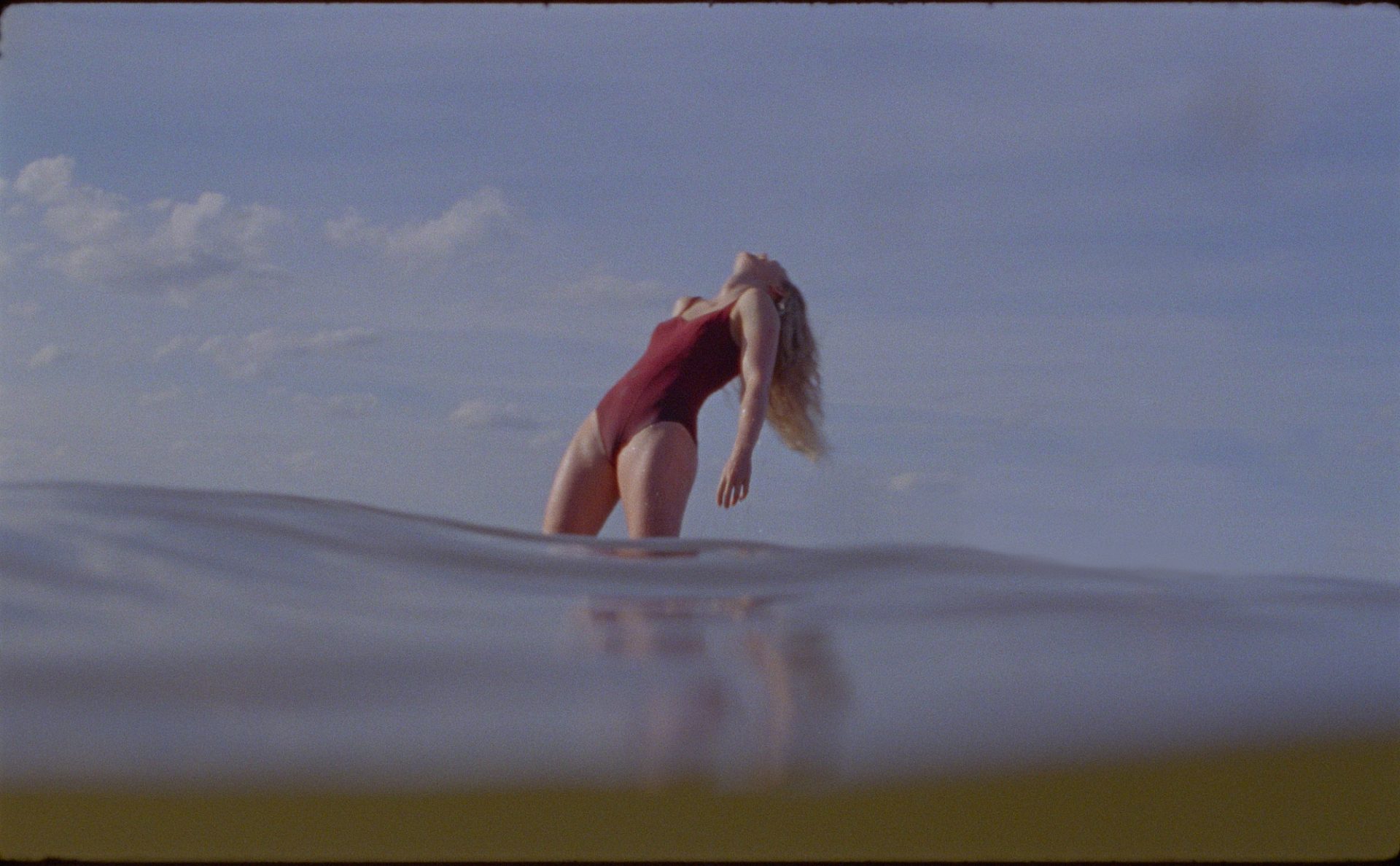
Photo courtesy of Corey C Waters. © CG Cinema International, Forma Pro Films, Nevermind Productions and Scott Free Productions.
"There's this feeling that they're going to bump into the lens sometimes, and we really wanted that intimacy to be uncomfortable when there are moments that are hard to watch. What do memories look like? How disjointed are they? Is the sound going to align or misalign? You especially noticed it with the scenes of the [abusive] father [Michael Epp]. When he's speaking sometimes, you hear him, but you see him just looking. It was more about his gaze than what he was saying, and that was a nice way to depict his character."
The movie is structured around a series of memories for Lidia that are presented as flashbacks, flash forwards, or even dreams and daydreams. These include her awkward, painful childhood, her swimming competition, the still birth, her relationships, her sexual experimentation, her three marriages, her writing, and the interaction with her young son.
Meanwhile, the jarring opening introduces Lidia above a swimming pool as disturbing retinal flashes before she jumps in, followed by her blood trickling on the shower tile. For Waters, the importance of water functions throughout as her baptism. "A lot of time, when we were looking at water, I thought it was almost daydreaming," Waters says. "You start to see its rhythm, and you start to see a weird, natural path that it takes. We're looking at the rocks or the water or the nature. This is Lidia looking and what is she thinking about?"
Lidia's childhood in Florida contains tinting and overexposure to make her skin redder. By contrast, her older sister, Claudia (Thora Birch), is often underexposed. "I liked to milk the blacks quite a bit more with the sister," Water recalls. "There's a lack of light with the sister or a lack of clarity. We're looking at her through glass cabinets or through the Christmas tree."
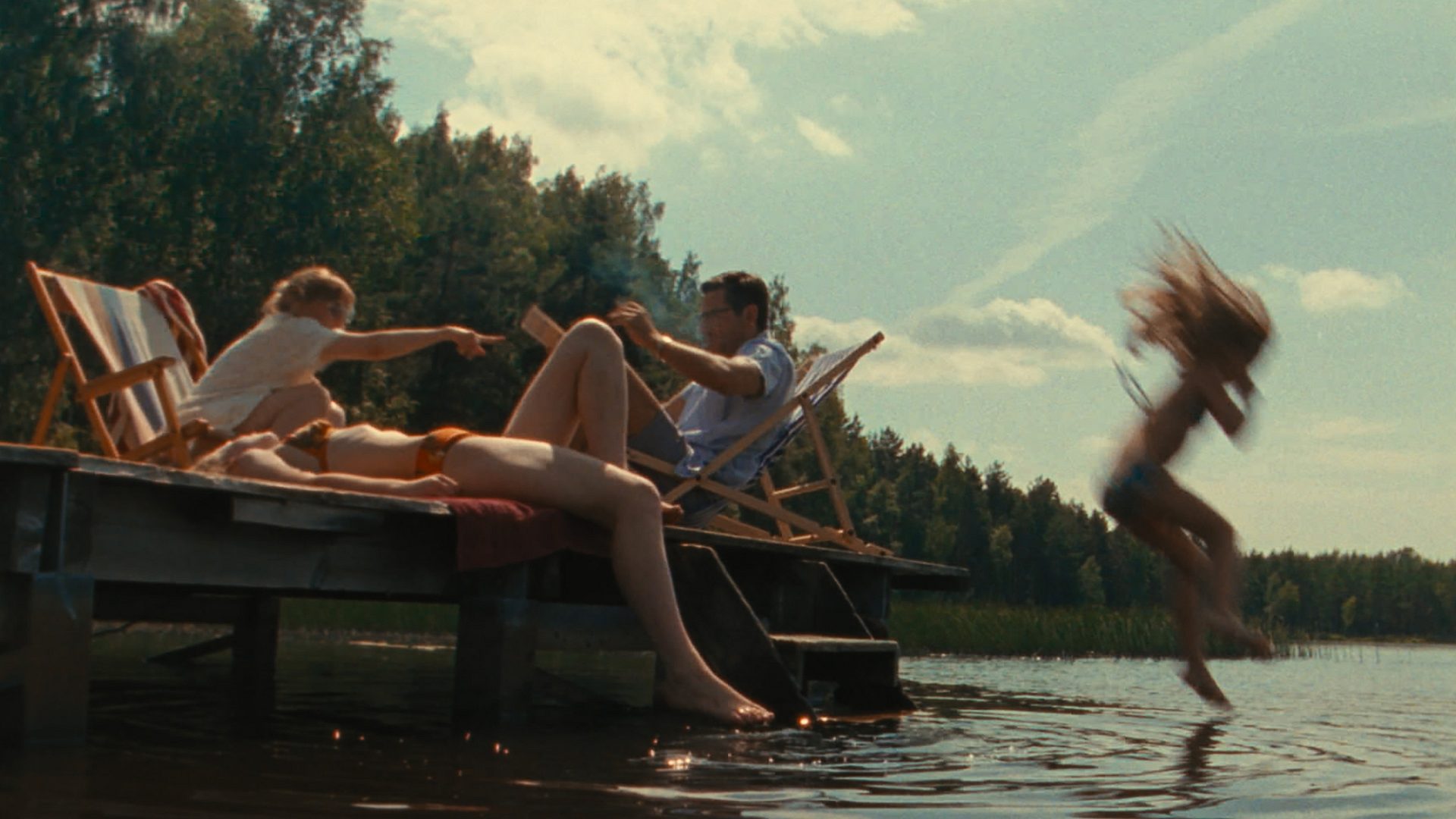
Photo courtesy of Corey C Waters. © CG Cinema International, Forma Pro Films, Nevermind Productions and Scott Free Productions.
A lot of thought, though, went into the look of the first swimming meet that Lidia wins. This is when Lidia is most locked into her environment. "She's really successful with swimming and Imogene did a lot of work to depict somebody who's very competitive," Waters reveals. "And thinking about control and pace and the breaths in between: How do we capture that? And how do we deal with this water? The color of this water feeling really safe and a blue that's really welcoming was nice to play with in the grade.
"But underwater is so hard," he continues. "You have to communicate through times in between. You have your moments underwater and you shoot things, and then you come back up and discuss it and sit with it for a second because you don't have a lot of time to figure out exactly the pacing of things and how maybe you're going to deal with what's not working. But it made sense when we first brought the camera underwater, and we were looking at Imogen having really done her homework. We realized that we just needed to keep this as controlled as possible. This was one of the few times in Lidia's life where something terrible isn't happening. But as soon as she breaks the surface, it's like she's hanging on by a thread. And we felt that disconnect was really nice to explore."
The most abstract sequence involved Lidia having a three-way with her girlfriends in a cabin. These were shot with a Russian 16mm camera called the Krasnogorsk 3. One example was a reflection of the sun in a pool of water. The sequence, in fact, was edited by Waters' wife, Inès Kivimäki, who's a conceptual artist. "Kristen wanted to explore different ways of thinking about sex on screen, capturing these things in nature that could be utilized," Waters recalled.
"And the Krasnogorsk 3 is a camera I love because the gate weave is insane," he continues. "But there's something really wonderful that it does with its 17mm to 69mm lens, which has this strange way of rendering light because of the lack of coating: refracting objects through all the different elements of the lens, then also becoming halated by the 16mm and the gate weave. This was the most extreme way of embracing the imperfections, but it felt right."
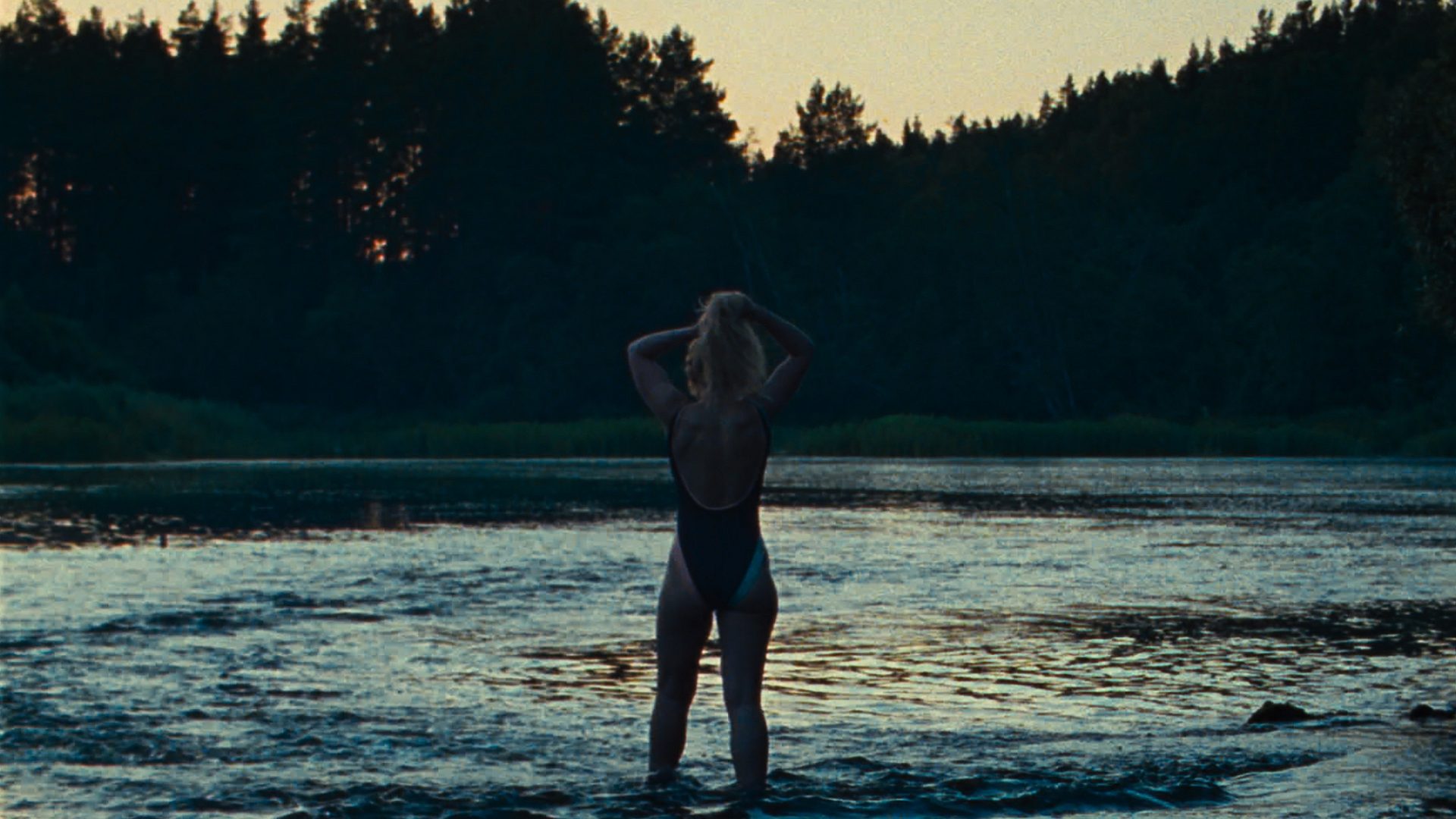
Photo courtesy of Corey C Waters. © CG Cinema International, Forma Pro Films, Nevermind Productions and Scott Free Productions.
For the scenes when Lidia bonds with One Flew Over the Cuckoo's Nest author Ken Kesey (Jim Belushi) during a writing workshop in Oregon, Waters utilized a lot of zooms to emphasize his larger-than-life appeal."We wanted to get closer to him, we wanted to feel her gaze," he says. "That's when zoom felt really appropriate when he first comes to the classroom and we see him through this gauzy gaze with her. But he clearly has this alcoholic-fueled rosacea. We wanted to try and amplify those things with light and color. There's nothing harsh about him. He's goofy at times but we also wanted to amplify the cherub-like quality when you're looking at this perfectly round, old man's face, who smells of liquor and cigars and weed."
In the end, it comes full circle, with Lidia trying to teach her young son not to be afraid of the water by guiding him in a lake. Waters found it a great theme to wrestle with cinematically. "It's so wonderfully poetic that her son is afraid of the thing that's brought her refuge, and she gets to show him how welcoming it can be."
