KODAK Super 16mm proves a sure-fire winner for DP Mauro Herce AEC on Óliver Laxe's hypnotic and existential desert odyssey 'Sirāt'
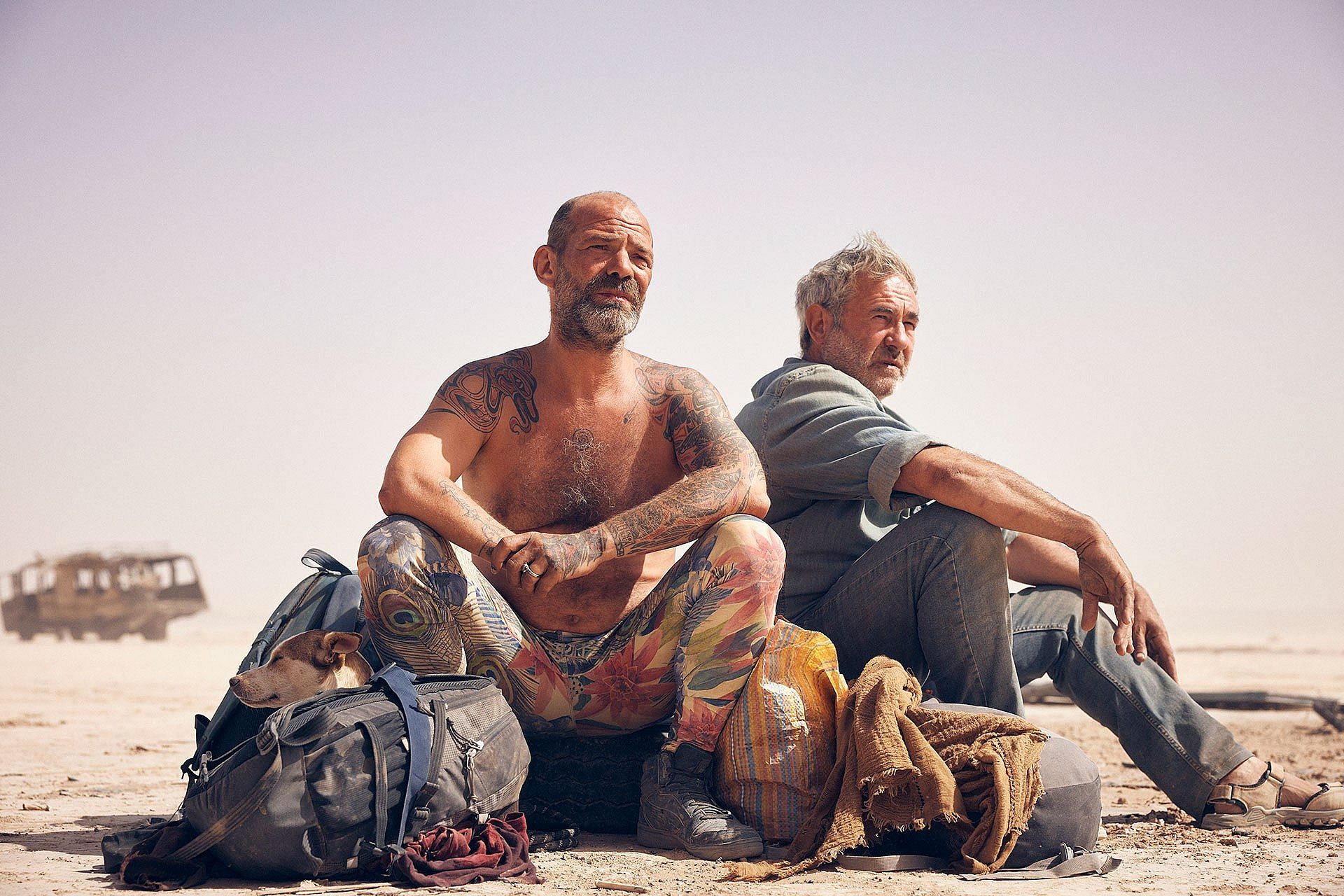
A scene from SIRĀT, directed by Oliver Laxe. Courtesy Neon/Mubi.
With visuals captured on KODAK film in S16mm, often accompanied by a thundering techno soundtrack, director Óliver Laxe's existential drama, Sirāt, defies easy genre categorization, but it has proven a hit on the festival circuit and, in time, may well become a cult classic too.
Co-written by Laxe and Santiago Fillol, with cinematography by Spanish DP Mauro Herce, Sirāt takes its title from the Arabic word for the narrow and perilous path connecting Paradise to Hell.
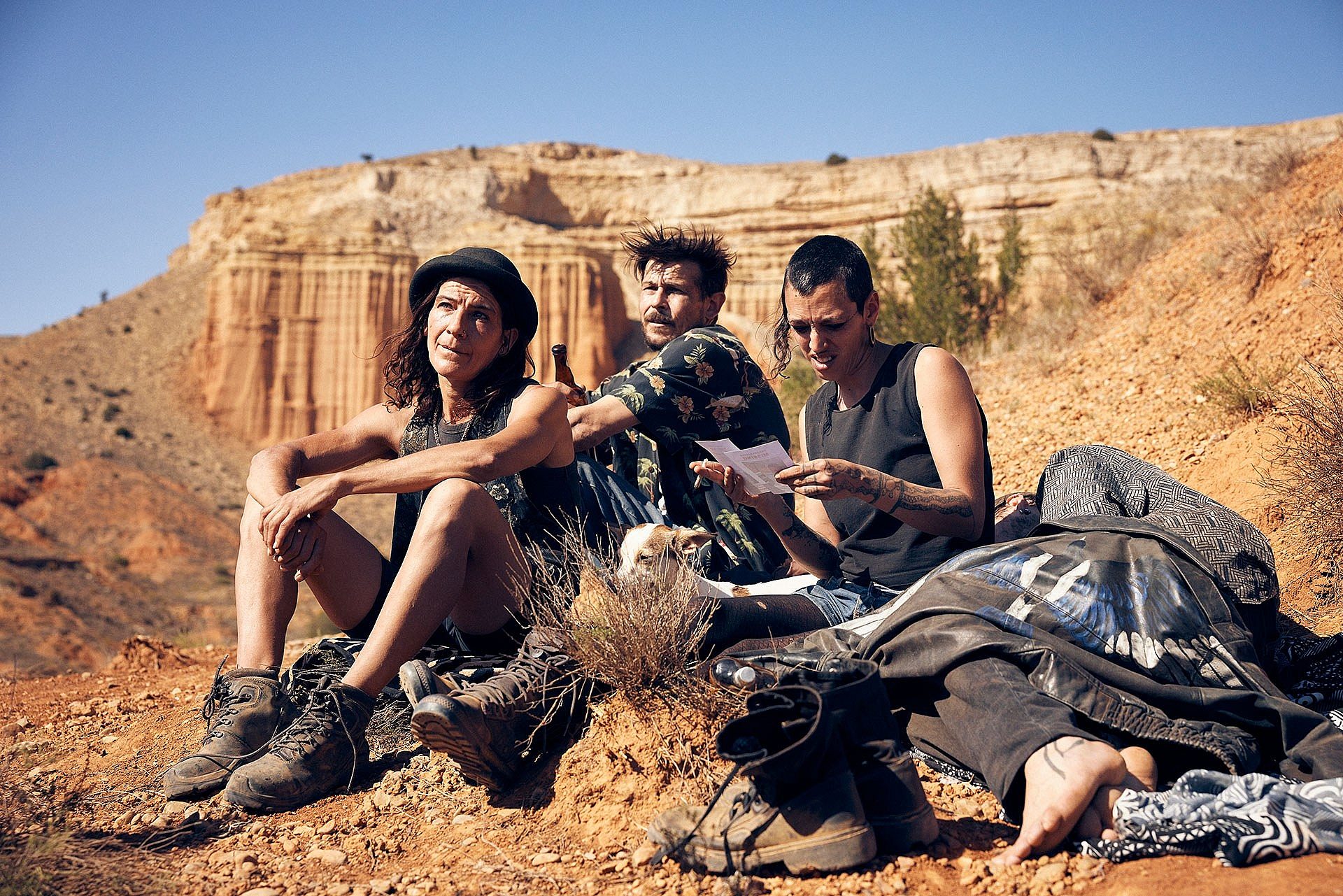
The €6.5m ($7.6M)-budget film follows Luis, a Spanish father, traveling through southern Morocco desperately searching for his missing daughter, Mar, who was last seen at an off-grid rave in the desert several months before. Accompanied by his son, Esteban, and the family dog, Pipa, Luis wanders among blissed-out partygoers at a hedonistic bash and eventually encounters a group who claim to have potentially seen Mar.
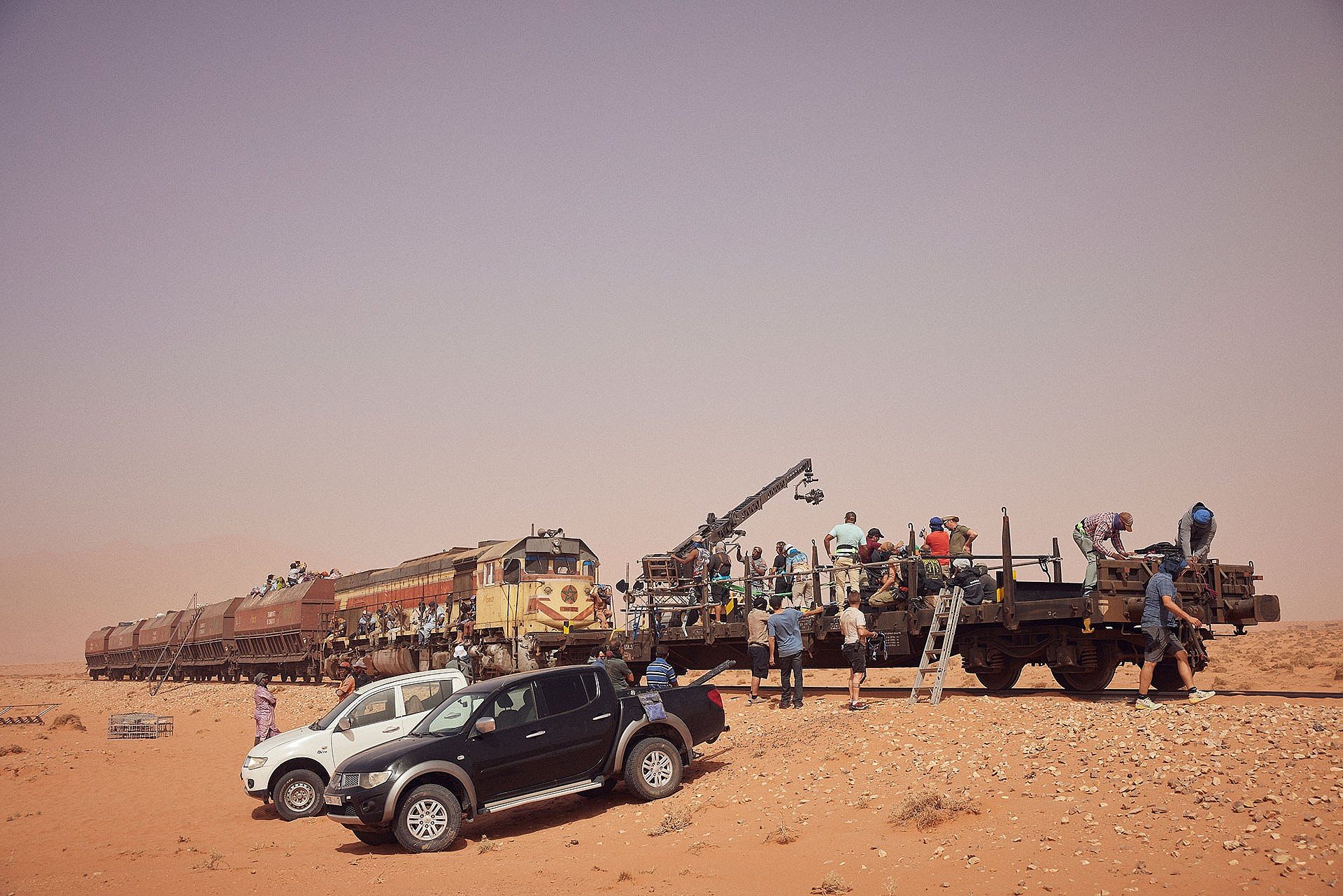
Photo by Quim Vives.
When the army arrives to break up the event and evacuate the land for military purposes, Luis decides to follow the sympathetic troupe in his car as they drive off in their beaten-up motorhomes in search of a second, seemingly mythical, rave near the Mauritanian border, with a hunch that Mar might be found in that direction.
With an apocalyptic global crisis looming, Luis and Esteban soon find themselves on an extraordinary odyssey deep into the scorched, primal landscape, replete with burning sunshine, fierce sandstorms and narrow mountain roads overhanging precipitous drops, navigating a tightrope between life and death.
Among many accolades, Sirāt won the Jury Prize at the 2025 Cannes Film Festival and received glowing reviews for the combination of Herce's striking cinematography with the pulsating techno soundscape by Kangding Ray to create a meditation on the loss of hope. Herce earned the prestigious Manaki Brothers' 2025 Bronze Camera, plus the 2026 European Film Award for Best Cinematographer. Sirāt is also nominated for Best International Film at the 2026 Oscars.
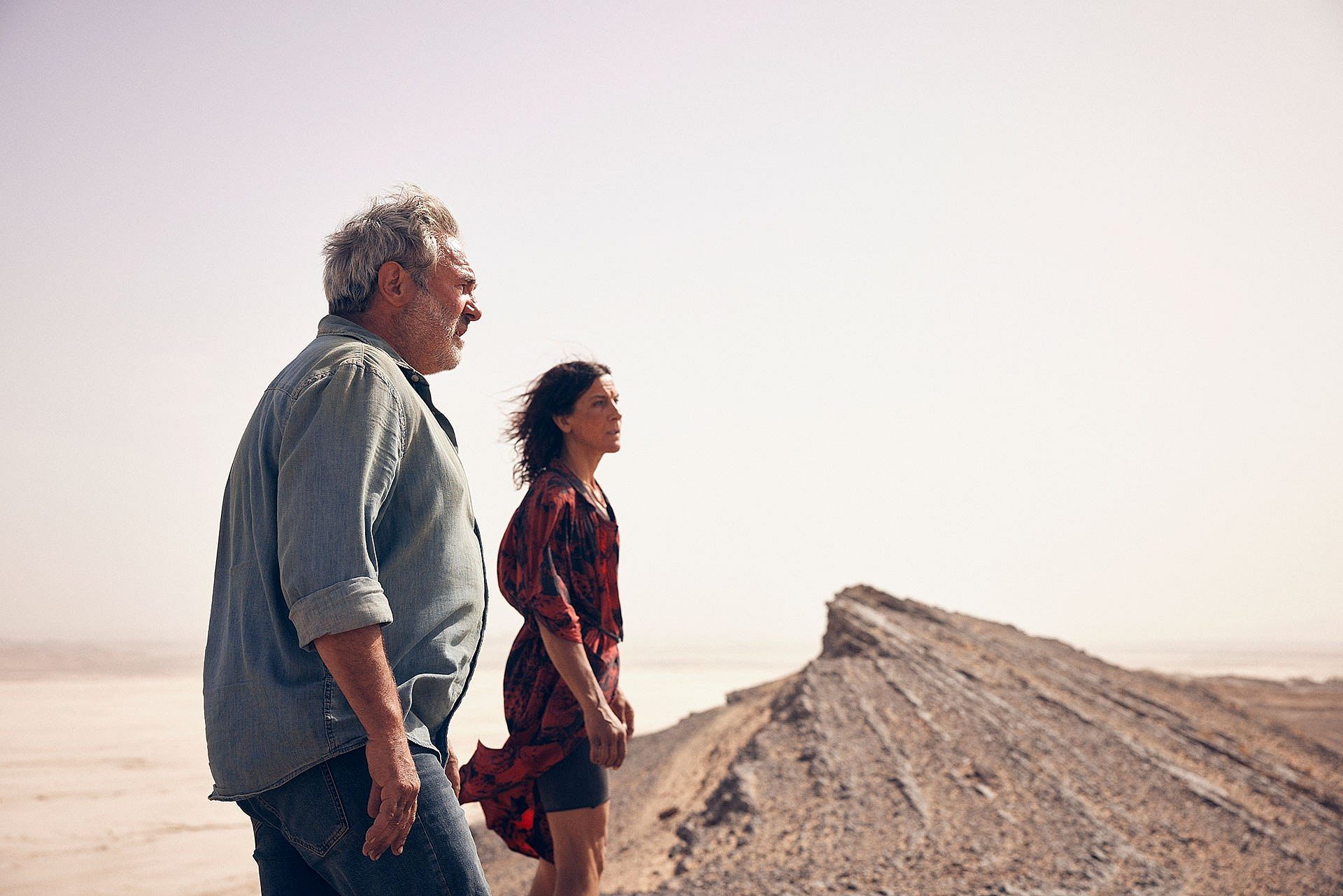
A scene from SIRĀT, directed by Oliver Laxe. Courtesy Neon/Mubi.
Sirāt represents Herce's third collaboration with Laxe as director, following the award-winning Mimosas (2016), also set in the rocky terrain and desert landscapes of Morocco, and Fire Will Come (2019), both lauded for their majestic camerawork, and both shot on KODAK 16mm film. Herce also previously worked, with Laxe as the producer, on The Fifth Gospel of Kaspar Hauser (2013), directed by Alberto Gracia, which the DP shot using a 16mm Bolex camera.
"Olivier always wants to shoot on film, and I adore it too," Herce declares. "Film delivers something different, there's a kind of magical aura in the colors and shades it registers, especially when you're shooting landscapes and exteriors in hard, overhead sunlight, like we did on Mimosas. We knew it would be perfect again for Sirāt."
Herce reveals that he and Laxe prefer to bypass direct cinematographic references, so as to avoid replicating anything to similar in their work. They did, however, imbibe the gripping, sweat-soaked aesthetics in The Wages of Fear / Le Salaire de la Peur(1953, dir. Henri-Georges Clouzot, DP Armand Thirard), the tense visceral nihilism of Sorcerer (1977. Dir. William Friedkin, DPs John M Stephens/Dick Bush), plus the dieselpunk style of Mad Max movies (1979-2015, dir. George Miller).
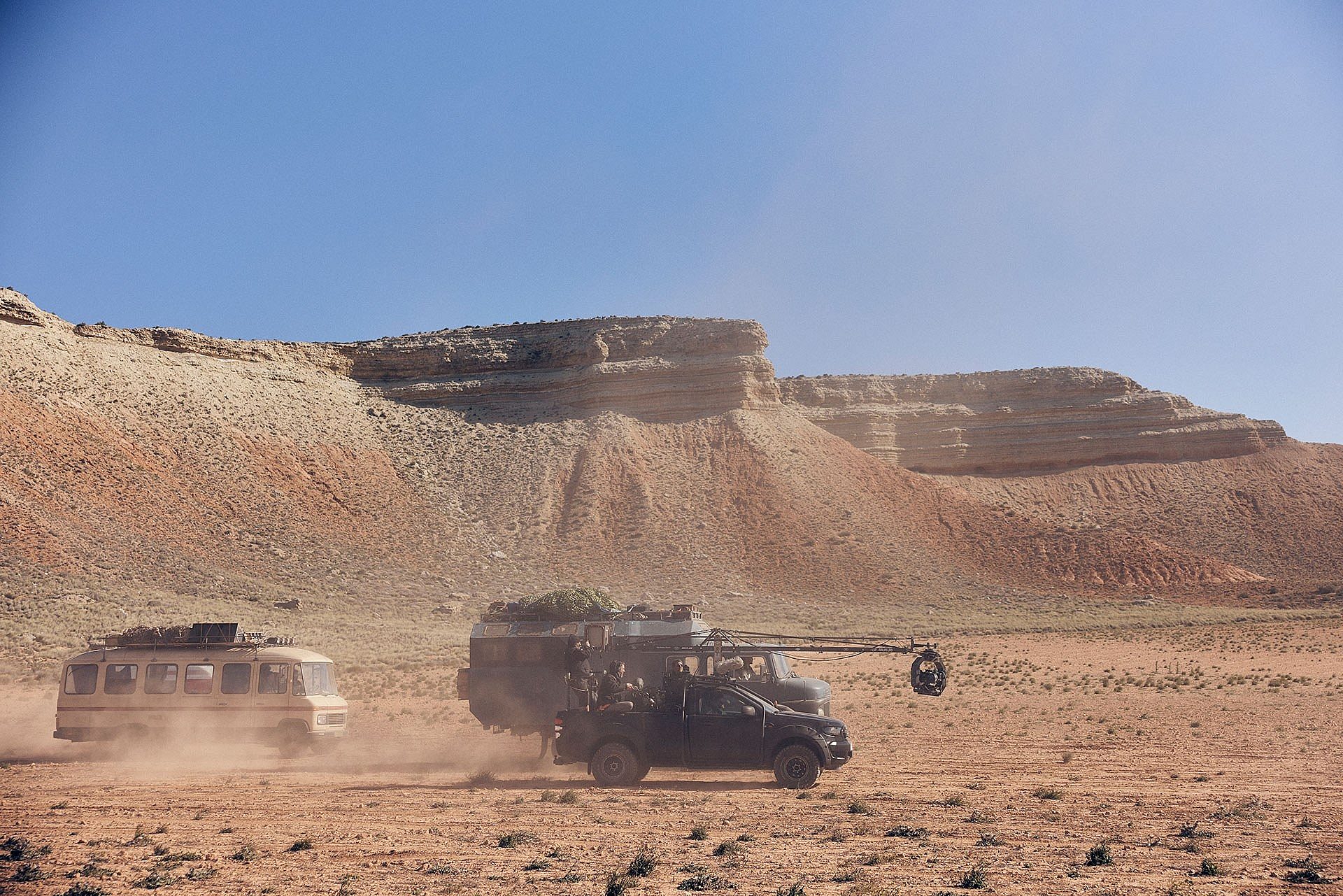
"We like shooting characters in cars in the hot desert sunshine, and it was all about finding our own visual language for the film," Herce remarks. "In that respect, Olivier gave me a lot of creative space. He's more interested in the overall world-building, the characters and their emotions, rather than shot-listing and the specific framing. Those were down to me.
"I knew the music and the soundscape would play big parts in the film. So, when there was little or no dialogue, those sequences needed to convey the sense of what was going on in the storytelling but have an air of mysteriousness, unease and suspense.
"Unlike spectacular action films, where there's often a lot of coverage of a scene from different angles, we decided to be much more sober and restrained with the camera —to have long takes of the characters in the desert landscape, to give the audience an immersive and sometimes strangely heightened experience."
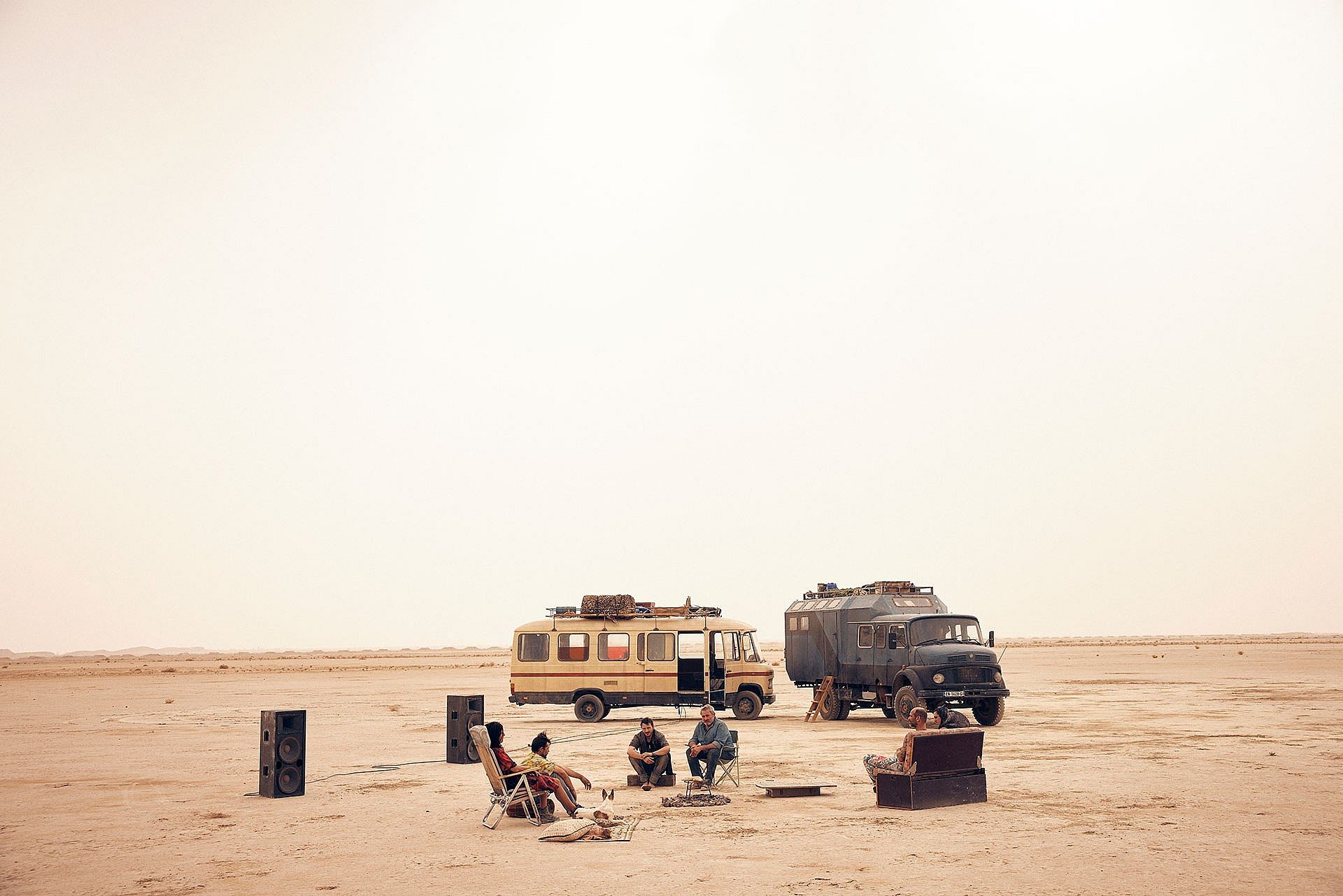
A scene from SIRĀT, directed by Oliver Laxe. Courtesy Neon/Mubi.
Principal photography on Sirāt took place between May and June 2024. Funding requirements meant part of the feature being shot in Spain. Supported by the Aragon Film Commission, filming took place for a month around the striking red stone canyons of Rambla de Barrachina, plus the provinces of Teruel and Zaragoza. The production then moved to Morocco for four weeks to shoot around the mountainous eastern province of Errachidia and the desert around town of Erfoud.
"It was easy to find locations in Morocco but much harder to find places in Spain that would match and therefore keep the continuity of the narrative," Herce says.
"Also, some scenes were not shot in chronological story order. For example, the river crossing and the rocky mountain road scenes were shot in Morocco. But scenes around those moments, including the ascent of the mountain at night in the rain and dramatic accident scene, were filmed in Spain. So, it was quite a jigsaw puzzle for me to work these out correctly."
A scene from SIRĀT, directed by Oliver Laxe. Courtesy Neon/Mubi.
Although Herce says he would have loved to have shot Sirāt on 35mm film in Anamorphic, logistical elements proved more expensive than originally anticipated, plus there were concerns as to whether those optics would survive the rough terrain and dusty conditions.
"Essentially, we thought it was far too risky to go into the desert for seven weeks without direct replacements being easily available," he explains. "And our thinking switched to Super16mm. As we knew from previous experience on Mimosas and Fire Will Come, the beauty of shooting on 16mm is that the camera package is quite small, compared to 35mm, light and maneuverable, which would be important part of the production. The lenses would still be precious but much less expensive in the event of any calamities."
For the shoot, Herce selected ARRIFLEX 416 16mm cameras, framing in 1.85:1 aspect ratio, using ARRI Zeiss Ultra Prime lenses. The camera package was supplied by Cine Técnico in Barcelona.
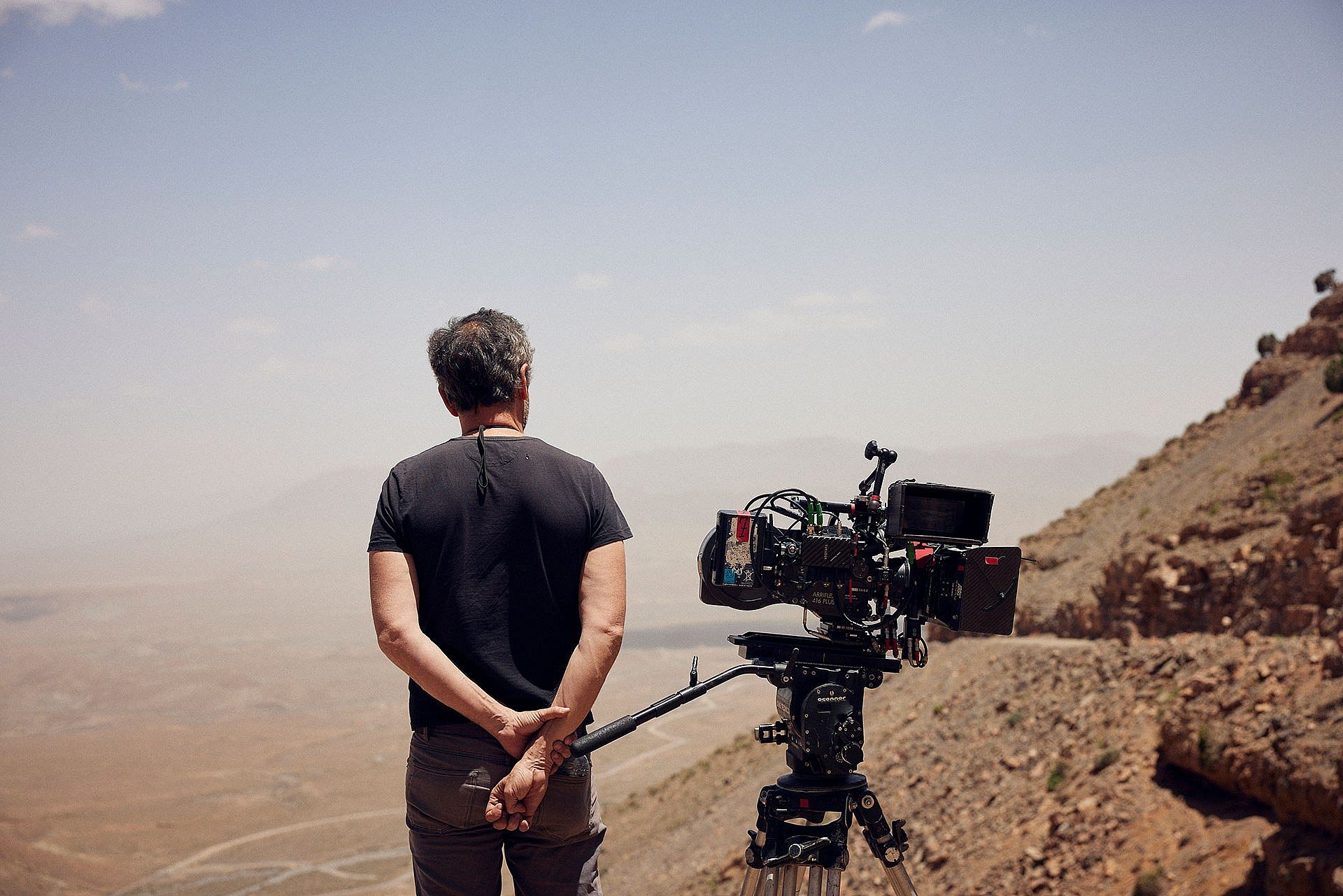
Photo by Quim Vives.
His chosen filmstocks were KODAK VISION3 250D Color Negative Film 7207 for the day exteriors and some interiors, plus KODAK VISION3 500T Color Negative Film 7219 for the movie's night sequences. Film processing and 2K scans were done at TransPerfect Media (formerly Hiventy) in Paris. Final color grading was done at Cube in Barcelona by Rafa Marmodoro.
"All of the films I've done on film in the last ten years have been shot on Kodak," says Herce. "I like KODAK VISION3 50D 7203 for day exteriors, but for me the contrast between it and the 500T would have been too great.
"So I went with the 250D and 500T as they are closer in terms of the grain and texture, and much easier to match organically during the color grade. The 250D always delivers lovely, eloquent results and the 500T is incredibly versatile. I knew I could let highlights bloom or burn out and still be confident of having detail in the darker parts of the image.
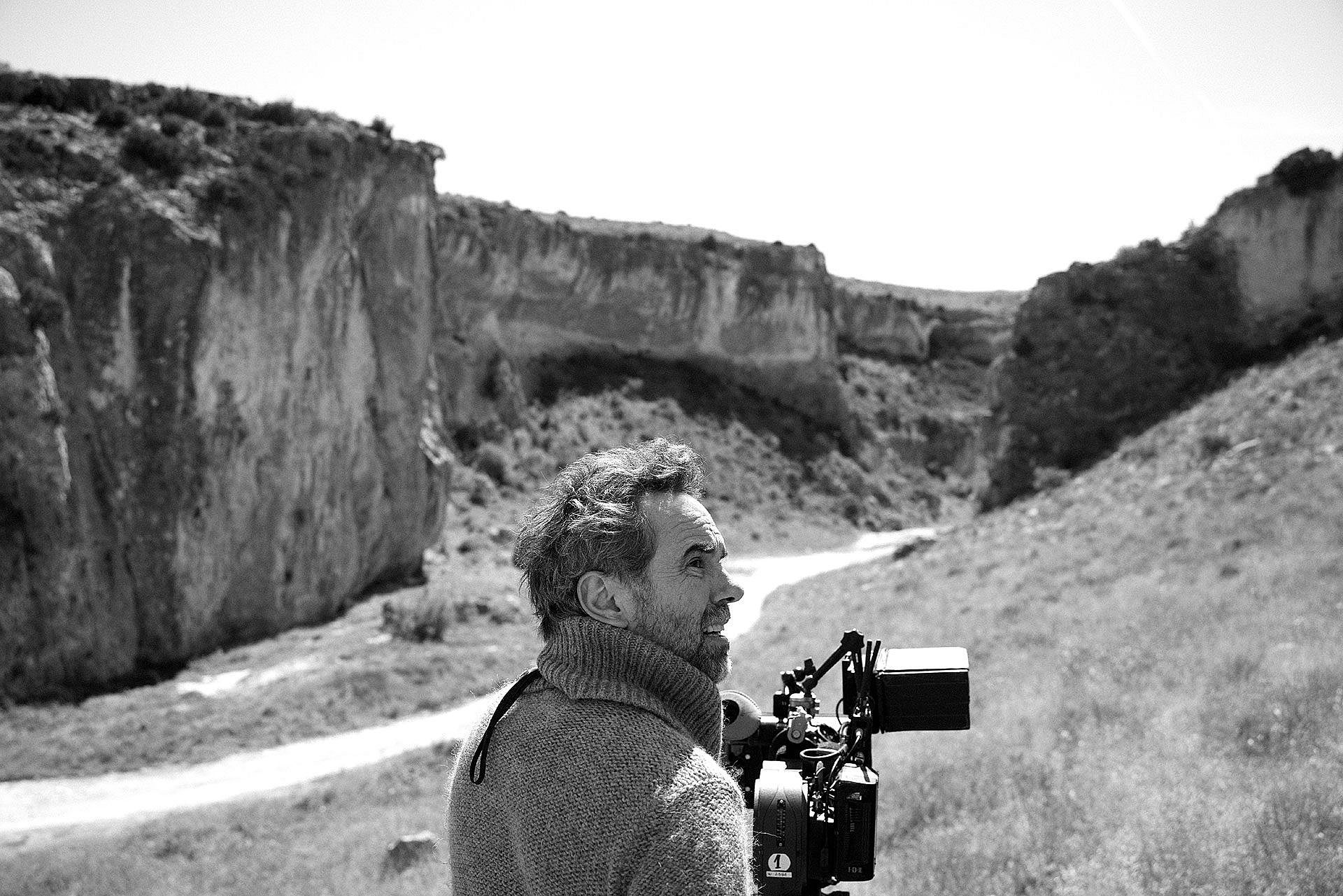
Photo by Quim Vives.
He adds, "I was perfectly happy with the 2K scans, as there's not a great deal of difference between 2K and 4K when you shoot 16mm film. I didn't do any push or pull processing at the lab, as we were never in situations that required exposure compensation or changes in grain, color or contrast. I was satisfied with what came out of the camera and knew the 2K scanned rushes would have enough latitude to make any changes we wanted in the final color grade."
Herce operated throughout, supported by Javi Barbero on focus, and Rachid Talidi working on Steadicam. Alfredo Arcos led the grip team, with Pep Zueras working as the gaffer. Second unit camerawork was done by Diego Romero.
"I don't like using an EasyRig, as I am quite tall and always think I can detect the movement of my stride in the camera movement. So, we used Steadicam to move the camera in the minefield or just shot handheld. Scenes that involved panning between the characters were done off the tripod. For travelling shots with the actors, we attached the camera to a 3-axis Black Arm and had a simple three-wheeled rig that could be pushed around. We also had a camera car with the camera mounted on a kind of three-axis Russian/Moroccan Arm driving scenes, and used a telescopic crane for the train sequence, all with me operating pan/tilt on the wheels.
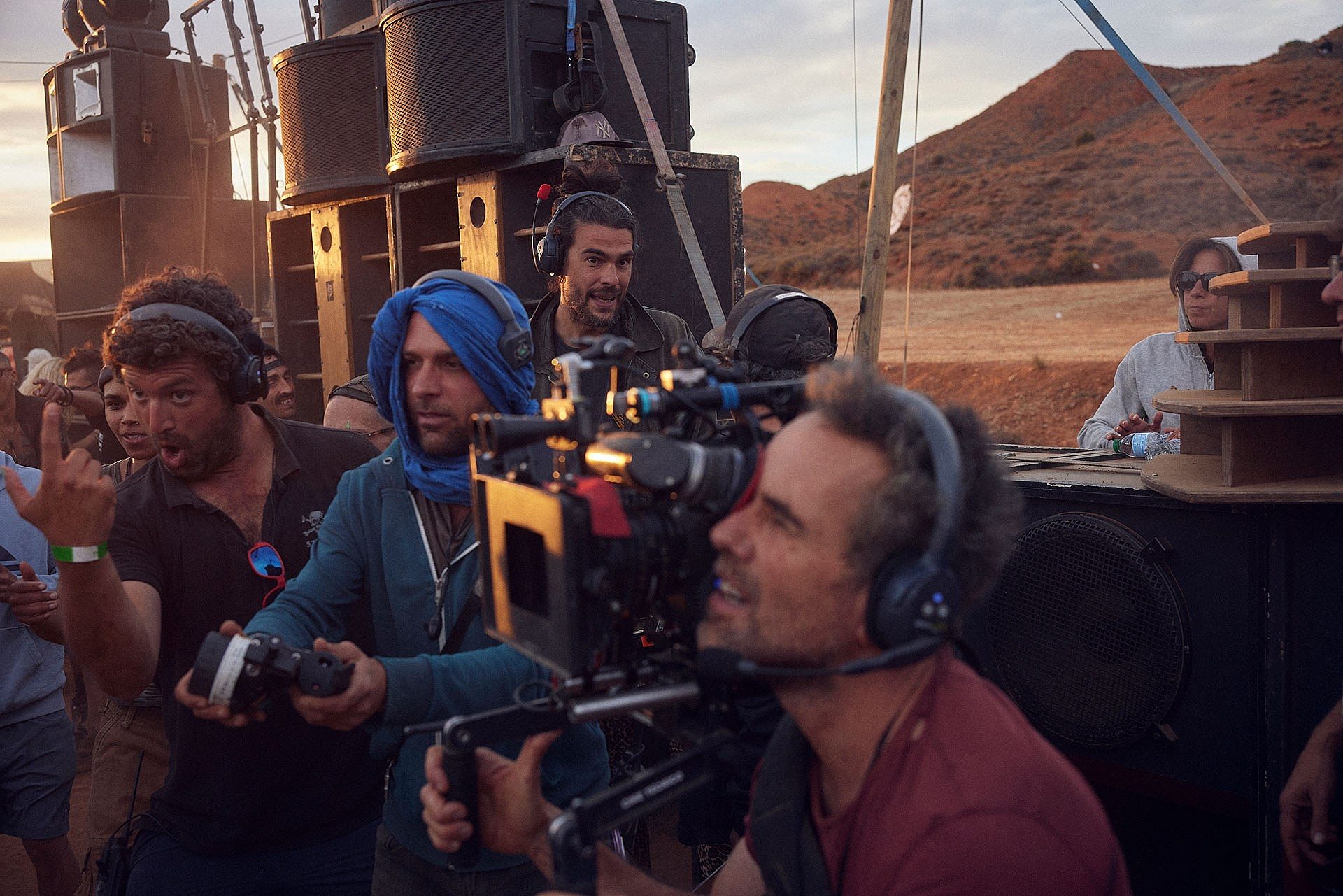
Photo by Quim Vives.
In keeping with Laxe's desire for a realistic aesthetic, the day scenes were filmed in available light, which was generally bright overhead sunshine.
"The cinematography of the day exteriors necessarily revolved around plotting where the sun would be at any given point," says Herce, "and then controlling the light to protect continuity, using frames for bounce, diffusion and negative fill.
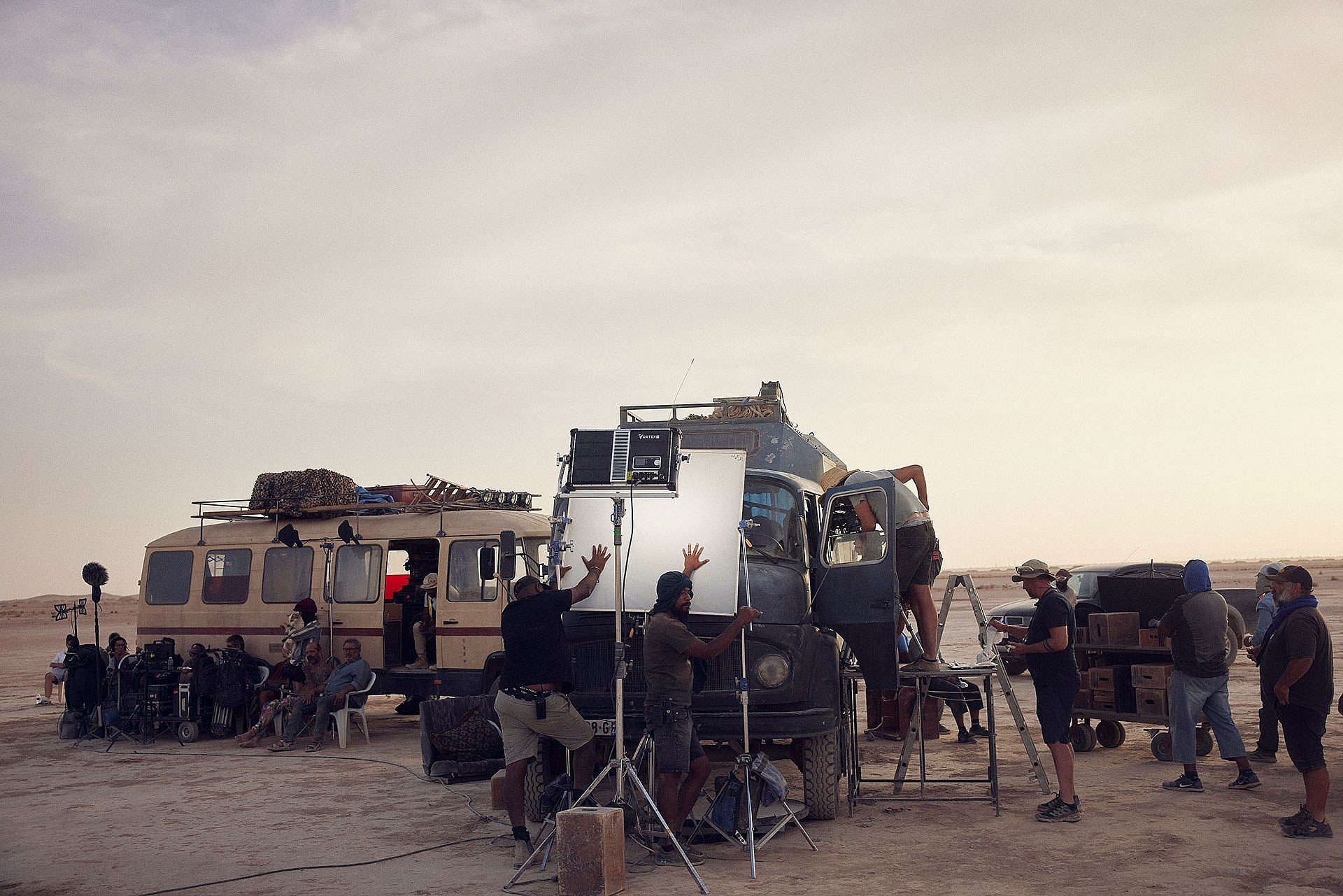
"For night scenes, our approach involved finding locations where powerful sources, such as HMIs, could be positioned high above for general illumination, as if by the moon. We then used an array of Creamsource Vortex, ARRI Sky Panels and Astera Titan tubes close to the actors. We also upgraded the lightbulbs in the vehicles to give stronger light."
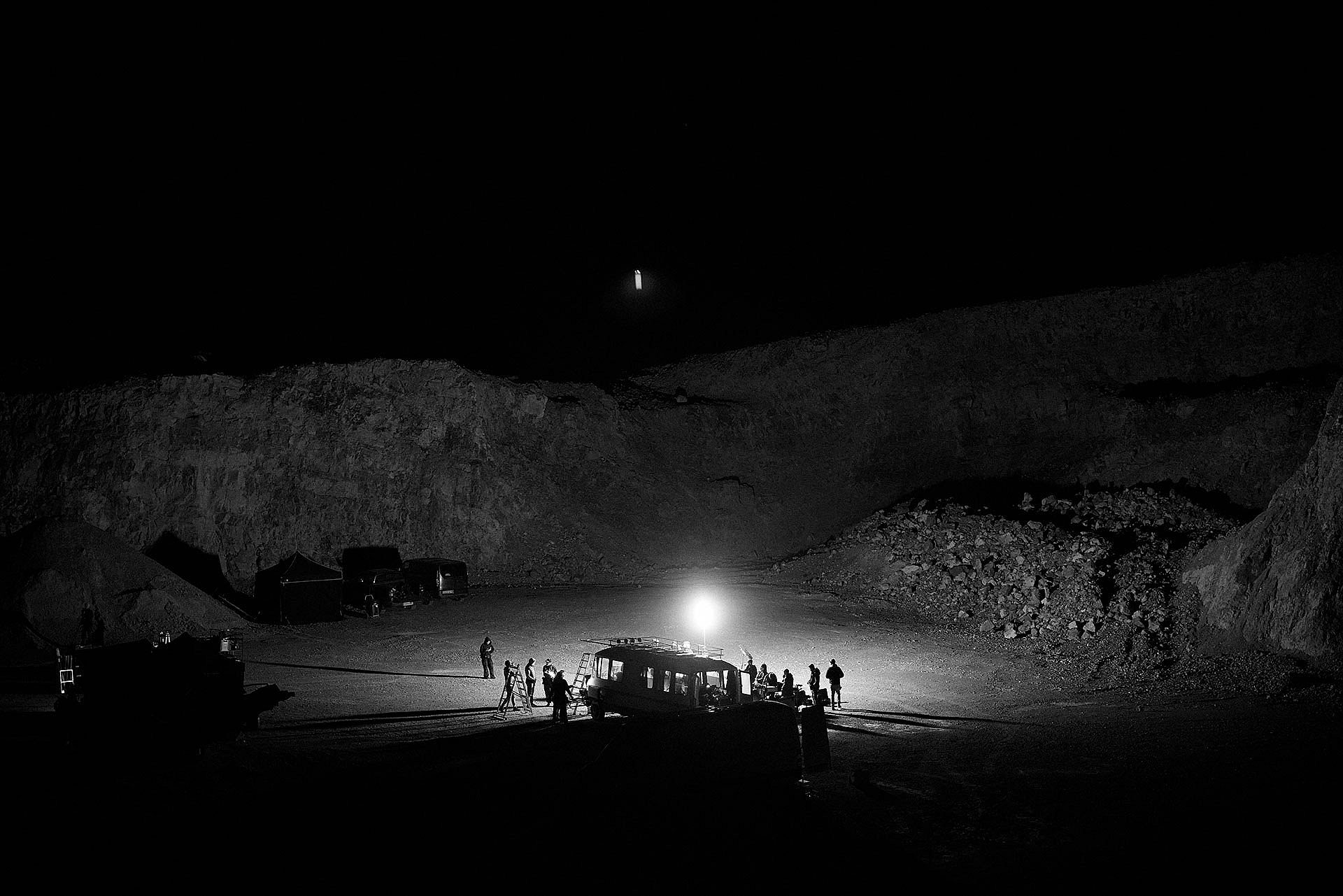
Photo by Quim Vives.
Herce says one of the biggest challenges was working in intense heat and dust. "In Morocco, the temperature reached 45°C/110°F almost every day, with sand and particles everywhere. We got through lots of sunblock and drank a lot of electrolytes to keep hydrated and maintain our energy levels."
He also admits, "We had some tense moments whilst filming some of the set pieces, plus the vehicles were very old and needed to be constantly repaired, which required us all to remain calm and be patient.
"While Olivier gave me a lot of creative freedom with the shot-listing and framing, there were technicalities at many locations. For instance, for the accident scene that we shot in a quarry, we had to pay for a road to be cut for the vehicles to move along, which also had to have the right orientation for our camera shots, using green screens for background replacements in post. The sequence was difficult to shoot as we could only cover a 90° angle. This meant we had to work on the upper side of the hill in the morning before re-orienting the green screens and shooting from the lower side in the afternoon.
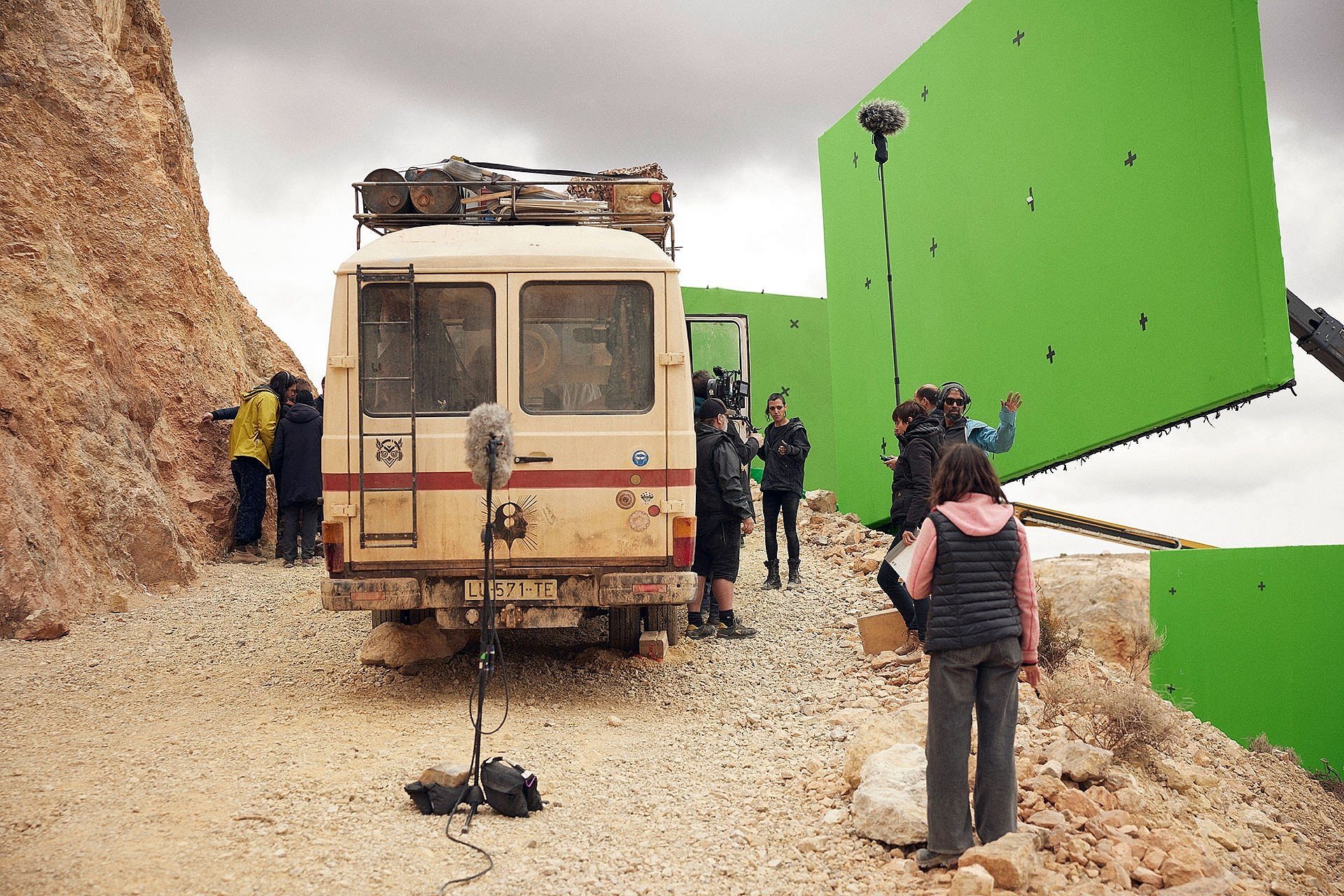
Photo by Quim Vives.
"The explosive denouement of the film was also a challenge because of the abstract nature of the setting—a flat stretch of desert with nothing else apart from the motorhome, the characters, their loudspeakers, a distant horizon line and some mountains in the background.
"We had to shoot a dozen different scenes there, one after another. Doing the shot-list for those while keeping track on the movement of the sunlight for continuity took a lot of thinking. When a sandstorm developed, and we had the opportunity to shoot Luis being covered with sand for real, but had to react very fast, more like a documentary. Respecting those situations meant my mental muscles got a real workout."
Reflecting on shooting Sirāt, Herce says, "I devoted 40 weeks of my life—from prep to production and post—to this film, but even though it was extremely challenging, I am very proud of the results. I really didn't expect the awards and attention it has received, and all of has been a very good surprise.
"We put a lot of trust into the way the images and sound would work together. We also put trust in the process of shooting with film, like trusting the light meter. I'd go to sleep every night with the images I had seen through the viewfinder in my mind but not sure what was going to happen. But when the results arrived back from the laboratory, we were nearly always positively surprised. Film has this kind of magic, that makes you say 'Wow,' and it was nearly always better than you think it will be. You have to shoot each production with the right tool, and film was the right choice for this."
