Choosing the Right Imprinting Strategy for Hybrid Production - Individual Inkjet Printheads or Pre-configured Print Bars
The traditional cost advantage of analogue presses is built upon the assumption of economies of scale. However, even in application segments where overall volumes remain high, those volumes have become more fragmented and complex. Many companies also find themselves with presses and post-press equipment that are underutilized and subject to increased downtime as they age.
Rather than replacing equipment outright, imprinting systems can be added to existing presses and converting systems with lower capital outlay and less operational disruption.
Investment in hybrid production, where digital inkjet is added selectively to existing equipment, offers a pragmatic route to protecting margins while expanding capability.
The simplest form of hybrid imprinting is adding a single inkjet printhead and associated drive electronics to existing equipment enabling variable printing of a fixed width, typically 4 inches or less, The print head is the building block of a solution that can be made more robust by adding additional, individual printheads to address a greater width or range of colors. Print bars elevate imprinting capabilities by allowing an assembly of multiple printheads to act as a single, wider, digital imaging unit. A print bar uses unified electronics and control systems, along with calibration software to synchronize printheads and automate stitching and color-to-color registration. It’s important to right-size an imprinting solution to the intended use, but one of the key advantages is that imprinting is component based and can be expanded and reconfigured to scale and adapt to additional production requirements. Some integrations are mobile enough to be used on multiple pieces of equipment.
The Integration Process
The integration process for augmenting existing printing equipment with printheads or a printbar platform is typically provided by the printhead manufacturer or an integration consultant. It is increasingly rare for companies to elect, or have the option to elect, to perform the work themselves.
The complexity of the process varies significantly. One company may want to add a few monochrome heads to a folder/gluer while another wants to add multiple print bars across the width of a web-press. One might be a stand-alone integration while the other could be part of an integrated production line with workflow automation software, color calibration, and camera systems for quality control. The simplest implementations could be accomplished in a day while complex hardware/software integrations may require weeks.
The key to successful integration is in the planning process. There may be multiple options for where to place inkjet within the production operation for optimal results and maximized ROI. Fluid requirements such as substrate compatibility, food safety, sustainability, drying speed, and post-press process compatibility are critical factors. Understanding the key decision points around equipment compatibility, application requirements, automation levels and budget is critical to designing the most efficient hybrid production environment. An experienced integration partner can help to map out a strategy to add value quickly and scale to meet future needs.
Kodak offers customers multiple decades of experience with designing and implementing hybrid production solutions. The latest imprinting products from Kodak, representing two distinct approaches, support a range of production needs, investment profiles and application segments and are the focus of this article.
Two Approaches. Many Use-Cases.
Kodak’s PROSPER S-Series Imprinting System, introduced in 2009, is among the earliest and most widely installed components for hybrid production. The PROSPER imprinting portfolio has expanded to include the PROSPER Plus Imprinting System and the PROSPER Print Bar (introduced in 2024.)
Although both solutions are built on Kodak’s STREAM continuous inkjet technology and water-based inks, they are designed around very different assumptions about coverage, frequency of use, and production intent.
PROSPER Plus Imprinting Heads: Modular and Targeted
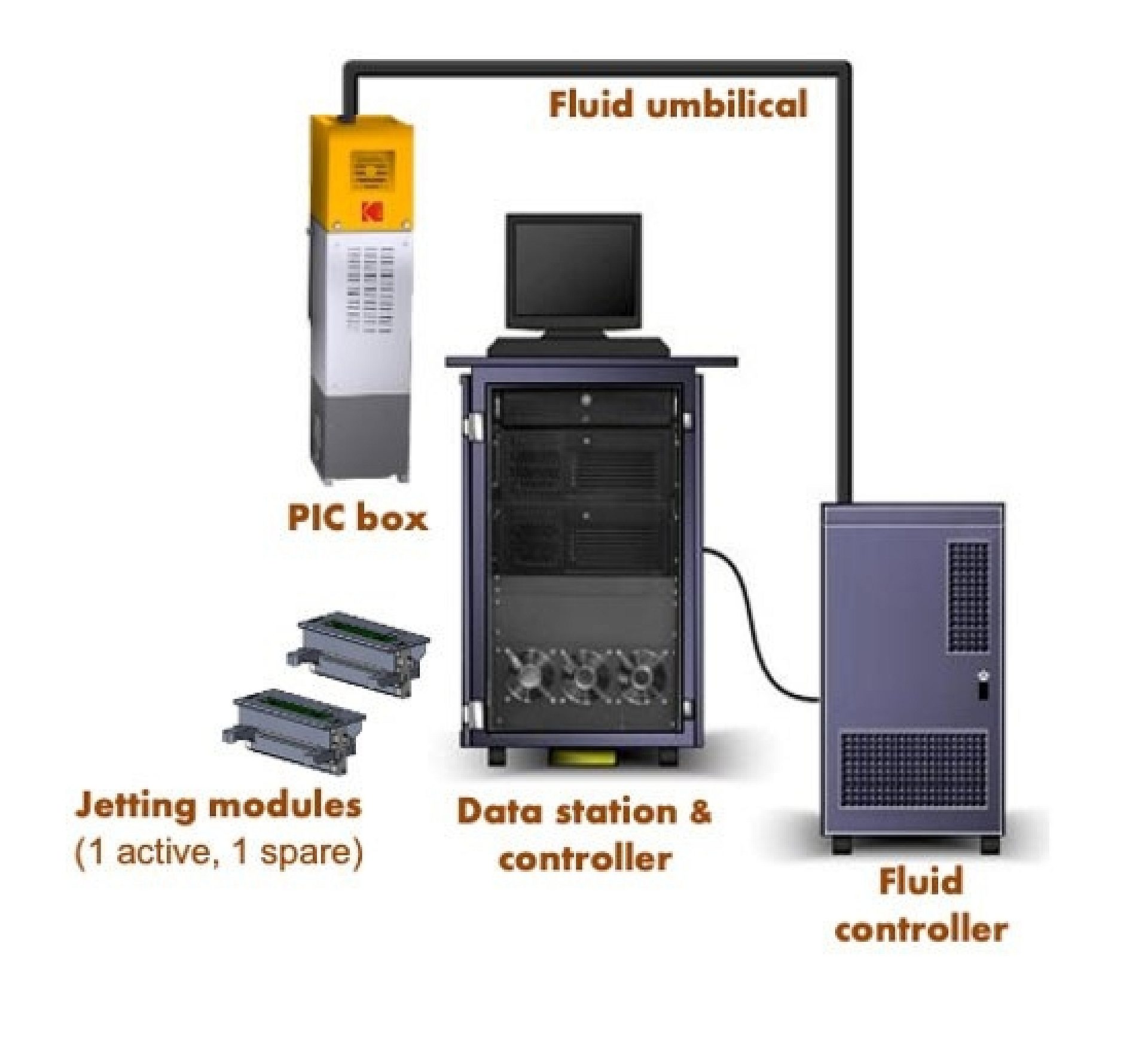
The PROSPER Plus system is fundamentally modular. Individual printheads of 105 mm (4.16 inches) in width are added to an existing press or post-press line to print specific variable elements such as barcodes, QR codes, serialization, simple graphics, or text.
The design philosophy is incremental. Printers can start with a single monochrome printhead and expand over time with additional print width or colors, or both, only as applications demand it. Integration is relatively straightforward, making PROSPER Plus particularly attractive for retrofitting older presses or finishing lines where space and mechanical tolerance are constrained. For example, the system might be configured for offset, flexo or gravure presses as well as folder/gluer lines, finishing, or even custom transports. In fact, the system is so modular and mobile, it’s possible to deploy PROSPER Plus on press or in post-press implementations at different times as needed. The heads can be deployed to different areas of the press with very little downtime to meet varying application requirements.
In practical terms, PROSPER Plus is less about replacing analogue print and more about removing inefficiencies from traditional processes. This may include reducing make-ready times and the number of plates used while enabling last-minute data changes without stopping production.
PROSPER Print Bar: A Platform for Wide-Area Variable Imaging
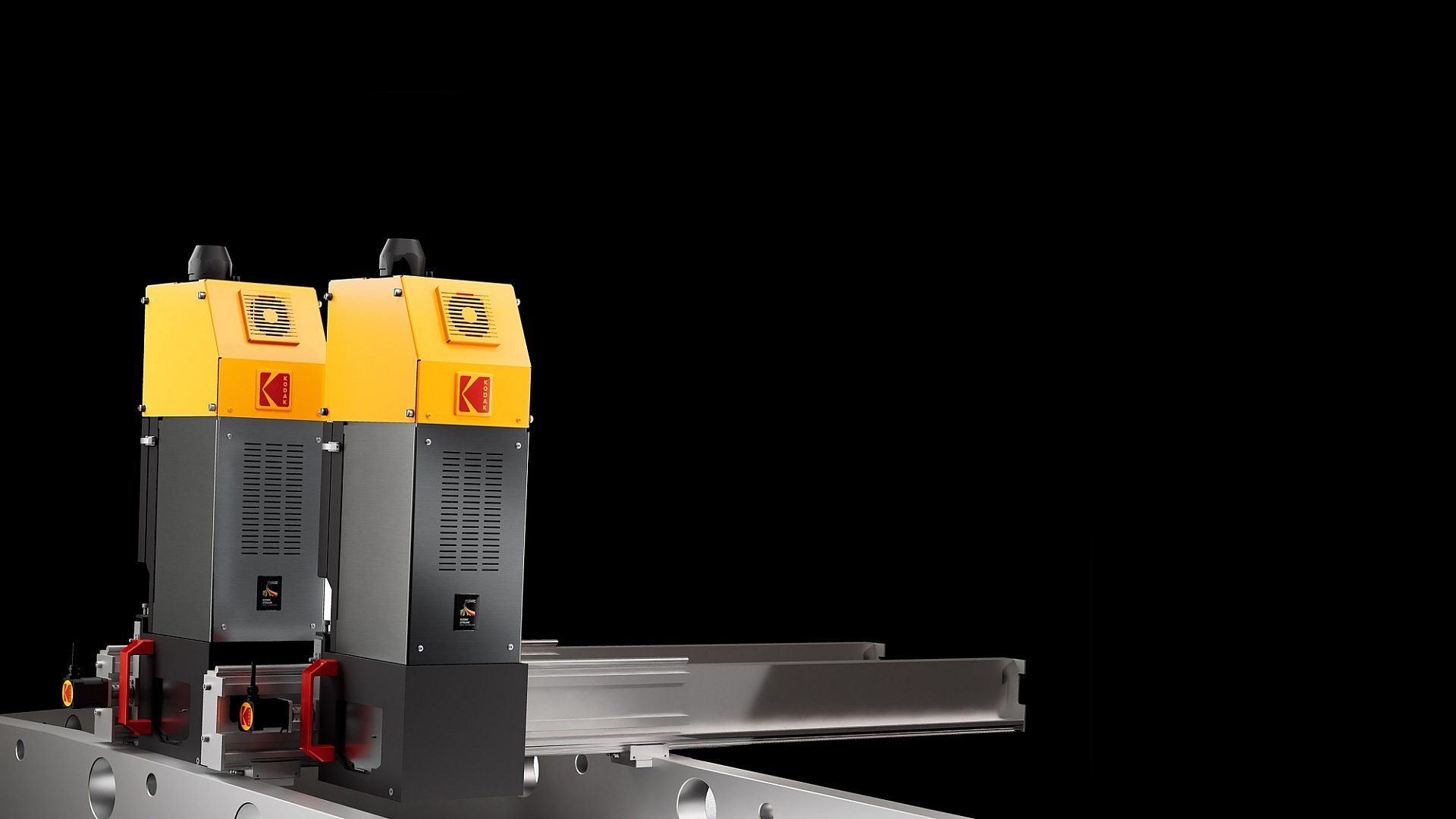
The PROSPER Print Bar represents a different scale of imprinting capability while building on the PROSPER Plus base technology. Rather than individual heads operating independently, the Print Bar combines multiple PROSPER inkjet engines into a single, integrated, imaging platform with automated stitching and color-to-color registration.
This allows for wide, contiguous variable print areas of up to near-full page or full panel coverage—produced at speeds of up to 300 mpm (1,000 fpm). The Print Bar is intended to behave less like an add-on and more like a digital print unit embedded inside an analogue line.
As a result, installation is more complex and capital costs are somewhat higher, but the trade-off is image consistency, registration accuracy and the ability to handle graphics-heavy variable content that would be impractical with cascaded standalone heads. Like the PROSPER Plus, the PROSPER Print Bar is versatile and configurable with options for black-only, spot color, or full CMYK. The system comes preconfigured options for 2, 3, or 4 lanes and can be customized to meet specific integration needs.
KODAK PROSPER Print Bar
Application Segments and Economies of Scale
Direct Mail
This segment has seen strong adoption of Kodak’s S Series imprinting systems and continues to favor PROSPER Plus. These solutions are a best-fit where variable data density is high, but image coverage is low. The economic value lies in eliminating plates, reducing changeovers, and enabling personalization—not in printing full-color variable graphics across the page.
Publishing and Inserts
Both technologies can be relevant but the PROSPER Plus heads are suited to varying selective elements such as codes, offers or regional identifiers while the Print Bar becomes compelling when publishers move toward graphics-rich personalization at scale, particularly for advertising inserts.
Labels and Packaging
This is where the distinction between Kodak’s solutions becomes most pronounced:
- PROSPER Plus excels in compliance-driven use cases—serialization, track-and-trace, and variable text where digital inkjet replaces secondary analogue stations.
- PROSPER Print Bar supports brand-led applications where visual differentiation and SKU proliferation demand wider variable print areas without sacrificing flexo productivity.
Security and Gaming
Security printing applications often favor PROSPER Plus heads for serialization and controlled variable content, though Print Bar systems are sometimes justified where complex variable imagery or layered security graphics are required across a larger area. A key differentiator for Kodak is their ability to produce security inks that meet exacting standards and continually evolving requirements.
Why Scale Matters
At lower to mid-volumes, or where variable content is used intermittently, PROSPER Plus delivers faster payback due to its lower entry cost and incremental scalability. As volumes rise and variable coverage increases, the economics begin to favor the Print Bar. At that point, automation, registration accuracy, and image consistency outweigh the higher initial investment—particularly where digital content is no longer a supplement, but a defining part of the product.
Compatibility with Analogue Presses and Post-Press Equipment
One of the strengths of Kodak’s imprinting strategy is its applicability beyond traditional press units. Both the PROSPER Plus and the Print Bar can deliver resolutions of up to 600 x 900 dpi, however the PROSPER Plus is also offered in lower resolutions to provide an economical solution for printing limited coverage and marking applications. Each has a role to play in expanding the capabilities of existing printing equipment within a range of application segments. For example:
Offset presses
While the PROSPER Plus is well-suited for direct mail and publishing applications where variable text or codes are required but coverage is limited, the Print Bar is more suitable when publishers or commercial printers want to introduce substantial variable graphic content, such as targeted advertising inserts or region-specific editions. Both systems are compatible with web presses and are sometimes used in roll to sheet environments. When stitching is required across wider widths, the Print Bar is usually the superior solution.
Flexographic presses (narrow and wide web)
For label and packaging applications where barcodes, traceability marks, regulatory text, promotional messages, or other small areas of content change frequently, the PROSPER Plus is a good fit. Packaging lines that require broader variable imagery such as full SKU versioning, regional branding, or campaign-driven graphics running across larger areas of the substrate will benefit from the wider widths and graphic punch of the Print Bar. Again, integration is typically on web transports but may be considered for specific cases such as corrugated packaging running directly to a folder/gluer.
Post-Press and Converting Lines
A key differentiator for PROSPER Plus is its suitability for post-press integration including mounting on:
- Folder-gluers
- Envelope converters
- Finishing and inserting lines
- Coating or laminating lines
In these environments, PROSPER Plus heads add value up to the last possible moment, reducing inventory risk and enabling just-in-time customization. The Print Bar, by contrast, is less suited to post-press use due to its size, integration requirements and the level of process control it requires upstream. However, if wider width, fine registration, and stitching are mission critical the Print Bar can meet the demand.
A Strategic Decision
Adding inkjet imprinting technology to existing analogue equipment provides printing companies a path to new opportunities while extending the life and capabilities of aging equipment.
Kodak offers multiple, flexible options to help their customers drive these results along with design, integration, and training services to support their continued success.
The choice between PROSPER Plus and PROSPER Print Bar is not primarily about print quality since both are industrial-grade inkjet solutions based on the same underlying printheads. Instead, it is about how deeply digital capability needs to be embedded into the production workflow.
- PROSPER Plus is a precision tool: targeted, flexible, and ideal for extending the life and relevance of analogue assets.
- PROSPER Print Bar is a platform: designed for printers who see hybrid production as a core strategy rather than an enhancement.
In that sense, Kodak’s two imprinting approaches mirror the broader industry transition. The future is not analogue versus digital, but how intelligently the two are combined.
Article written by Elizabeth Gooding, Insight Forums.