Shooting on KODAK, DP Pat Scola ASC pictured a legendary renegade in a brutal new light for Michael Sarnoski’s 'The Death of Robin Hood'
Images courtesy of A24.
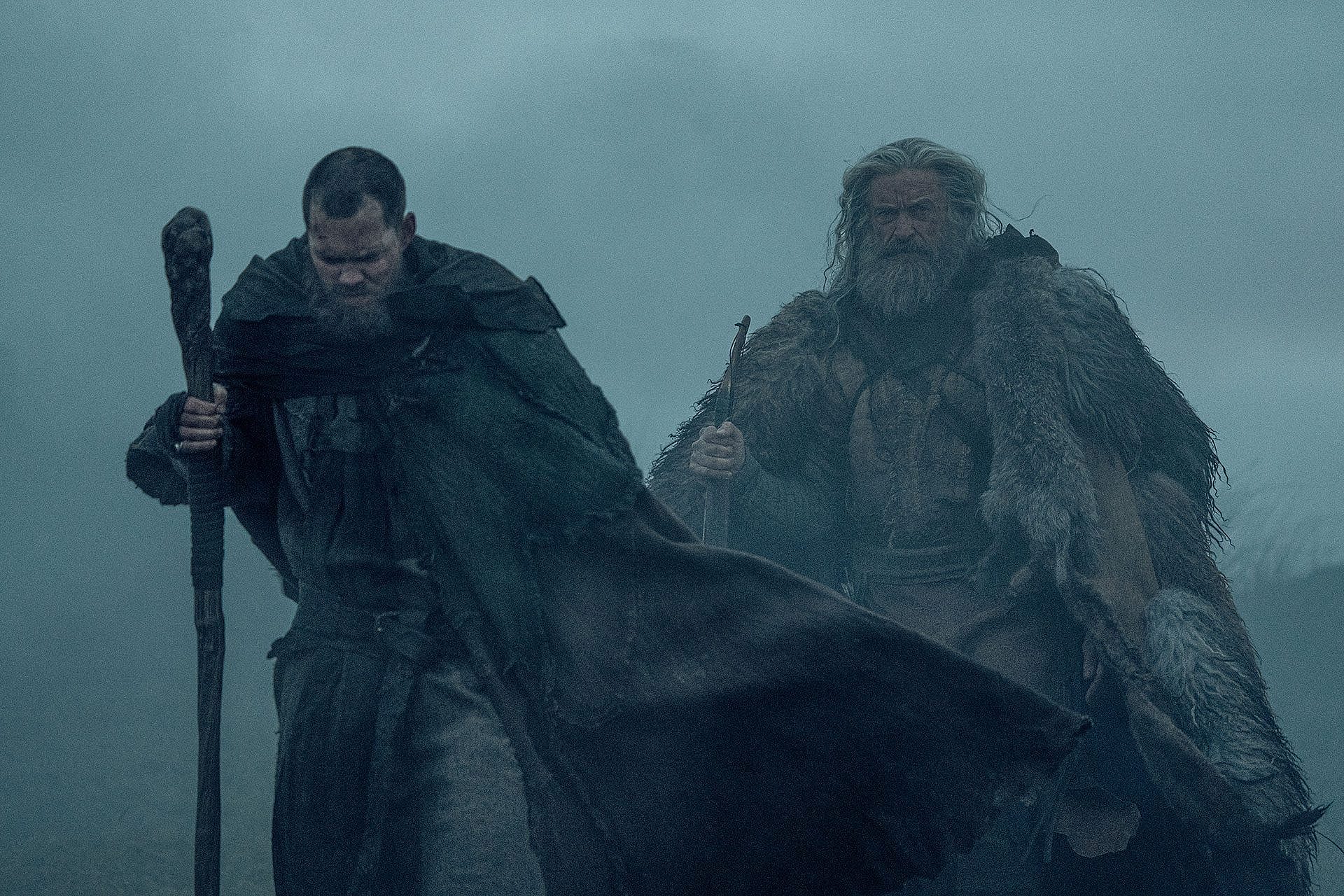
The Death of Robin Hood, written and directed by Michael Sarnoski, portrays a dark and distinctly unromantic vision of Robin Hood, one that's far removed from the myth of the gallant outlaw performing deeds of derring-do, robbing the rich and providing to the poor.
Captured on KODAK 35mm filmstocks by DP Pat Scola ASC, Robin is presented instead as callous criminal and murderer, who has lived a life of bloody violence, only to have become wearied and tormented by his transgressions.
It's 1247 in the wild, windswept Celtic highlands, and the grizzled Robin Hood must stay watchful for the vengeful offspring of people he has slaughtered, all of whom are hell-bent on retribution. He remains a merciless marauder, but when his erstwhile associate Little John recruits him for one last mission, Robin is gravely injured. He finds himself being nursed back to health in a remote priory run by Sister Brigid and questions what his past has truly amounted to.
BTS photos by Aidan Monaghan.
The film stars Hugh Jackman as Robin Hood, with Jodie Comer as Sister Brigid and Bill Skarsgård as Little John, alongside Murray Bartlett and Noah Jupe. Critics applauded Sarnoski's unusual take on the Robin Hood legend, the central performances of the cast, and Scola's naturalistic cinematography, including a change in aspect ratio, to convey Sarnoski's alternative vision.
The Death of Robin Hood is Scola's third feature collaboration with Sarnoski following Pig (2021) and A Quiet Place: Day One (2024). It also extends his experience of shooting longform features on film, following Sing Sing (2023, dir. Greg Kwedar) and Lurker (2025, dir. Alex Russell), both of which were captured on KODAK 16mm.
Scola says he and Sarnoski decided to shoot The Death of Robin Hood on 35mm film from the get-go.
"Michael and I knew from the start that this story had to be shot on 35mm film. It was a no-brainer, partly because of how film helps worldbuilding by transporting you to, and grounding you in, the reality of another time and place. And partly because of the inherent difference film brings to the overall look. We were keen to visually separate this project from other films and streaming shows set in medieval times, especially those that have been shot digitally."
BTS photos by Aidan Monaghan.
Regarding references, Scola remarks, "We referenced precious few feature films in our visual approach, apart from how the brutality of nature was depicted in The Revenant (2015, dir. Alejandro G. Iñárritu, DP Emmanuel Lubezki AMC ASC), and Braveheart (1995, dir. Mel Gibson, DP John Toll ASC) for its truly period feel.
"While I appreciate their artistry, I actively avoided watching films like Robin and Marian (1976, dir. Richard Lester, DP David Watkin BSC) so as not to obscure my objectivity. It was more about finding a set of aesthetics, lighting and textures that would support Michael’s vision, and paintings proved to be the greatest influence on us visually."
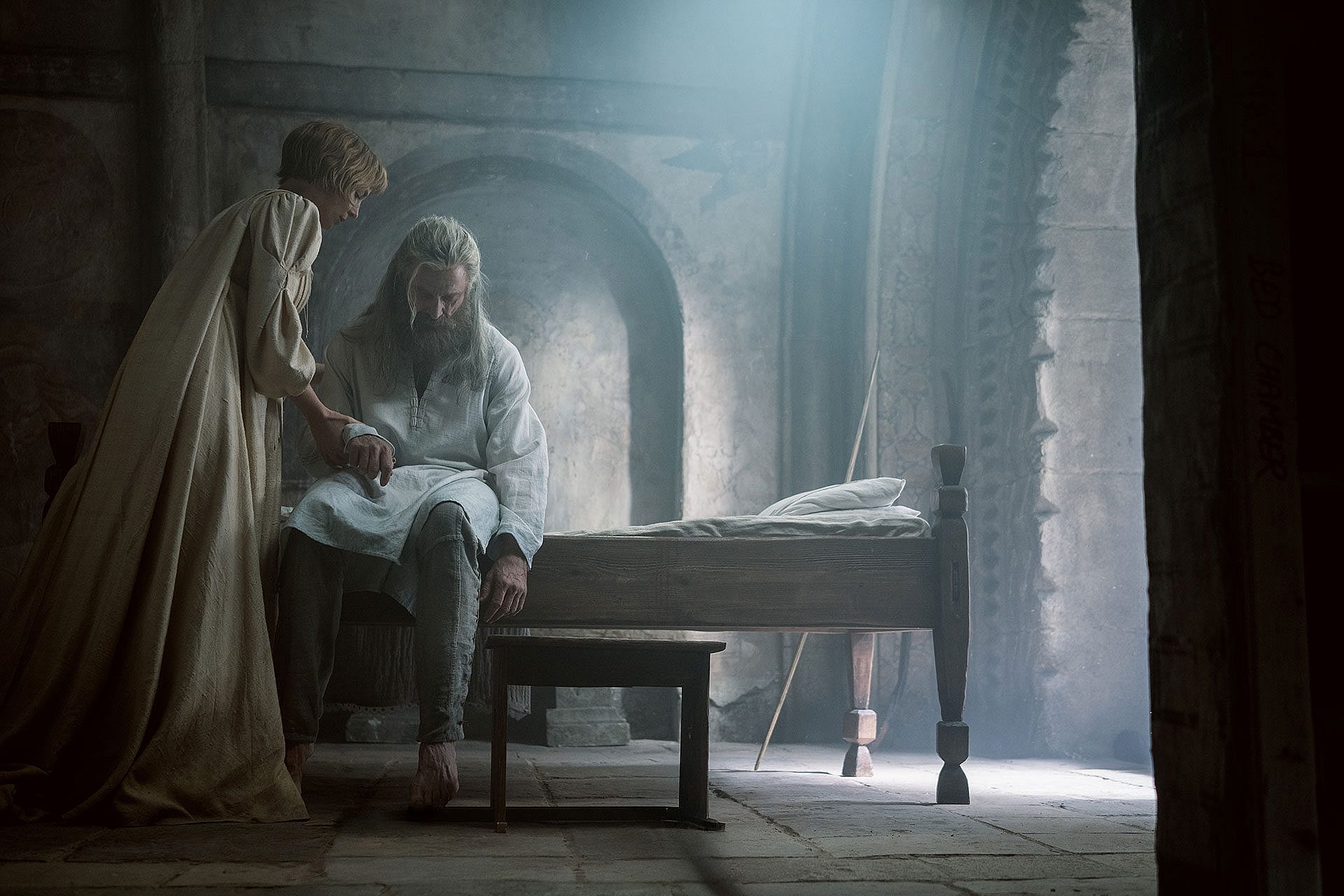
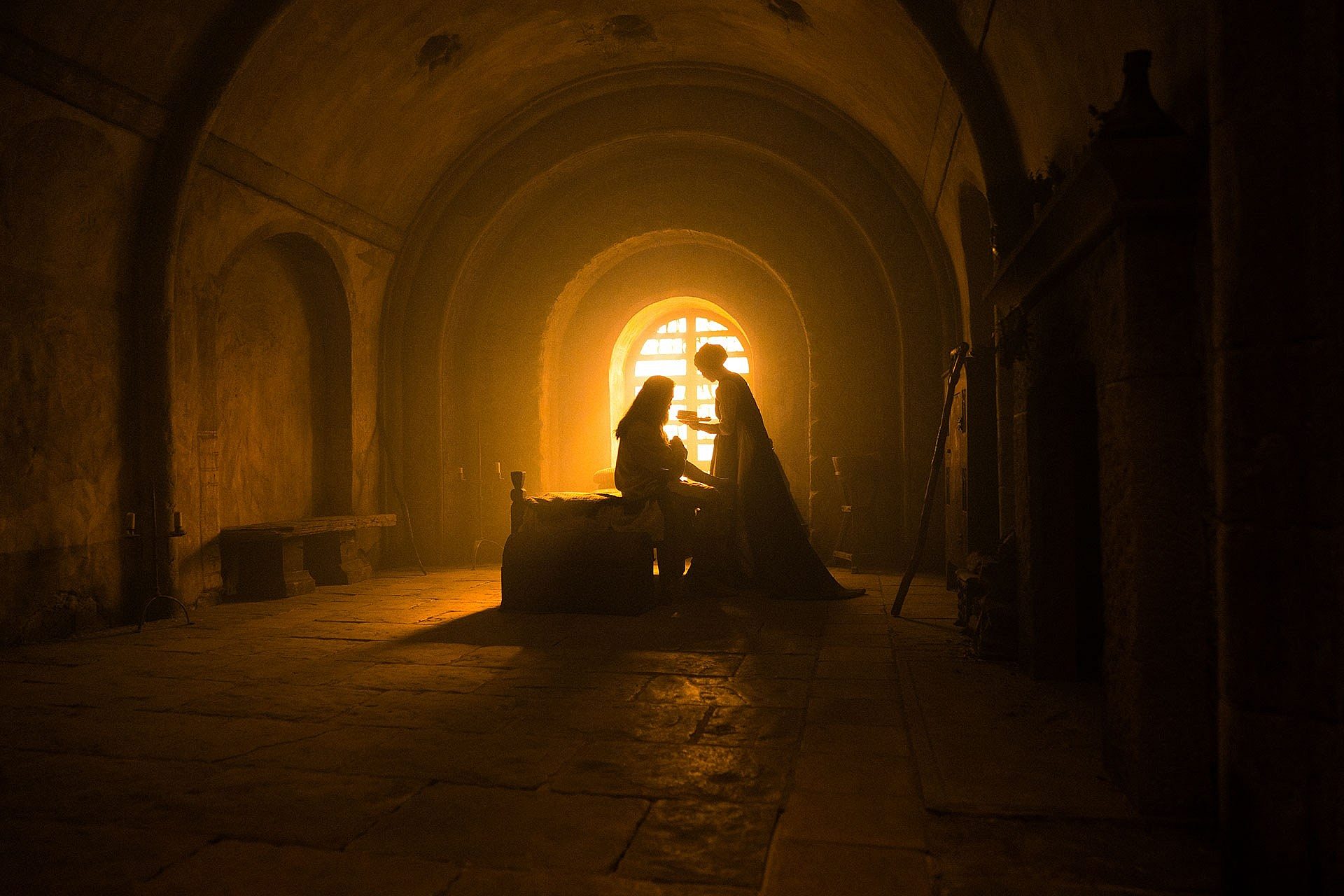
Scola says this started with the cover page of Sarnoski's script, featuring NC Wyeth's famous 1917 oil-painting The Passing of Robin Hood. "That image was an immediate pointer for the film's denouement, not just for its heart-breaking imagery, but also for the textures in the stone walls, furniture and clothing, the intimacy of the moment and the ethereal light.
"That image also started to inform the rest of the film in a way we hadn't expected, and we went down a wonderful rabbit hole of painters and painterly aesthetics."
Images courtesy of A24.
Steeping themselves in research and artistic references, Scola cites works by Vermeer, Caravaggio and Goya as being hugely inspiring. The pair also wanted to make deliberate use of changing color palettes across the story arc.
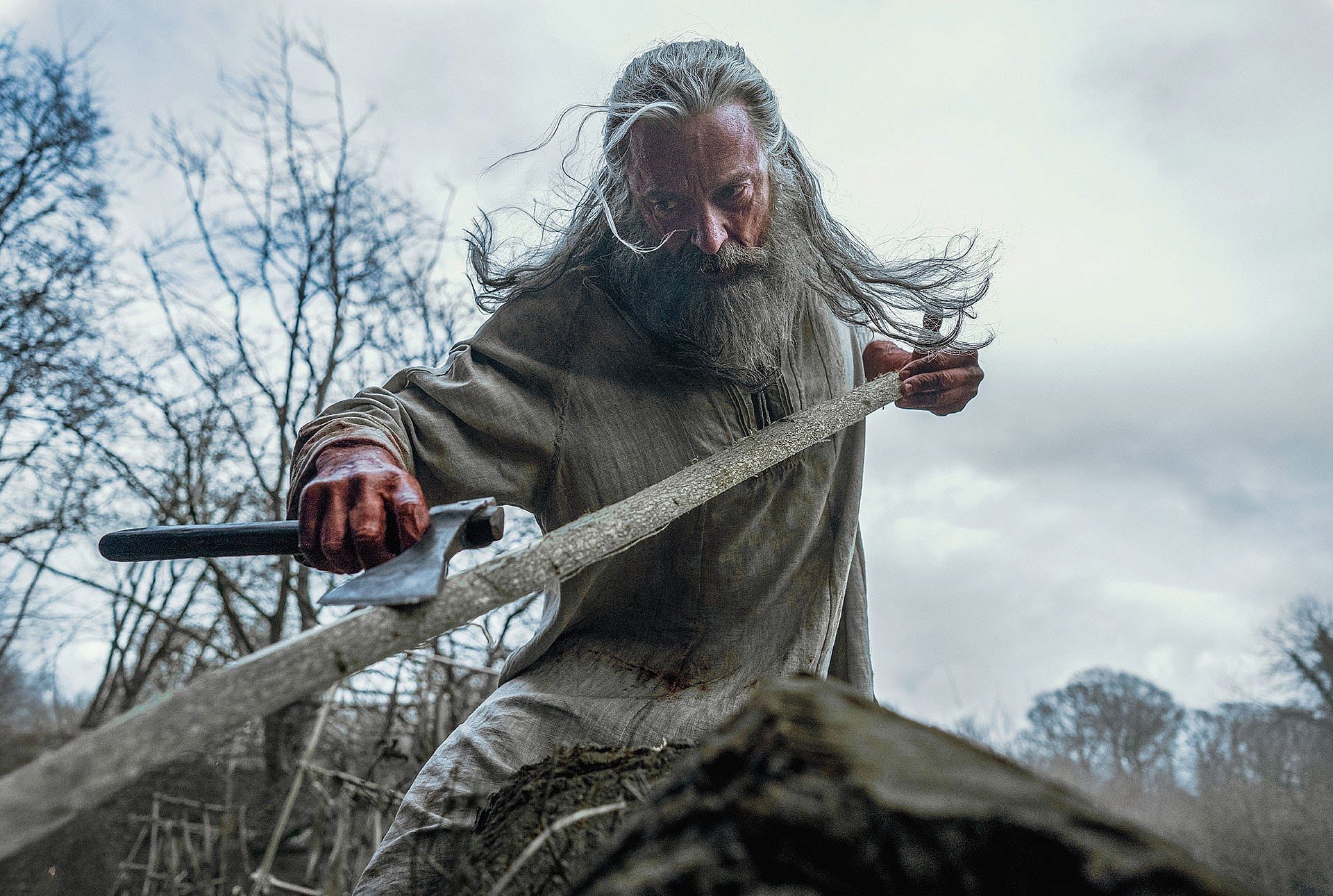
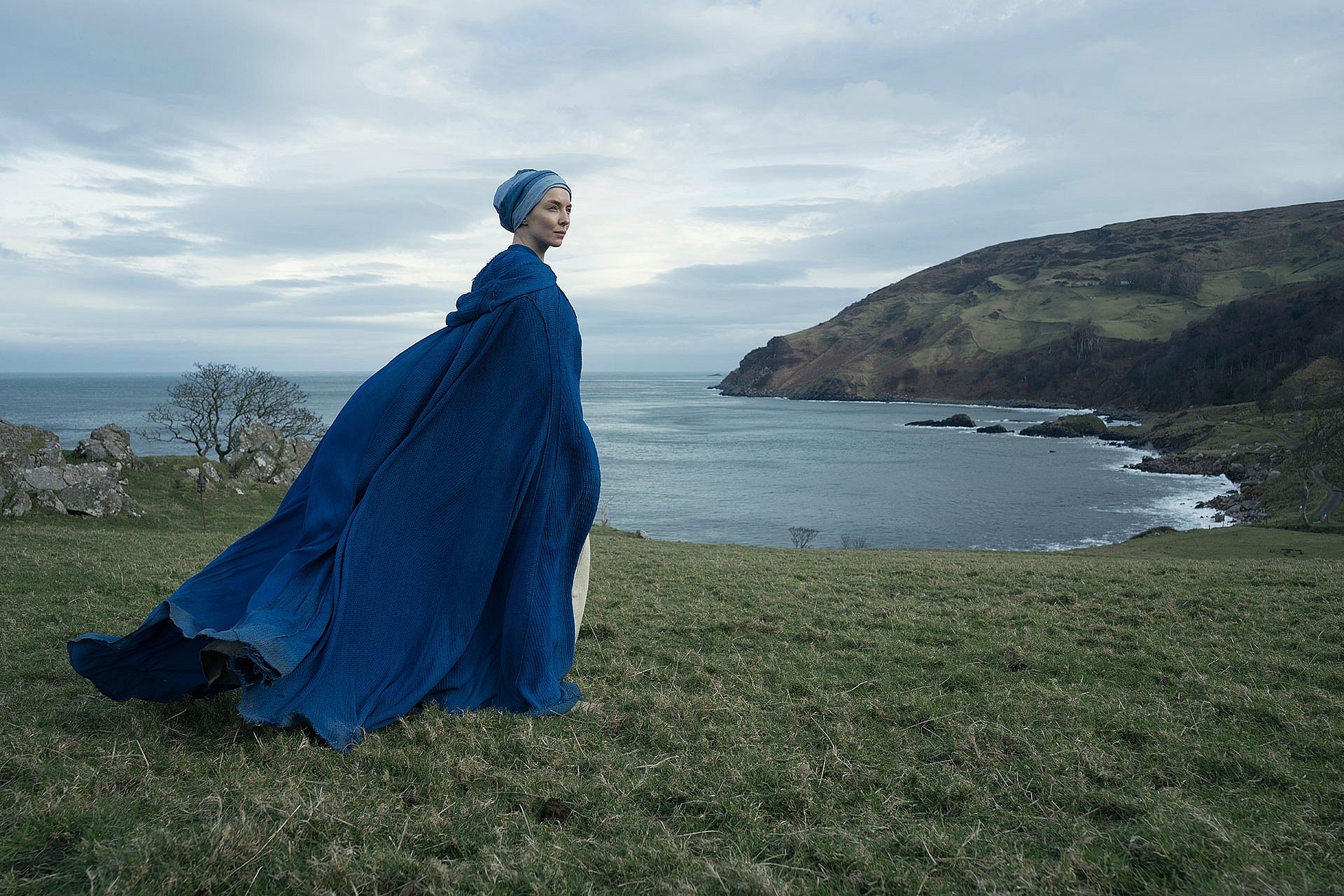
Scola explains, "The idea was that light and color would be indicative of Robin's mental and physical states. At the beginning of the film, we are plunged into the bleak, grey, tough and brutal environment of Robin's world. Once we arrive at the Priory, under Sister Brigid's auspices, color and warmth filter back into Robin's world as his life changes and he begins to heal physically. Ultimately, the color returned to a form of greyness in the story's denouement as he confronts the terrible things he's done."
Along with the changes in color, Scola says he saw the story as divided into two distinct parts – Robin the myth and Robin the man – representing different versions of the character and his personal transformation. Along with color, he felt this shift would be best reflected by changing aspect ratios.
"We decided to present our vision of Robin Hood, during the violent opening section of the movie, by shooting in widescreen Anamorphic," says Scola. "Once we get to the Priory, where intimacy and humanity prevail, and the story becomes much more of a chamber drama, we transitioned to a taller, more accessible aspect ratio, enabling us to photograph faces that would suck the audience into inner struggles of the protagonists.
Images courtesy of A24.
"Furthermore, from a technical standpoint, as so much of the second part of the film takes place inside small rooms and spaces, the height of a taller aspect ratio avoided things feeling claustrophobic or stuffy had we remained in Anamorphic."
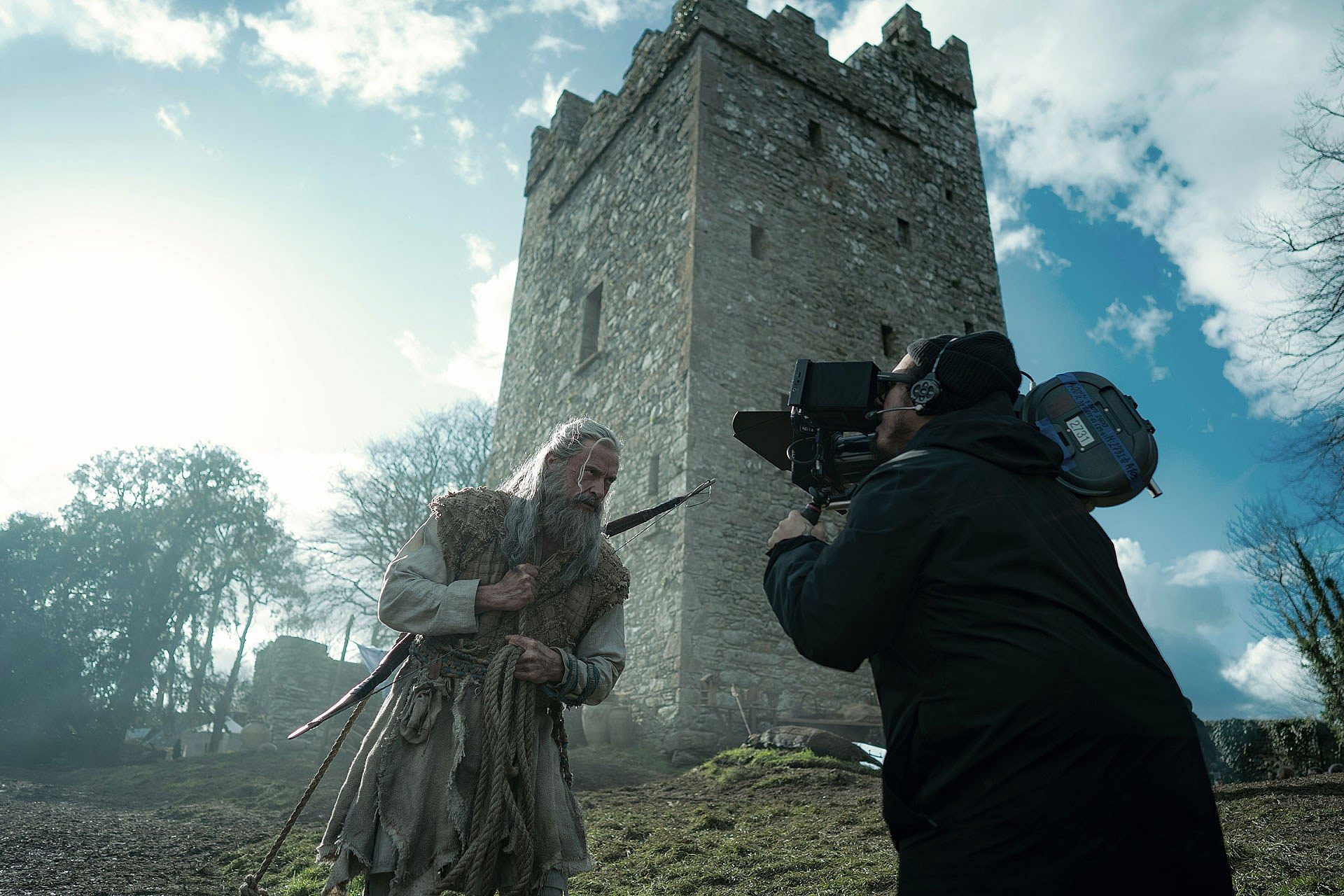
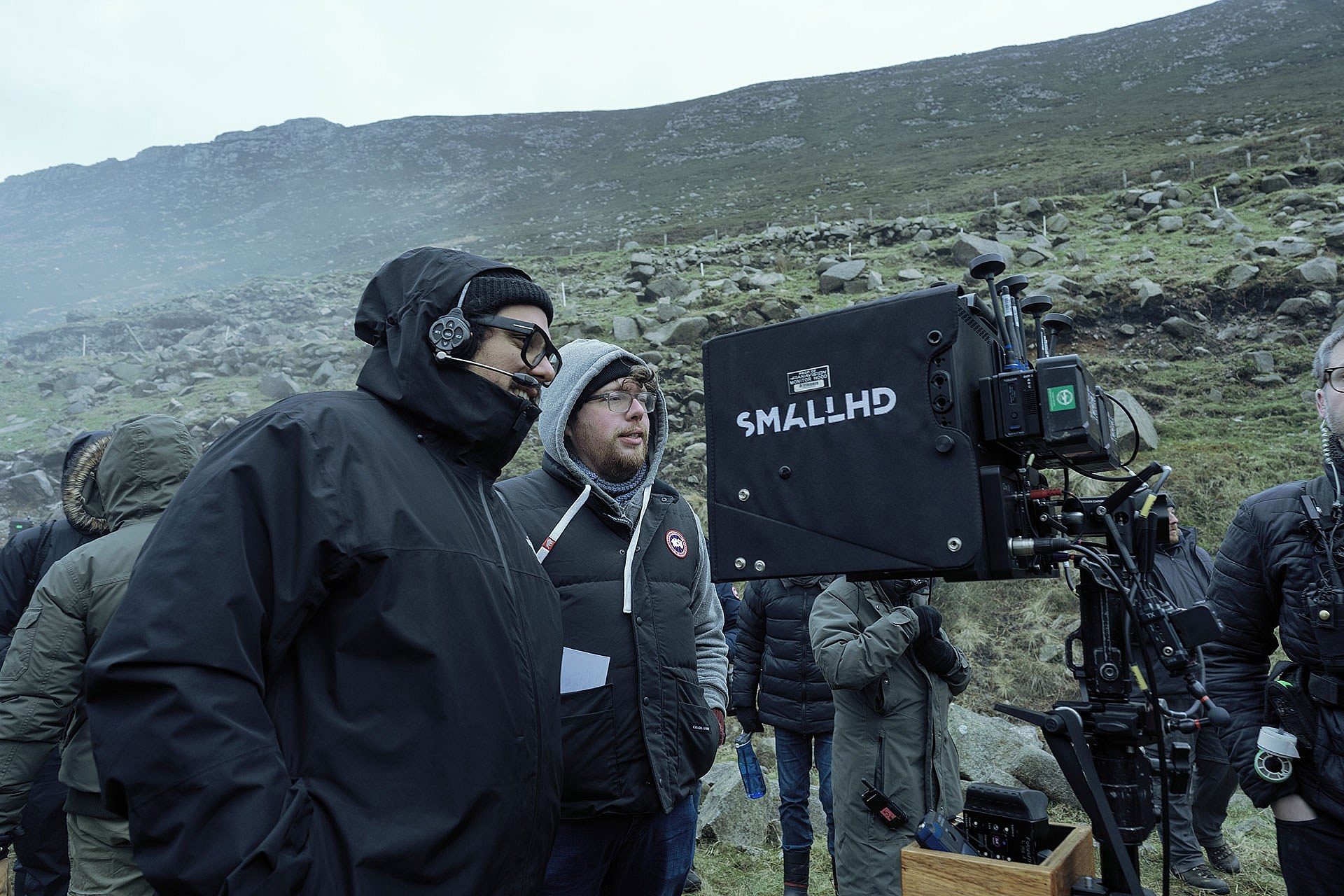
Principal photography took place over 30 shooting days during February and March 2025, at locations around Northern Ireland and Eire, some extremely remote. Scola says the weather could be unforgivingly cold, adding, "The reason this film looks so wild and real is because it actually was that way when we shot."
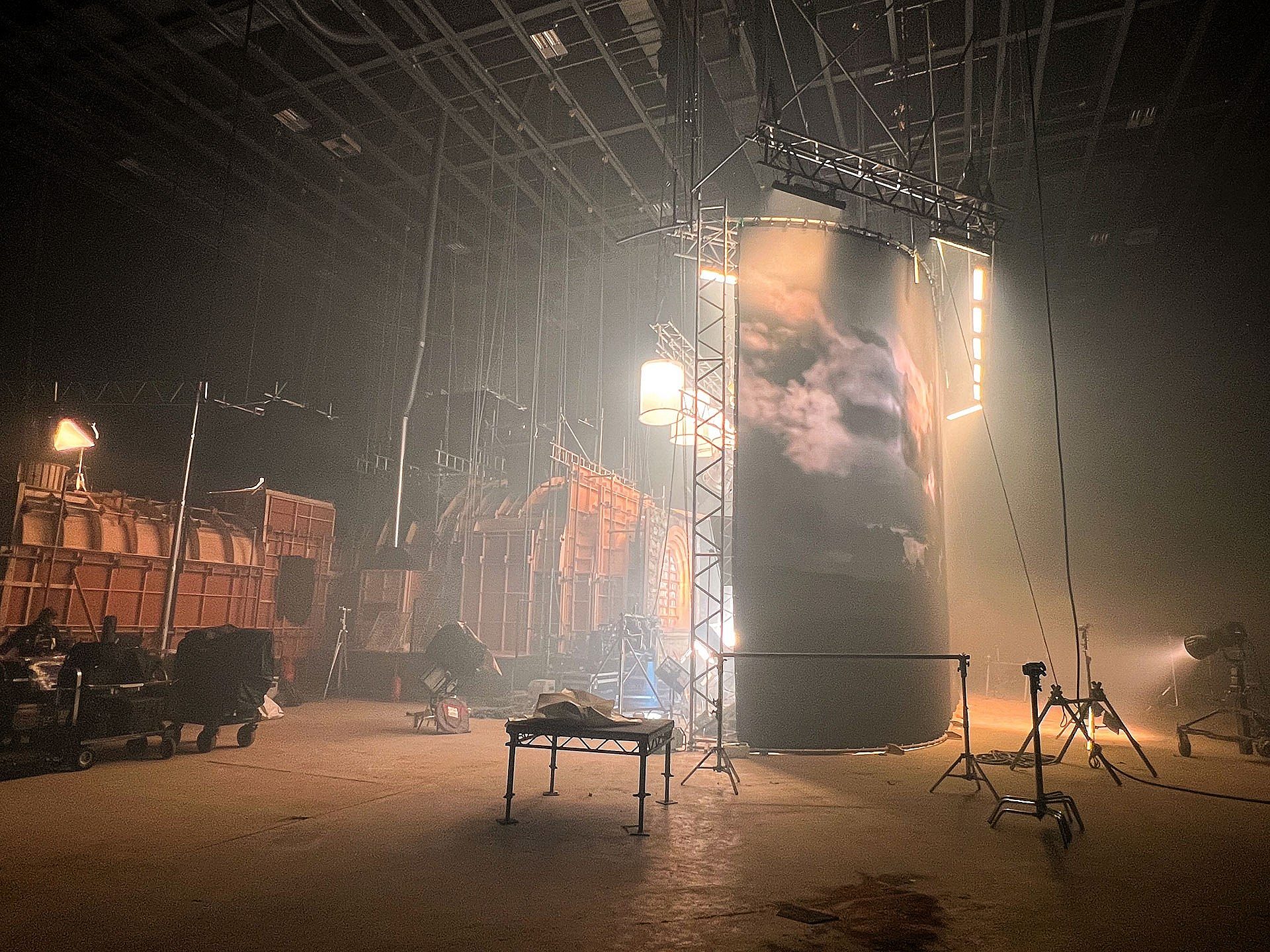
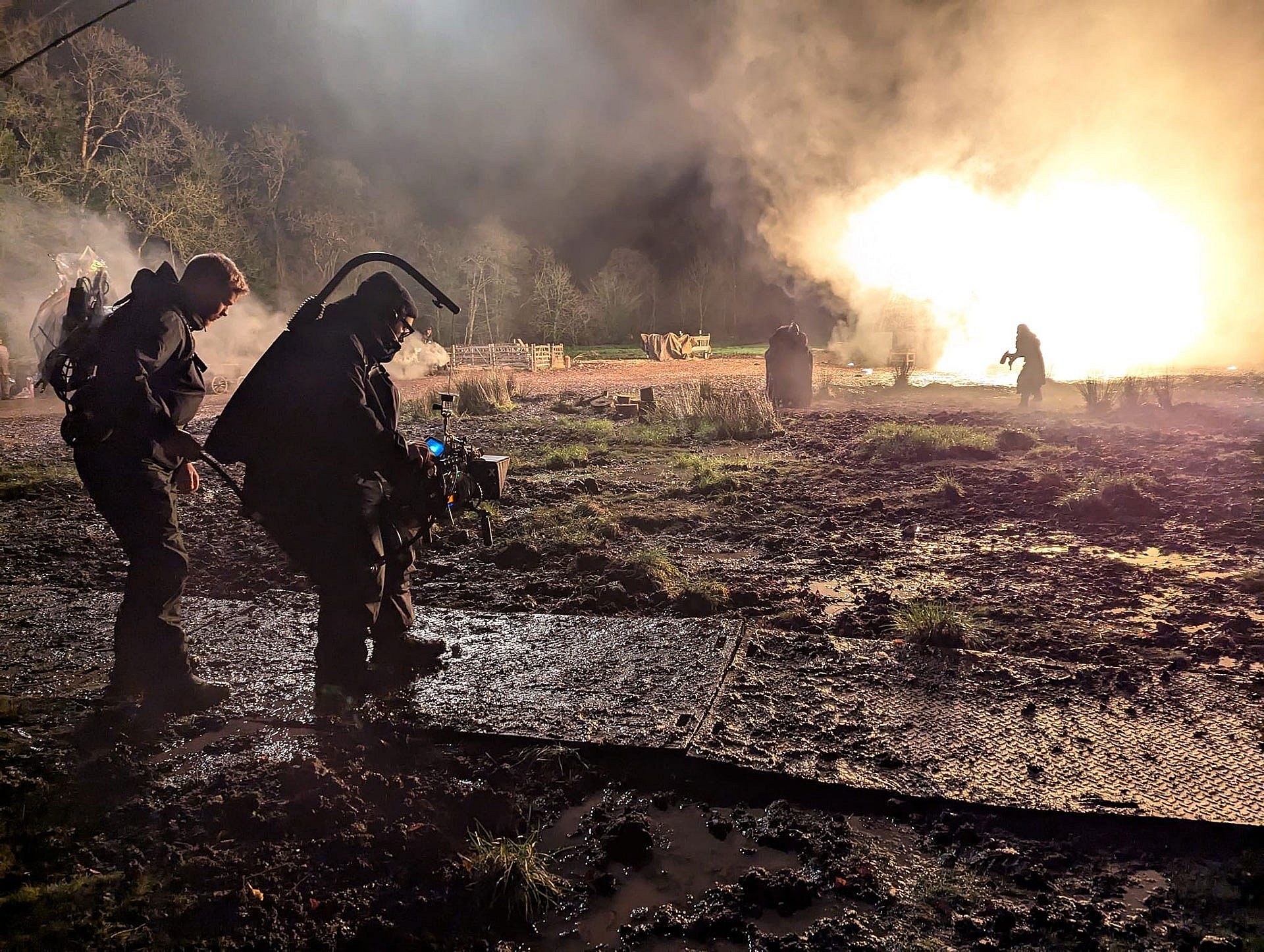
The movie's battle scenes, when buildings are engulfed by flames, were shot in a large field over two nights, using sets that were purpose-built for several burns. The Priory was an amalgamation of multiple locations. These included interiors of Shane's Castle in Northern Ireland and exteriors of Rock of Cashel, in Country Tipperary, Eire, plus set-builds at Belfast Harbour Studios of connecting hallways and Robin Hood's bedroom, which was filmed using a skyscape SoftDrop custom-made by Rosco.
Images courtesy of A24.
Scola shot the entire movie in 3-perf using ARRICAM LT 35mm cameras, framing the first part in widescreen 2.39:1 aspect ratio with Ultra Panatar II 1.3x squeeze Anamorphic lenses, before transitioning to 1.66:1 using spherical Panavision Primos, for the remainder of the film.
A small, lightweight ARRIFLEX 235 was used for travelling shots involving Steadicam and Trinity camera stabilizers. The DP also variously employed a Lensbaby Sweet 35 and a glass preserving jar, filled with water, to bring distorted and impressionistic looks to the sequence in which the injured, semi-conscious Robin Hood is transported to the Priory.
"The lenses were an interesting puzzle," Scola remarks. "The Ultra Panatar IIs were built for large-format digital cameras, but with a little help from Dan Sasaki and the team at Panavision in Woodland Hills, LA, we were able to use them on the 35mm film cameras, with the 1.3 Anamorphic squeeze in the 3-perf size. This meant we didn't have to change camera bodies when we switch to the Primos.
"For the sequence when the dazed-and-confused is taken to the Priory, I tested tilt/shift lenses, and even a lens with a liquid silicone front element, but went with the Lensbaby Sweet 35, and the results looked tremendous on 35mm film."
Images courtesy of A24.
Aerials were captured using a DJI Inspire 3 camera drone, with the digital footage later printed out to a variety of KODAK VISION3 50D, 250D and 500T 16mm/35mm film stocks, so as to add the texture of real film grain. The camera and lenses were supplied via Panavision in London. Film processing and 4K scans were done at Cinelab in London.
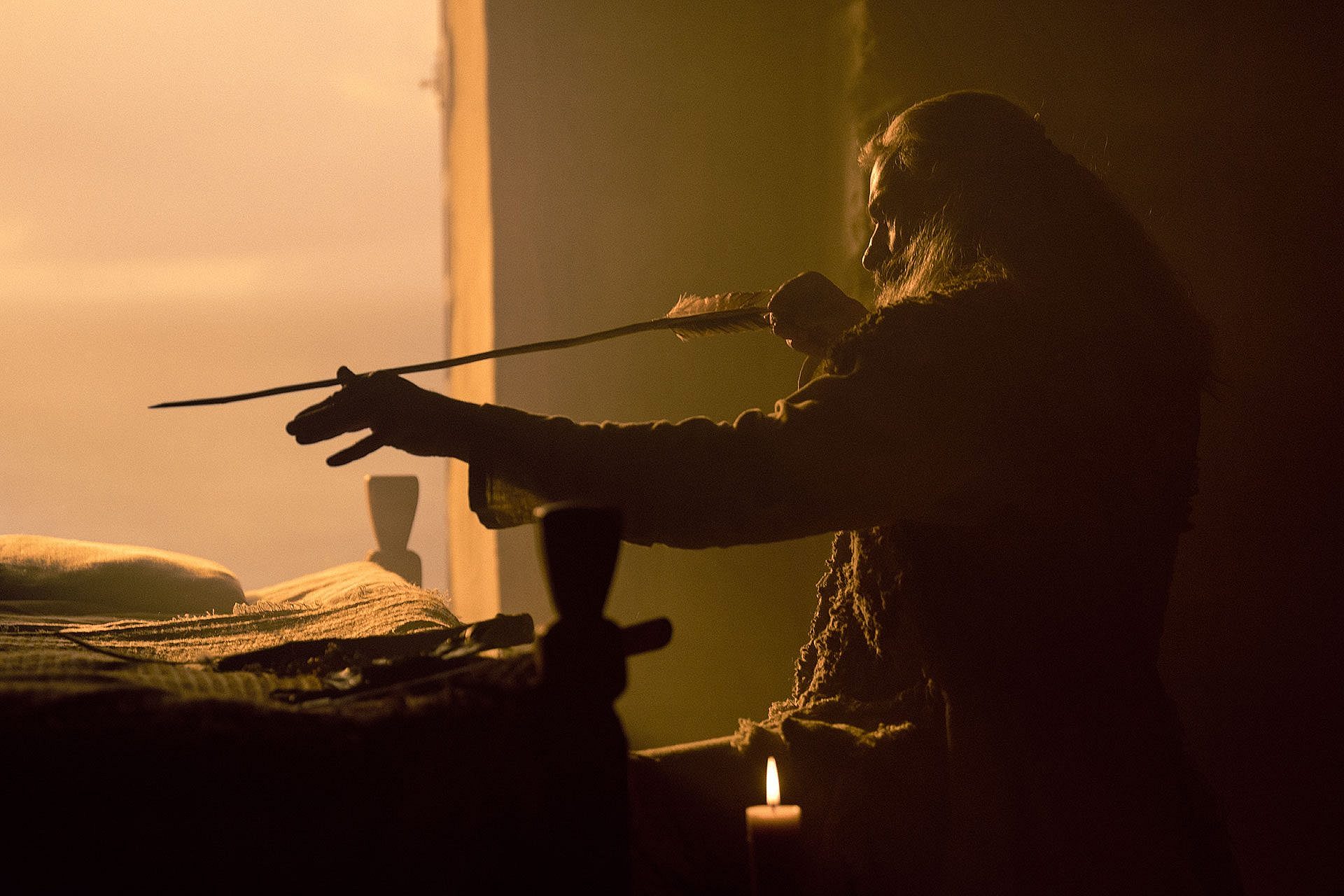
Scola selected KODAK VISION3 5219 500T for the low-light and night interior/exterior scenes using Tungsten and LED fixtures, and KODAK VISION3 5207 250D for all daytime scenes, principally illuminated using HMIs. He also selected KODAK's newest film stock, KODAK VERITA 5206 200D, for the film's denouement in Robin Hood's bed chamber.
"I had shot with KODAK VERITA a couple of times during its beta testing. It gives a peachy rosiness to skin tones that is just stunning, as well as lovely color saturation, rich blacks and bleachy roll-off in the highlights. When you see the window behind Robin in that final scene, it's kind of blown out in a lovely textural way. Using KODAK VERITA for that scene was a way to subtly affect the audience emotionally, but without them noticing it visually."
Apart from a handful of days filming with two cameras – for the fight/battle scenes and second unit – The Death of Robin Hood was a single camera production. Charlie Rizek worked as A-camera/Steadicam operator, supported by Ben Brown on focus, apart from a small number of scenarios, such as Robin building his bow and teaching Little Margaret how to skin a rabbit, when Scola operated the camera handheld.
"The camerawork was all about getting inside the soul of each scene, connecting to the performances, watching Robin and Sister Brigid and observing how they make sense of one another. So, the camera remained subtly inquisitive or still, and never needed to do anything particularly energetic or crazy."
Discussing his approach to the lighting with gaffer Seamus Lynch, Scola says, "The idea was to keep things naturalistic, and on exteriors we often shot in available light with few or no supplementary lamps.
"Interiors often involved motivating the light from firelight. There's a romance to shooting just with real fires and flames, but there are situations when you have to be careful to protect the actors and their performances, and that means finding suitable workarounds.
BTS photos by Aidan Monaghan.
"We used real flames and firelight when we could, but necessarily had to bring in electrical lighting sources. Our exterior fires were supplemented by combinations of Maxi Brutes and 12, 9 and 6-lights. For some of the close-ups we used what Seamus called 'The Dalek', a 3x3-foot plywood board crammed with 500W bulbs that could be randomly flickered and dimmed as required. At other times we ran fire videos though LED panels. In one instance, we did a Texas Switch, swapping between a real torch and an LED torch in the same take."
Regarding Robin Hood's chamber, Scola recounts, "This was my fourth film using Rosco SoftDrops, and I'm always impressed by how versatile they are. To represent the view from Robin's bed chamber, we used a drone to photograph different ocean skies and Rosco did an amazing job of putting together all those plates and printing out our SoftDrop backdrop. We lit it from different angles and in different qualities of light to give us an overcast day or a peachy sunset, and could even light it from behind for moody moonlit moments."
Summing up his experience of shooting The Death of Robin Hood, Scola says, "It was a real privilege to work in Northern Ireland with a largely local and highly talented crew. I really enjoyed shooting on film again, too. I am always a champion for this medium and will keep pushing for film with anyone who will let me shoot on it.
"This isn't a movie for everybody, and it's likely different to what you might be expecting. I wish more 'grown-up' movies were made like this, and I am proud of the visceral, visually-poetic result."
