Capturing on KODAK Mátyás Erdély HCA ASC brought a slice of Hungarian history to life for director László Nemes' stylish biopic 'Orphan/Arva'
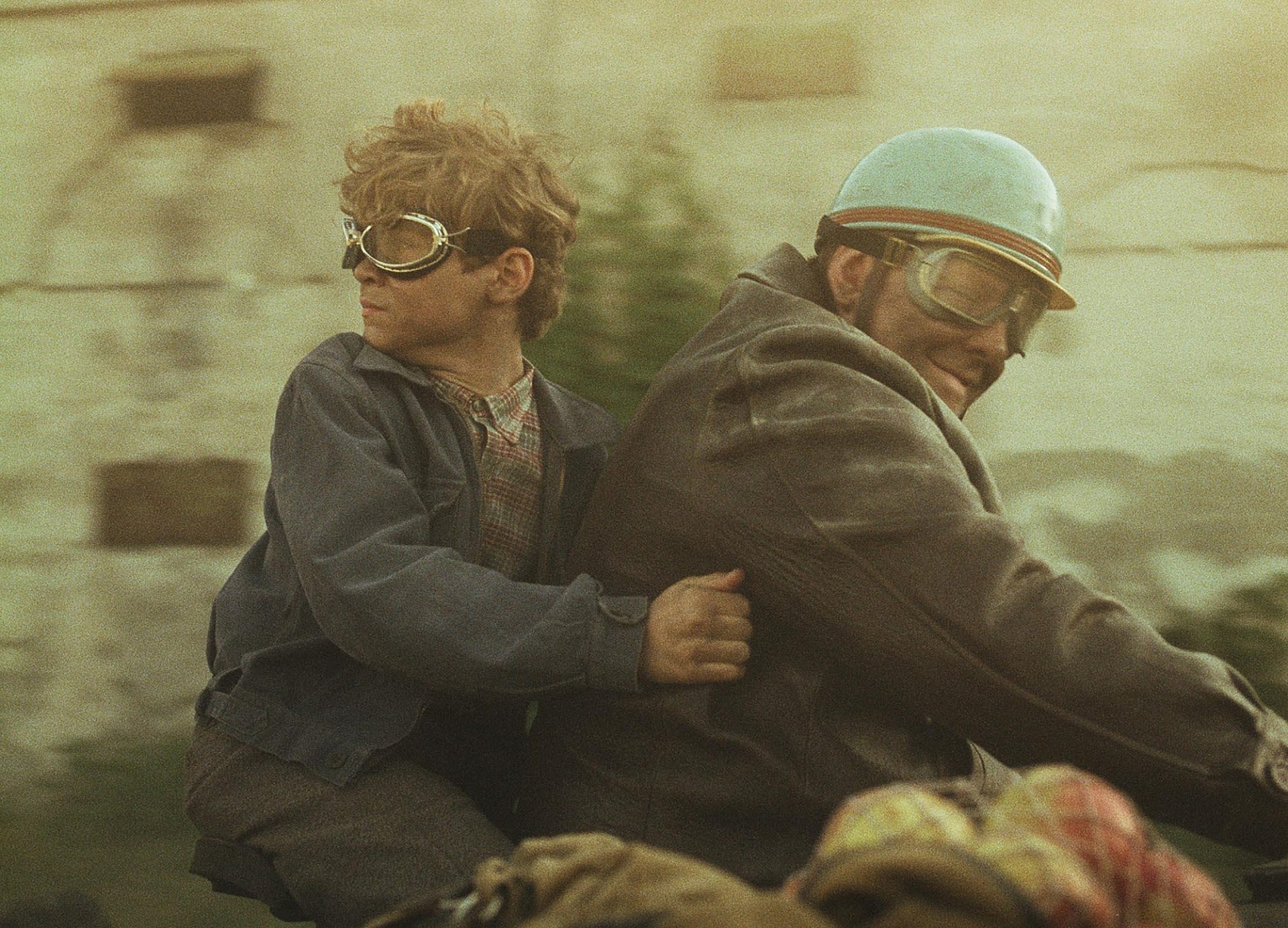
Photo courtesy of Mubi. © Pioneer Orphan Kft.
Collaborating again with László Nemes, and shooting once more on KODAK 35mm as well, cinematographer Mátyás Erdély HCA ASC depicted a painful slice of Hungarian history for the director's acclaimed feature Orphan/Arva, using a recipe involving lenses, filmstock, lighting, exposure and development, and remarks, "It's my best work so far."
Orphan is set in the aftermath of the failed Hungarian Revolution of 1956 against the Communist regime, an uprising that was brutally crushed by Soviet forces, during which thousands were killed or wounded, and nearly a quarter of a million Hungarians fled the country, ushering in a new age of authoritarianism and state-instigated paranoia.
The coming-of-age drama, co-written by Nemes and Clara Royer, is loosely based on the real-life childhood experiences of Nemes's own father, the celebrated Hungarian film and theater director András Jeles. It follows Andor, a young Jewish boy, who goes in search of his missing father, only to unveil uncomfortable truths about his mother, her survival during the Holocaust during WWII, and his father's true identity.
The film stars Bojtorján Barabas as Andor, making his feature debut at just 14 years old, Andrea Waskovics as his mother Klára, and Grégory Gadebois as Mihály Berend, a local butcher who claims to be Andor's biological father.
The feature was nominated for the Golden Lion at the 2025 Venice Film Festival, and earned praise for its exploration of generational trauma, plus Barabas' compelling performance in portraying a young boy's crisis of patrimony, amid the scars of WWII and the failed rebellion.
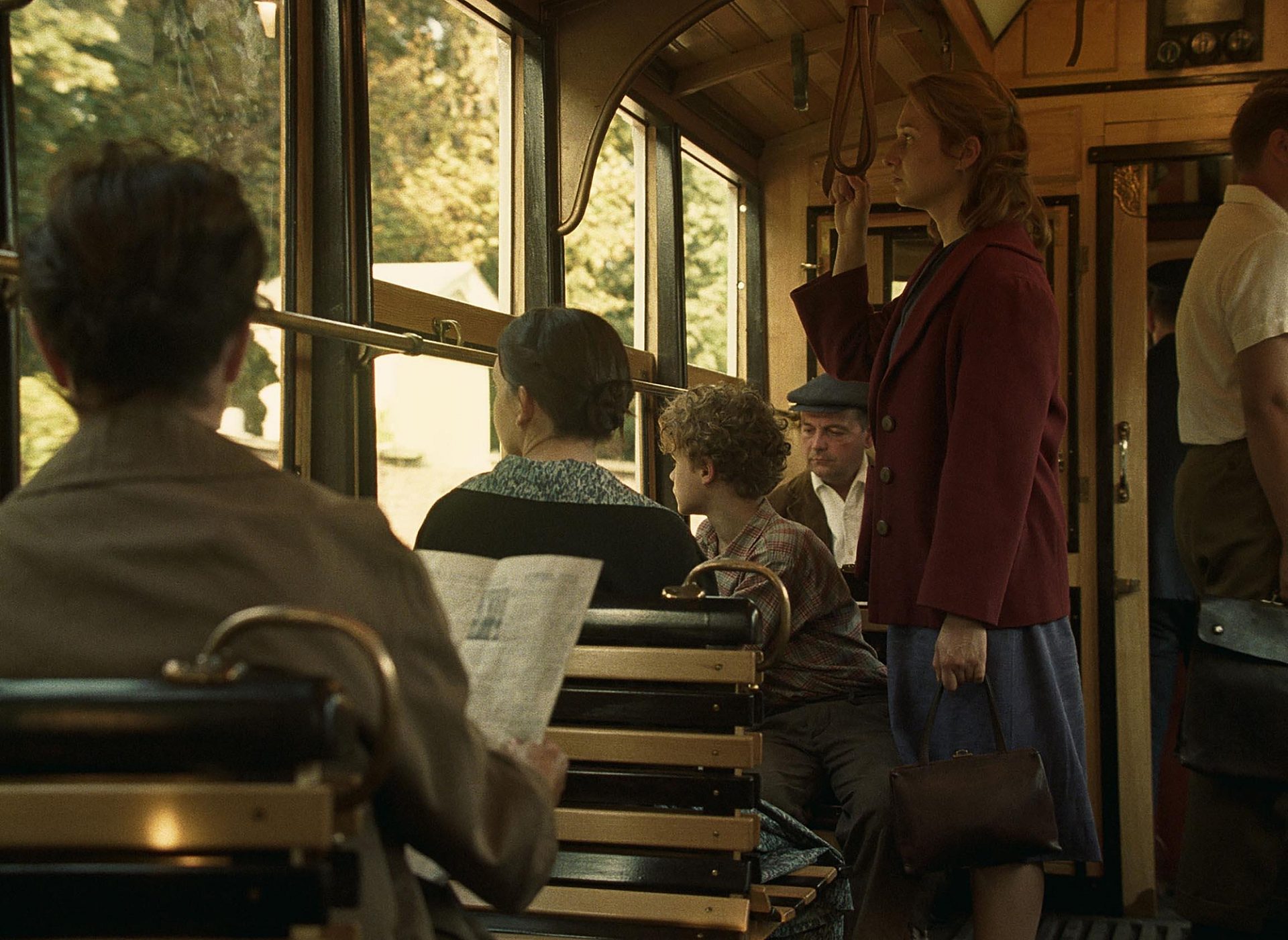
Photo courtesy of Mubi. © Pioneer Orphan Kft.
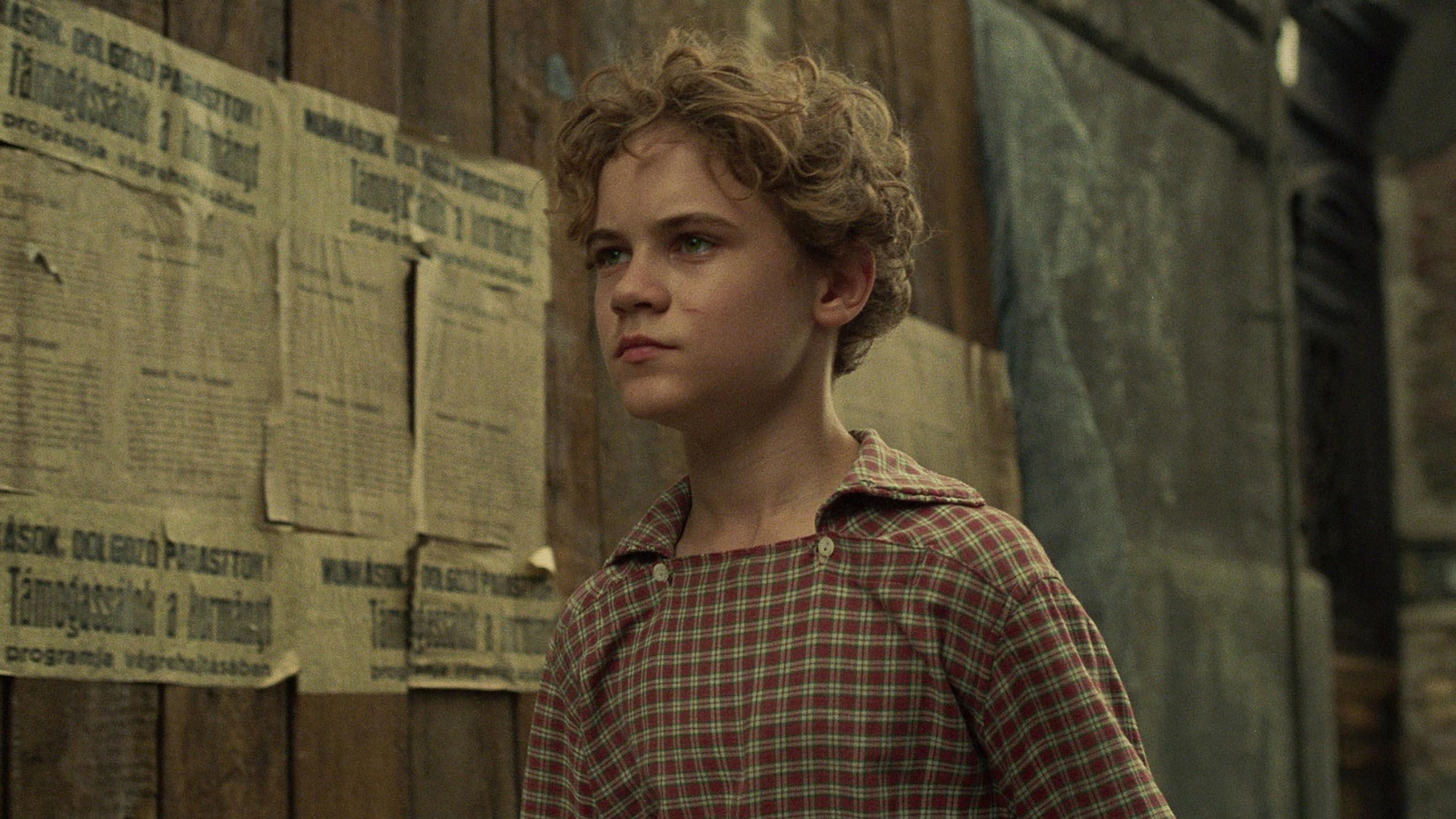
Critics also hailed it as a visual masterpiece, citing Erdély's atmospheric and exquisitely striking rendition of 1950's Budapest. The DP won the American Society of Cinematographers' Spotlight Award for his work.
The film represents Erdély's third long-form feature with Nemes, following Son of Saul (2015) and Sunset (2018), both of which were shot on KODAK 35mm film. The duo have since collaborated on Moulin (2026), a feature about a French Resistance member during the occupation of France in WWII, which was also shot on KODAK 35mm film.
"Orphan is László's father's story, and it's a very Hungarian-specific story, that's for sure," says Erdély. "The final image was the result of small and big decisions I made with László along the way as regards the compositions, lenses, lighting, filmstock, exposure and development at the lab, and I consider it to be my best work so far."
Erdély's says there was never a question about shooting Orphan on film.
"There's no better way to make movies than by shooting them on film. The results are extremely beautiful, and that gives the audience a more immersive experience. When we put digital and film images next to each other, László and I always react to the filmed pictures with a stronger emotional response. It's that simple and, as filmmakers, that's exactly what you want. You want the audience to emotionally connect to your images and to your story."
While Son of Saul and Sunset were typified by the camera being intimately tethered to the protagonist, either framing faces in tight close-ups at eye level or by tracking closely over shoulders, Erdély and Nemes chose to give the camera a wider gaze.
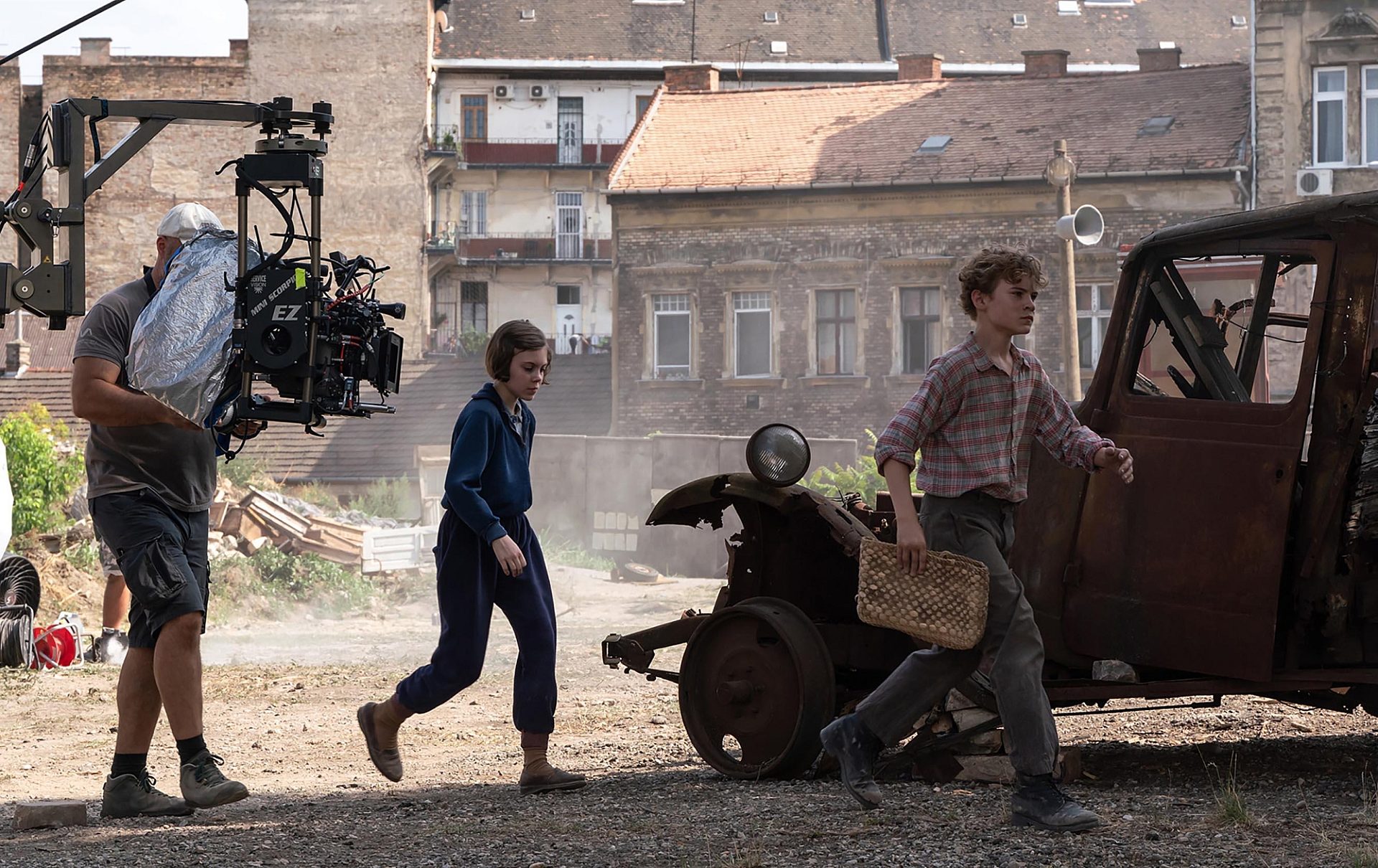
Photo courtesy of Szabolcs Barakonyi & Lenke Szilágyi.
"We started with a completely blank slate," he explains. "We didn't want to fall back on previous approaches and preferred to treat this story in its own right. From the start of our conversations László had a strong feeling about Andor being a child being in a world of grown-ups.
"This meant that the camera height and compositions would have to channel the perspective of a 12-year-old boy, but also allow for deep-focus framing, showing him curiously listening under doorways or peering through cracks in walls."
He adds, "The other important consideration that we deliberated on for months and months was how best to depict the presence of Andor's imaginary father character. After much discussion, we felt that having the camera high up and looking down at Andor would be the most appropriate way to represent this point-of-view. So that became part of the visual vocabulary too."
Unlike many filmmakers, Erdély reveals he and Nemes don't seek inspiration from direct creative references, and don't compile a look book either.
"We like to take our visual cues from the emotional moments in the script, and the research done by the art department into what the places and environments were like, along with the wardrobe and the colors of the time. Later on, we might then link our ideas for different scenes to particular photographs we remember, and during the shoot these are simply illustrative reminders about the ideas we talked about originally.
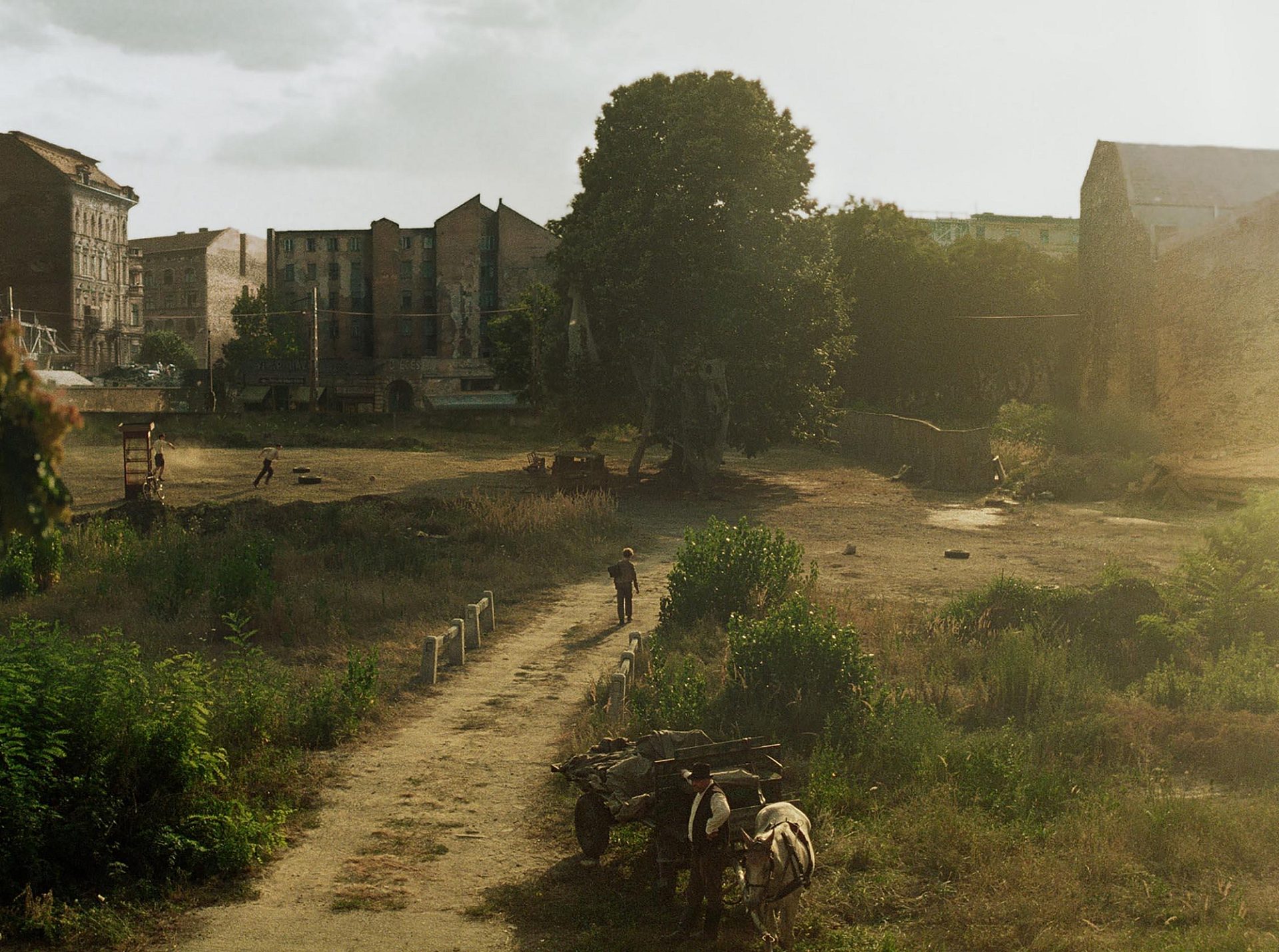
Photo courtesy of Mubi. © Pioneer Orphan Kft.
"Obviously I wasn't around in the 50s, but I had a very strong aesthetic understanding about what communism looked like in Eastern Europe anyway – the earthy brown and golden hues, the particular blue of the clothes and the red of Soviet emblems, which was all reinforced by the research work of our production and our costume designers. This wasn't like a sci-fi movie where you have to create your own world. It was more about encapsulating something we carry within ourselves from our shared memory."
The 45-day shoot took place in and around the city of Budapest, and the local countryside, during the summer of 2024. The only set builds were the interior of the apartment where Andor lives with his mother and the attic space at Mihály Berend's house, constructed on stages at the National Film Institute's studio complex in Fót.
"Our physical locations and set-builds were beautifully designed, dressed and prepared to recreate the look-and-feel of the period," Erdély recalls. "And it was amazing to work closely with VFX supervisor Glen McGuigan, who did astonishing work in making the transformation of time and place complete through seamless background replacements, set extensions and clean-ups on things like satellite dishes and air-conditioning units."
Erdély framed Orphan in 1.33:1 aspect ratio for its inherently intimate, boxed-in and nostalgic feeling. He shot using ARRICAM LT cameras and two full sets ARRI/Zeiss Ultra Prime lenses, that were separately detuned for day and night work by Christoph Hoffsten, head of the camera department at ARRI Rental Berlin. The camera and lens package was supplied through ARRI in Budapest.
"Knowing we were going to shoot on film and wanted to represent a certain mood from that period in Hungarian history, during prep László and I revisited some of the old shorts we had shot together, and came up with a combination of lenses, filmstock exposure and lab development that we liked. In combination with outstanding work from the production and the costume designers, these elements worked together to give the film its unique look-and-feel."
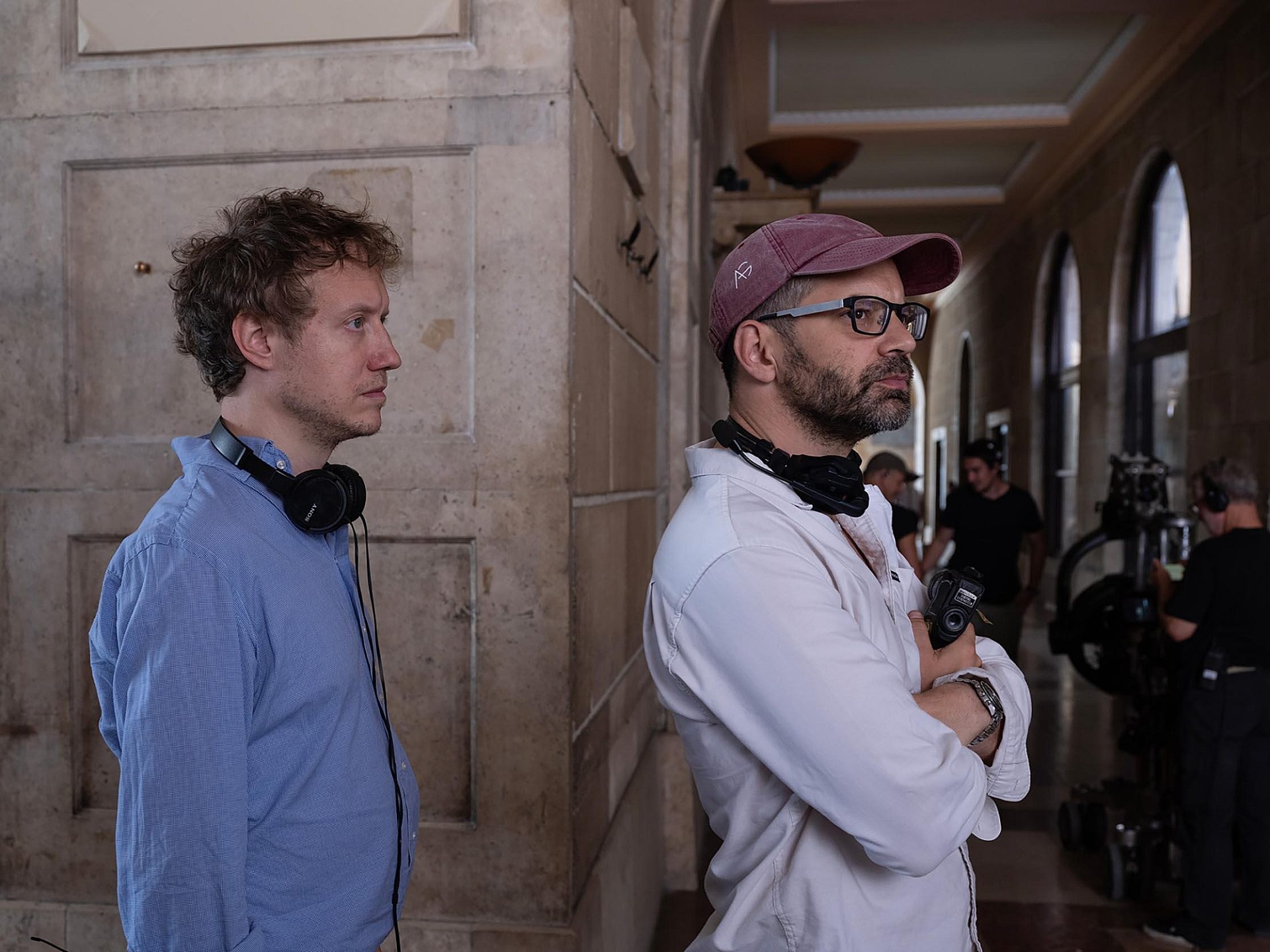
Photo courtesy of Szabolcs Barakonyi & Lenke Szilágyi.
Discussing the lenses, Erdély remarks, "Christoph is a very old friend of mine, and I started talking with him about what we wanted for this production many months in advance of the shoot. There was a lot of back-and-forth as he gradually customized the lens sets, including a 24-290mm Angénieux zoom to match, and we ended up with two amazing sets of glass – one for the day, the other for the night work – which contributed so much to the fundamental look and visual language of the film."
For the film's prologue, set in 1949 depicting the four-year-old Andor being released back to his mother from an orphanage, Erdély selected Orwo NC500 Color Cine 400ASA 35mm filmstock, but harnessed KODAK VISION3 5219 500T for the rest of the film's two-hour running time. Film negative processing, plus 35mm release prints of the final movie, were done at Magyar Filmlabor, The Hungarian Filmlab.
"The Orwo stock is pretty unstable, in the way that the perforations are not quite correct," he says. "That gives a little shake and weave to the image, which we embraced. The Orwo also has prominent, chunky grain, and the colors are generally muted, flat and desaturated, helping to give a really nostalgic, cinematic look, almost like a kind of bad dream.
"The 5219 500T is my favorite stock, and I have used it many times over the years. I love the quality of its grain, the saturation and contrast, and wanted the visual consistency of using just one stock for everything during the shoot – our interior/exterior day/night scenes. The 500T is incredibly flexible. When I'm shooting super-bright day exteriors, I just ND it down, but still have the same grain structure contrast and saturation as I would with a normal exposure. The same too with dark and low-light situations. I really like that."
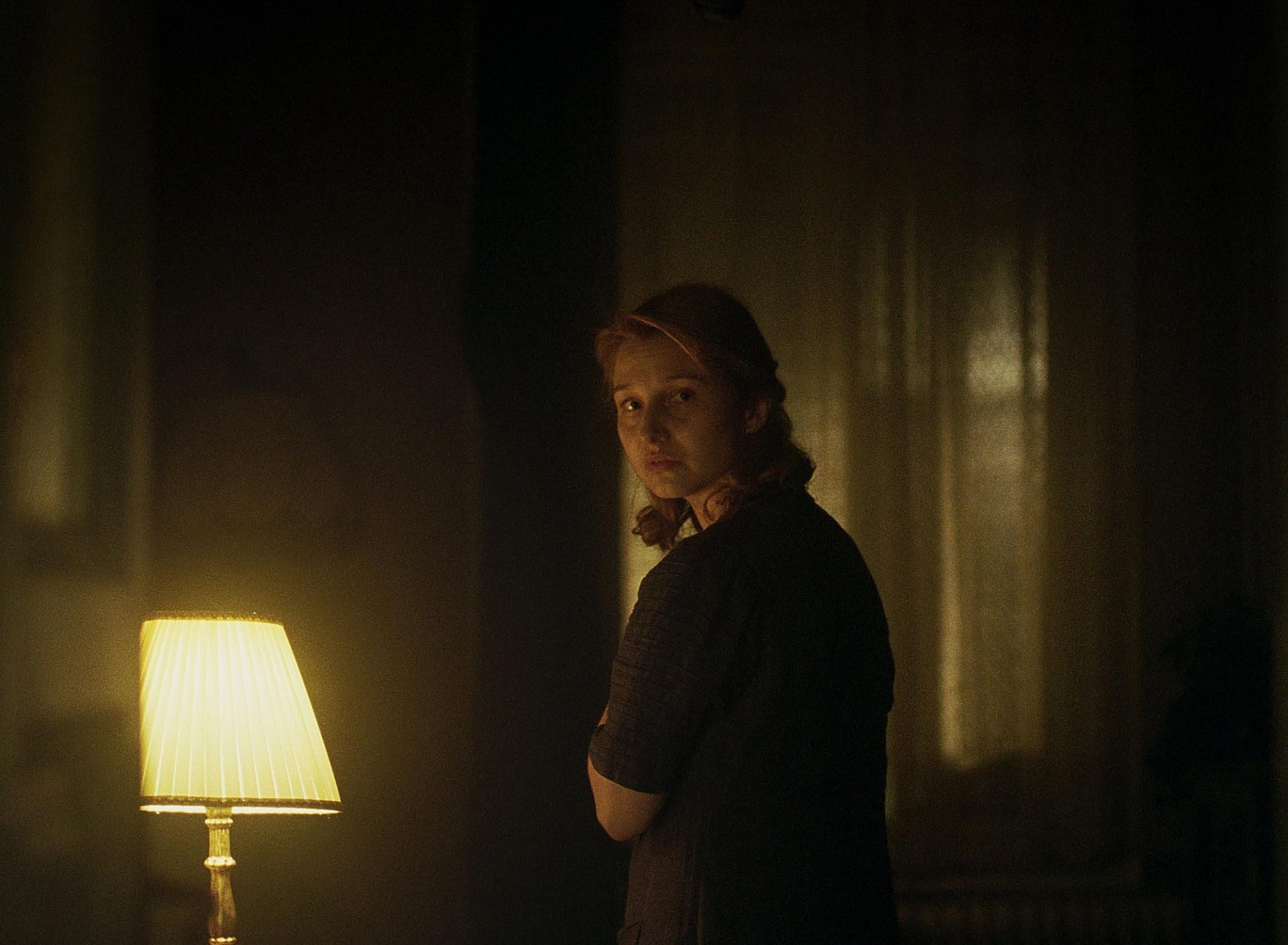
Photo courtesy of Mubi. © Pioneer Orphan Kft.
Erdély could have brought push/pull processing into the visual equation but preferred to put the exposed negative through a bleach bypass process at the lab, thereby retaining the metallic silver in the film emulsion alongside the color dyes. This had the effect of delivering deeper shadows, richer blacks and muted, more pastel-like colors. After the final DI color grade was completed, the filmed-out 35mm negative was printed to bleach-bypass positive stock to make the 35mm release prints.
"I love working with Magyar Filmlabor as they are always willing and able to undertake special processing methods. Although we had to do some testing to make sure the 4K DCP and 35mm film release prints matched, the results of both looked great, because of the additional silver in the image."
Erdély operated the camera, during what was largely a single-camera shoot, supported by Gergely Csepregi as 1st AC/focus puller. Ferenc Krámli led the grip team and operated the crane, while gaffers József Simon and Szabolcs Galgóczi collaborated with Erdély on the lighting.
"I loved the effect of shooting in 1.33:1 with regards to the portraiture of faces. We could also see the ceilings, which gave a feeling of being enclosed and oppression," Erdély notes. "This was a time of paranoia, when people regularly reported one another to the secret police, and mothers didn't talk openly in front of their own children. To reinforce the idea of suspicion and claustrophobia, we purposefully framed through doorways, along tight alleyways and even keyholes. We used dolly and track to follow the characters, with little push-ins, along with telescopic cranes and Matrix head, from Special Grip Hungary, for the high-angle work."
Discussing his approach to the lighting, he says, "I tend to lean towards old-school lighting units, as I prefer the way they look. Most of the night work was Tungsten-based, and I relied on HMIs for the daywork, with bounced-light through windows and practicals on the interiors. There were some occasions where LEDs were really useful, but I try to stay away from using softboxes containing Sky Panels, as that approach looks boring to my eyes.
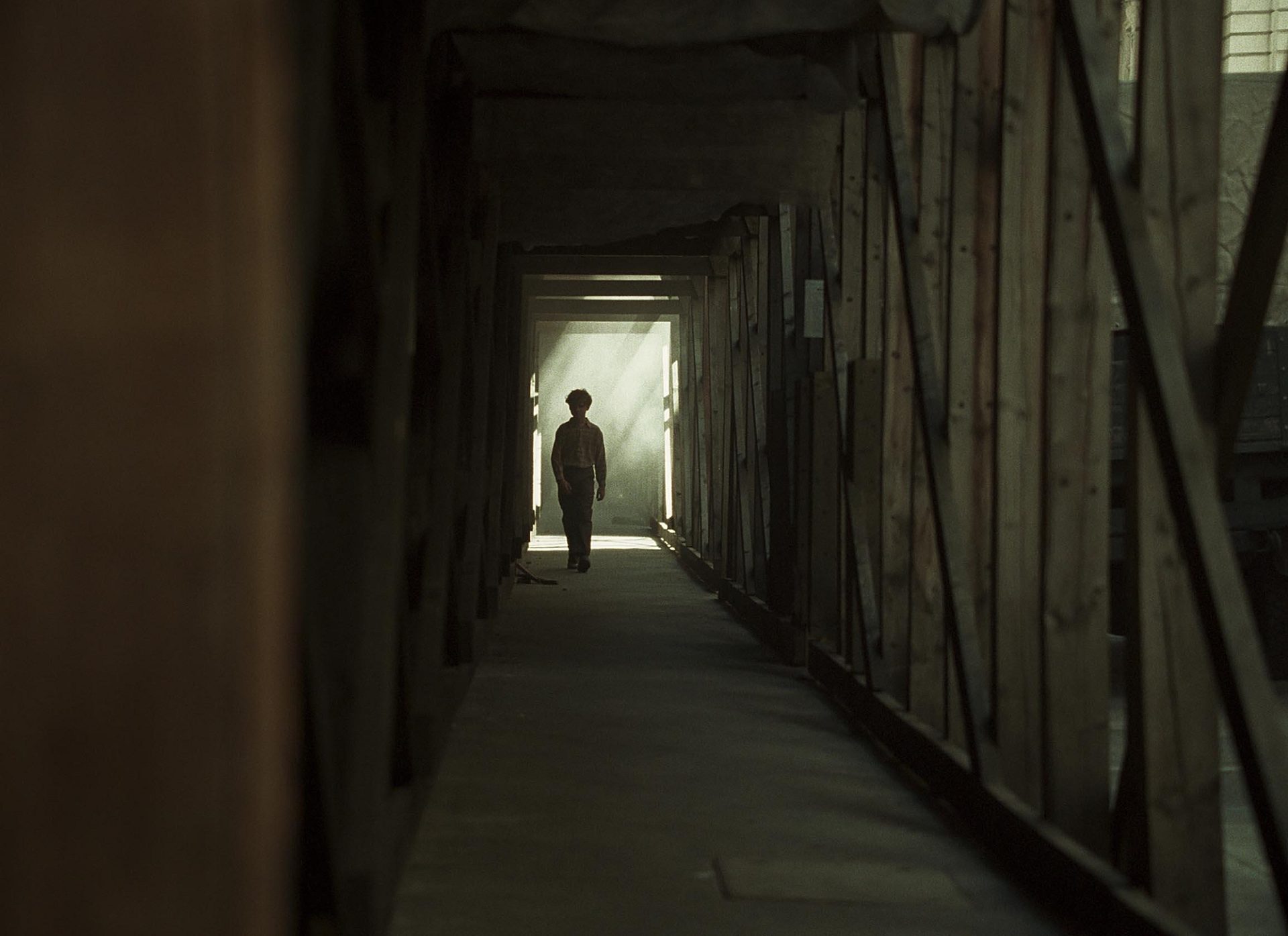
Photo courtesy of Mubi. © Pioneer Orphan Kft.
"My gaffers did a great job, and I am proud of how well the interior scenes of Andor's apartment, which were shot on stage, matched with the exteriors, which we shot on location. There are several sequences in the film where the action cuts back-and-forth between interiors and exteriors, and the results looked natural and organic. I also like the strong mood we created for the big scene at the funfair, and the symbolic imagery in the final shot that comments on the all-consuming nature of communism at that moment in history."
With his work on Orphan, Erdély has cemented a reputation for immersing audiences directly into intense historical and political struggles, through a combination of meticulous technique and collaborative effort.
"I really enjoyed everything about shooting this film on film, and visualising an incredible period in Hungary's past," but also confesses, "I was truly shocked to receive the ASC Spotlight Award. I also felt truly humbled, when two colleagues, both cinematographers who had experienced that time as kids, contacted me separately to say how the film brought back that era. Those are wonderful compliments to me – as well as to László and the other people in cast and crew – that I will cherish forever."