Shooting on Kodak 35mm, DP Janusz Kamiński captures Steven Spielberg's sci-fi 'Disclosure Day' as a conspiracy thriller
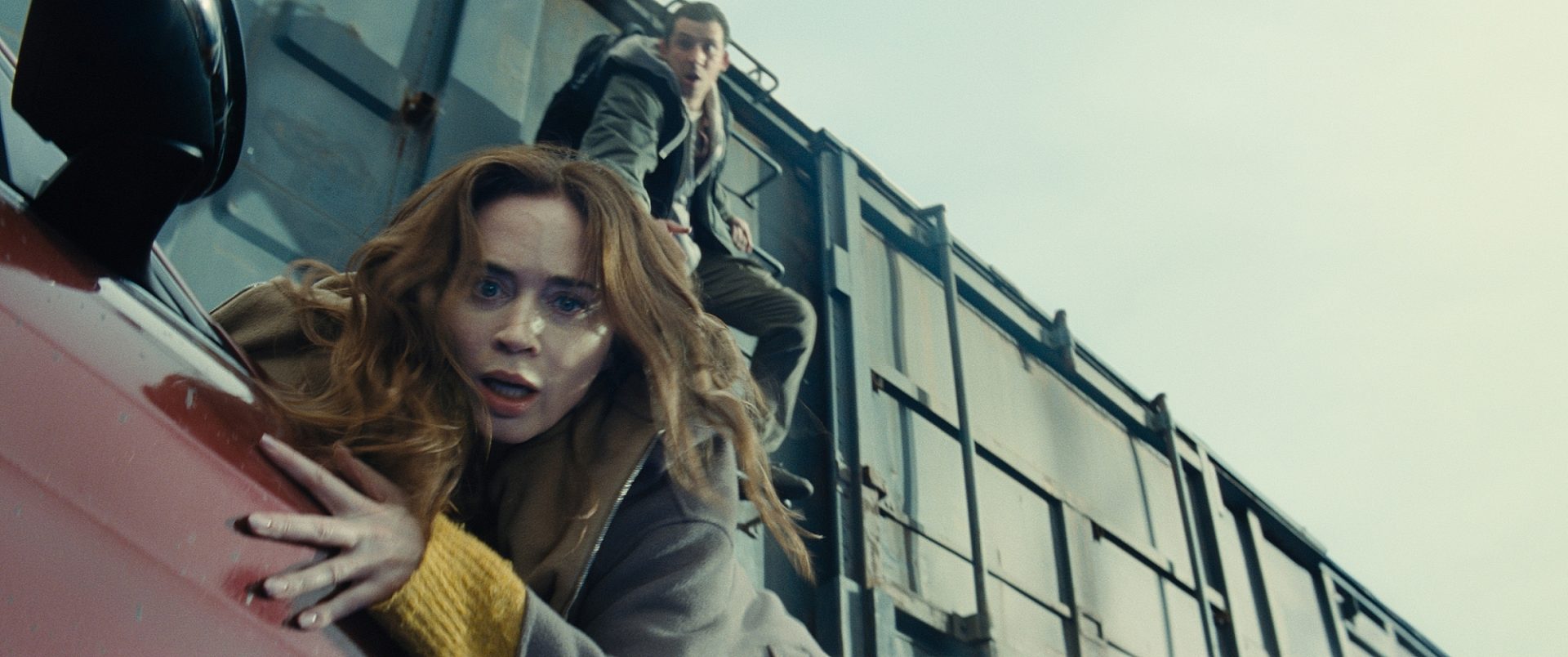
L-R: Emily Blunt and Josh O'Connor are on the run in Steven Spielberg's sci-fi thriller DISCLOSURE DAY. Photo courtesy of Universal Studios.
Steven Spielberg looks to the skies once again with Disclosure Day, reassuring us that UFOs and aliens are real and non-threatening, and that humanity is ready to embrace that we are not alone in the universe.
Inspired by The New York Times revelation that the Department of Defense funded a secret military intelligence program to investigate UFOs (now called UAPs or Unidentified Anomalous Phenomena), the legendary filmmaker conjured his sci-fi adventure as a conspiracy thriller. Given the U.S. government's recent eye-opening releases of declassified UAP files, Disclosure Day couldn't be timelier.
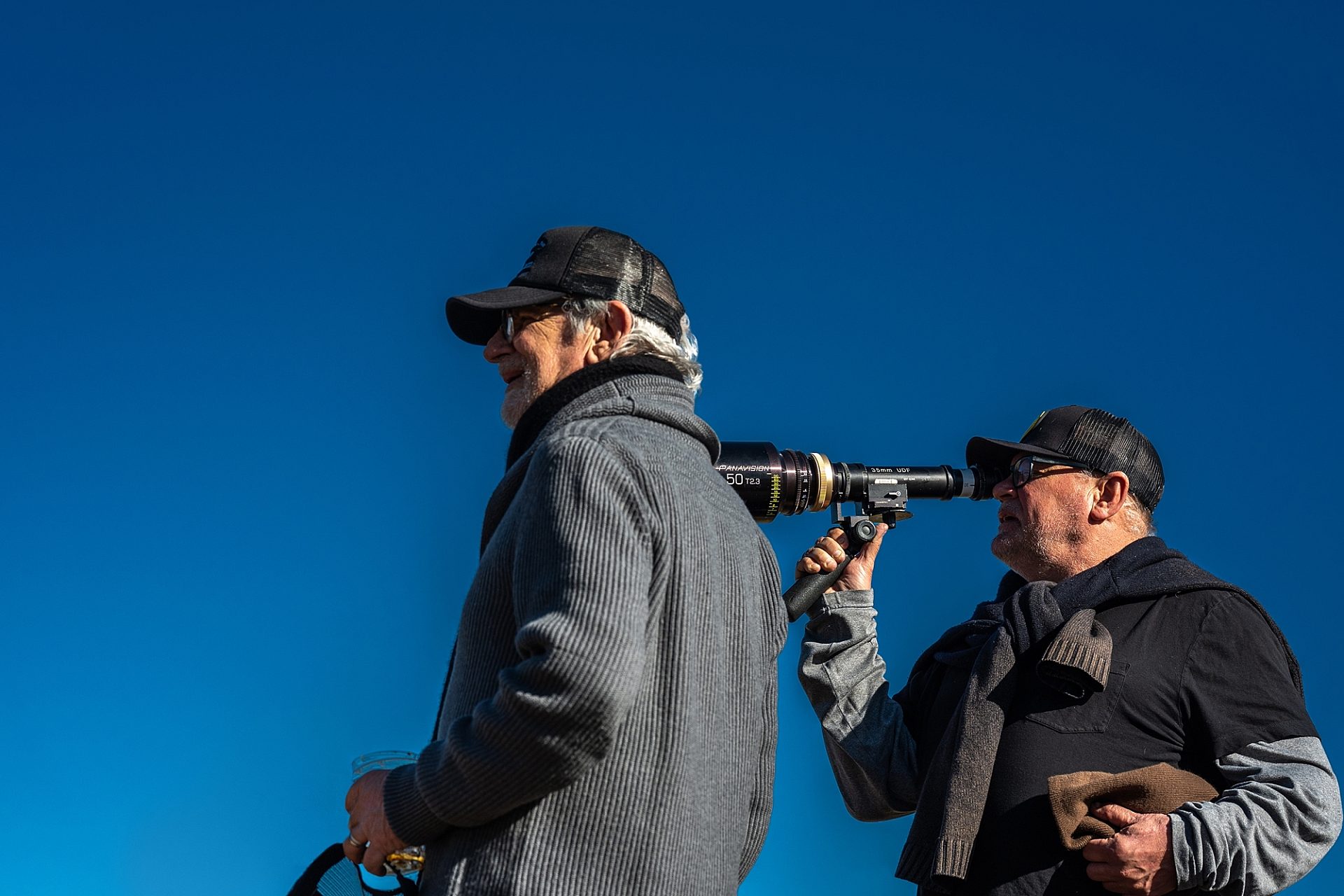
Director Steven Spielberg and cinematographer Janusz Kaminski on the set of the sci-fi thriller DISCLOSURE DAY. Photo courtesy of Universal Studios.
In fact, the movie serves as a spiritual sequel to Close Encounters of the Third Kind, with TV meteorologist Margaret (Emily Blunt) and cyber-security whistleblower Daniel (Josh O'Connor) in a high-stakes race against time to broadcast the secret archival files he stole from the shadowy Wardex organization that proves the existence of UAPs and aliens. What's more, they share a mysterious connection that imbues them with the superpower of empathy.
Disclosure Day marks the 21st collaboration between Spielberg and cinematographer Janusz Kamiński (the Oscar-winning Schindler's List and Saving Private Ryan), and they found a nuanced lighting approach together, shooting two-thirds of the movie on KODAK 35mm film and one-third digitally. (The Universal film screens June 12, including a limited run in 70mm.)
They shot in New York and New Jersey and at Steiner Studios in Brooklyn. For shooting on film, Kamiński used his go-to Panavision Panaflex Millennium XL and Arri 235 cameras, with Panavision T Series anamorphic and Panavision Primo spherical as his primary lenses. He also used his favorite 35mm stocks: KODAK VISION3 500T 5219 for low-lighting, KODAK VISION3 200T 5213 tungsten-balanced for daytime or controlled interiors, KODAK VISION3 250D 5207 for daylight-balanced, and KODAK VISION3 50D 5203 for bright sunlight.
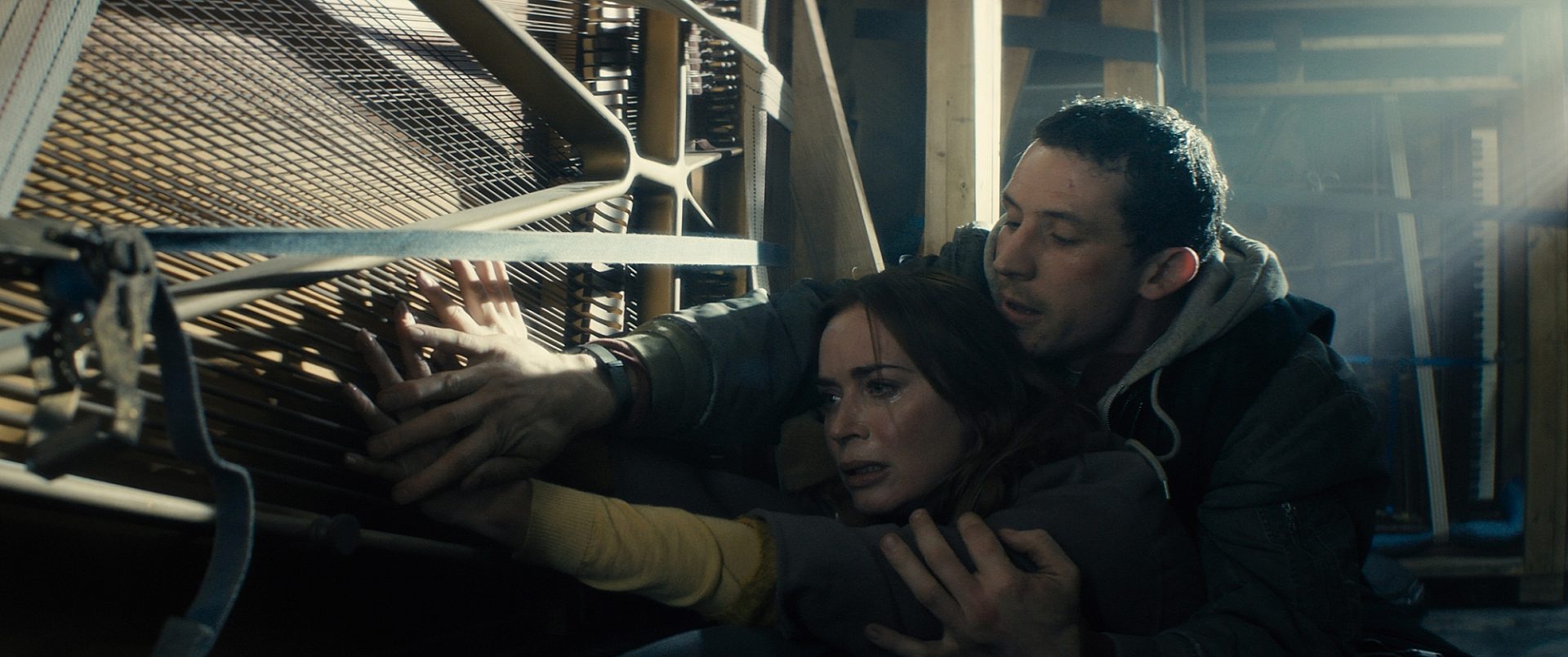
Emily Blunt and Josh O'Connor are on the run in Steven Spielberg's sci-fi thriller DISCLOSURE DAY. Photo courtesy of Universal Studios.
They shot 2.39:1 and moved deliberately from the grounded realism of '70s-era conspiracy thrillers (Three Days of the Condor) in early scenes to the "classic Spielberg-Kamiński style" of heightened realism later on. In addition, there are the dream-like flashbacks in Margaret's childhood bedroom, shot with exquisite nighttime and interior lighting. Another standout is the historical Wardex archival footage, beginning with the 1947 Roswell spaceship crash. These were shot and processed to look accurate to the '40s, '50s, '60s, and '70s.
Kamiński especially liked the opportunity to explore different lighting styles to help convey powerful emotions. The best example early on occurs at a farmhouse when Daniel reveals some of the shocking archival footage for the first time to his girlfriend Jane (Eve Hewson) on his laptop. They are huddled closely together, with sunlight streaming in from the window behind them, while the light from his laptop shines below.
"The color is also interesting," Kamiński says. "We put a little green curtain on the window to shield the daylight. By reducing the amount of light, the computer was more visible for them. Everyone's got a greenish/blueish tone, which was a little unusual because it's not very flattering. But it was about that level of information and how impactful it is to Jane.
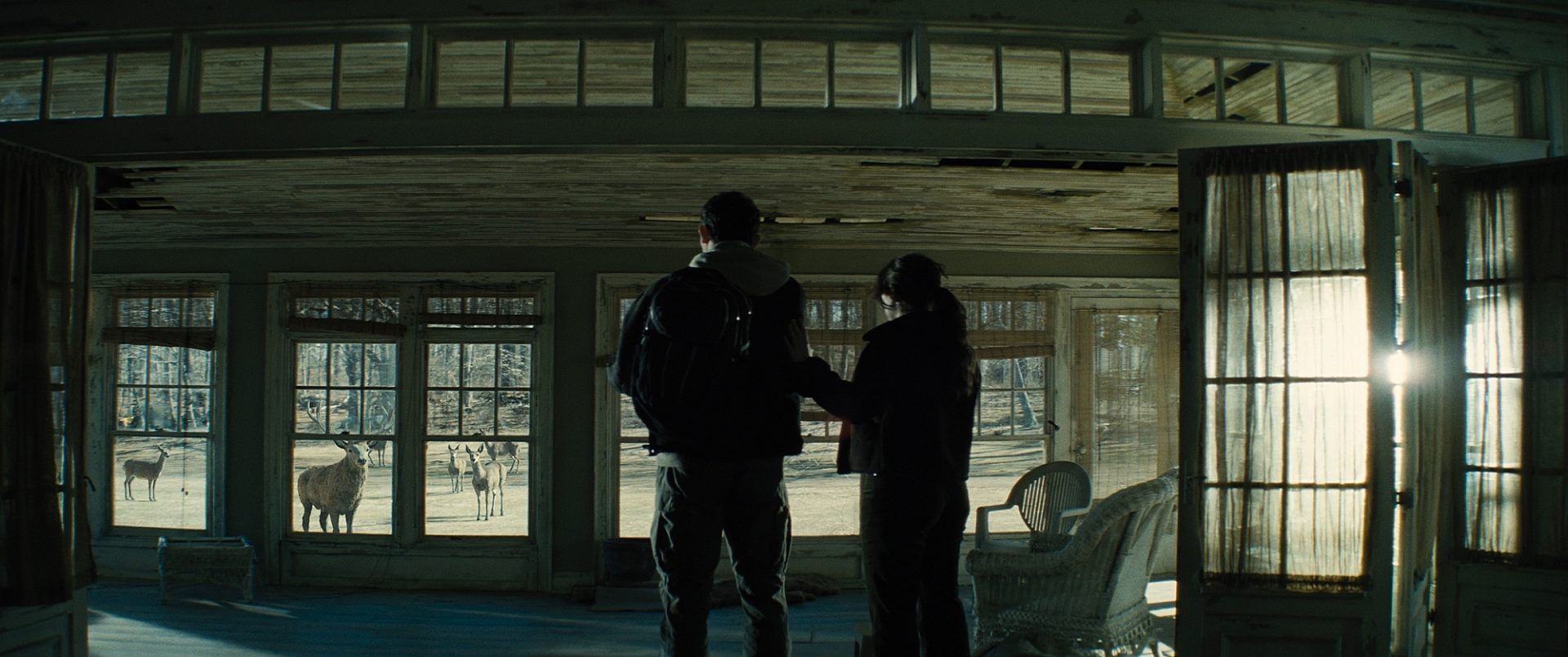
Whistleblower Josh O'Connor and girlfriend Eve Hewson in Steven Spielberg's sci-fi thriller DISCLOSURE DAY. Photo courtesy of Universal Studios.
"And there's one beautiful moment when she's sitting on the chair and playing with the crucifix right before Daniel arrives," he adds. "It looks so gorgeous. But it would never look that gorgeous with digital. What I did interesting for this movie were tests where I shot film and then I scanned the film and then scanned the positive. And then I gave the negative to the DI [team] and I asked them to do their version, which did not look good. And then I told them to match to the positive. And that was my so-called LUT for the film. That's how I retained the quality of the film emulsion."
By contrast, there's an unnerving back and forth between Wardex leader Scanlon (Colin Firth) and Jane, in which he attempts mind control with an unearthly device from his high-tech headquarters (shot digitally), while she sits at the farmhouse kitchen table. He actually projects himself to sit in front of her and she clutches her crucifix to try and fight him.
"It was a bright, sunny day outside, so I had to punch a tremendous amount of light to balance for the exterior and interior because I wanted to see outside the windows," Kamiński explains. "And, also, I wanted that scene to have a little bit of that artificiality that comes when you balance perfectly between interior and exterior. It's still dark inside but people are illuminated brightly."
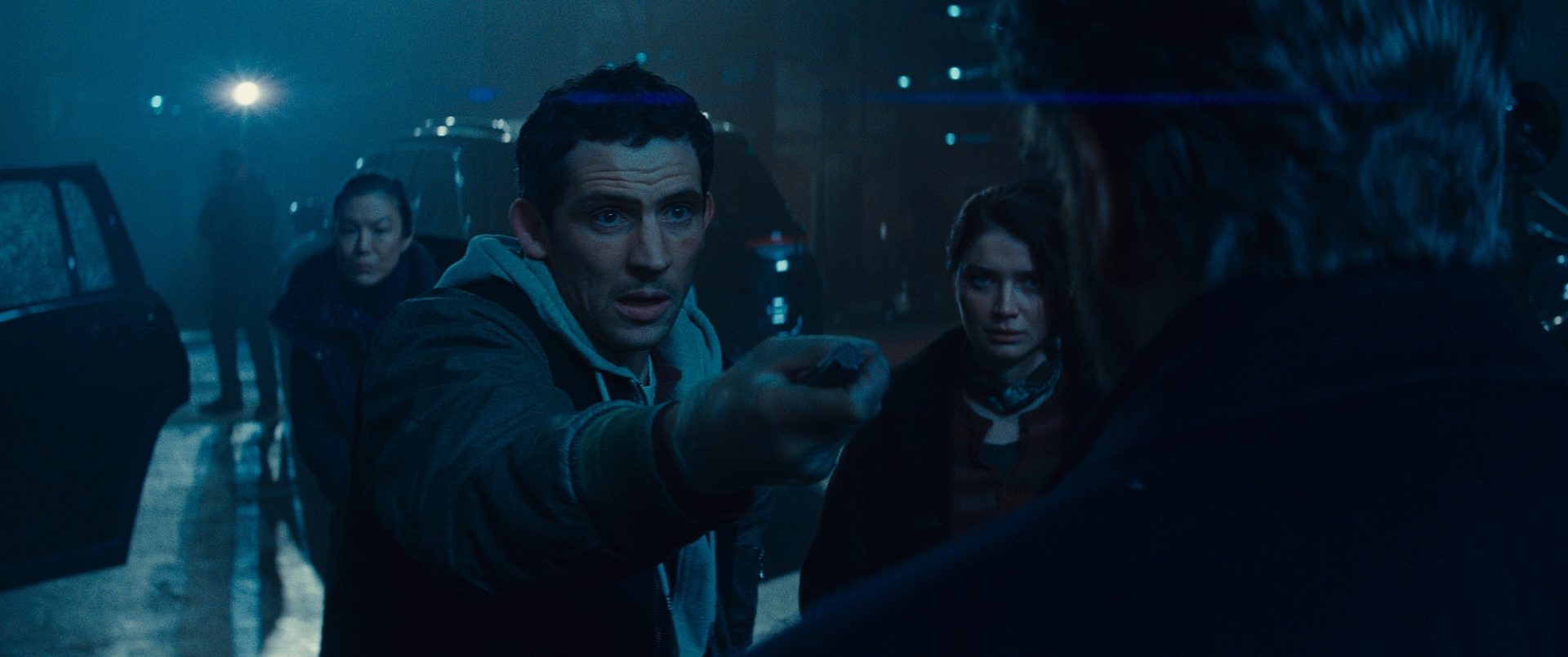
Whistleblower Josh O'Connor and girlfriend Eve Hewson confront Colin Firth in Steven Spielberg's sci-fi thriller DISCLOSURE DAY. Photo courtesy of Universal Studios.
However, the biggest challenge was stepping into the past to produce the archival footage, which "needed to look realistic when there was no actual reality for it," according to Kamiński. It was a great opportunity to experiment with different formats and looks, with high expectations for Roswell.
"There's some very vague images that represent the concept of what it possibly would look like if it happened," Kamiński suggests. "Some things moving across the frame, the ship's wing is protruding from the ground over this tent. But what does the ship look like? What is the light? What is our guest looking like? There's some references from the fantasy world and previous movies, and some research of what it's supposed to look like, but how do we create those images so they don't look fake?"
After shooting the black-and-white Roswell sequence in 16mm, they degraded the image slightly to make it look grainer and more authentic. "I think the biggest success Steven achieved is presenting those images to the audience in a way that is familiar by putting them on the devices: the phone, the screen, the iPads," adds Kamiński.
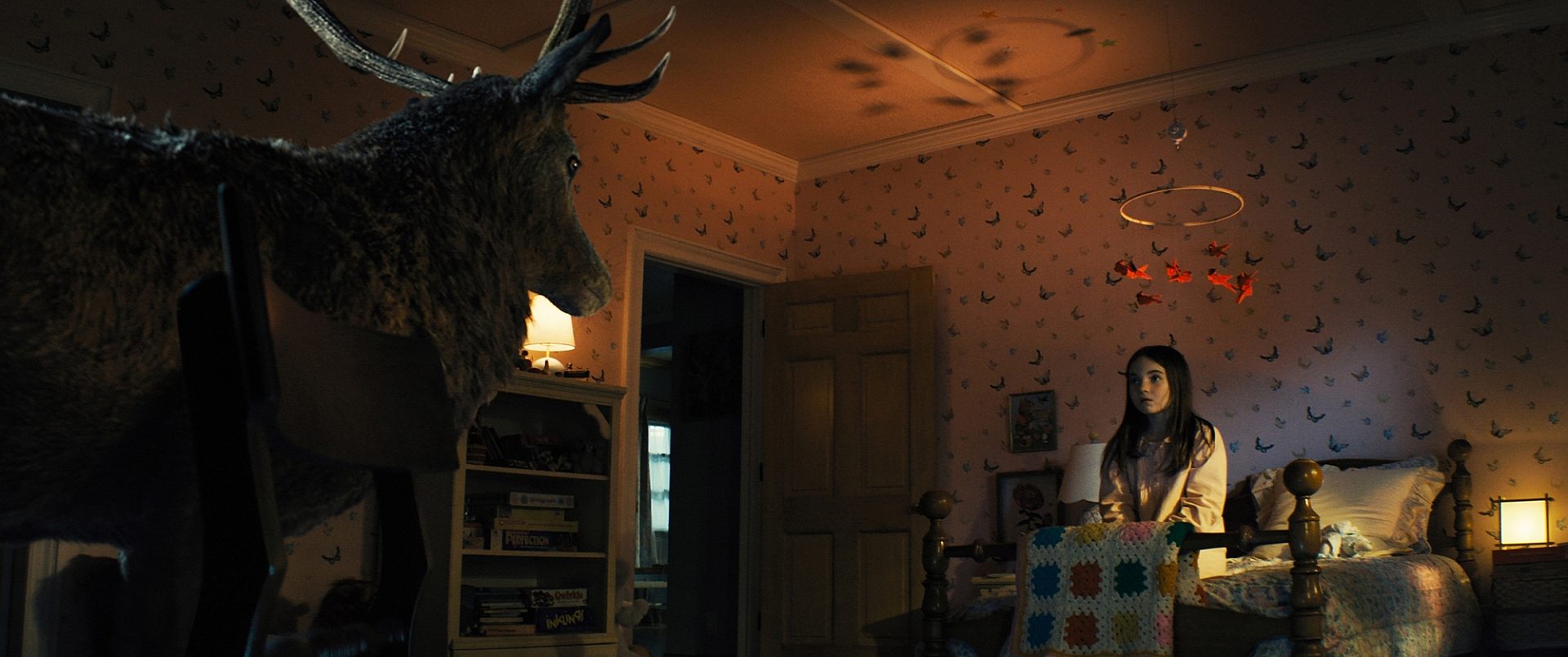
An otherworldly moment from Steven Spielberg's sci-fi thriller DISCLOSURE DAY. Photo courtesy of Universal Studios.
"We shot those images intending them to be on the big screen," he continues, "but Steven's choice in the end was to reduce them as a way of making them more mundane, more realistic, more approachable."
Meanwhile, the action centerpiece finds Margaret and Daniel trapped in a car while getting dragged at high speed by a freight train. This was first completely storyboarded by Spielberg and then shot on a short-line railroad in Cape May, New Jersey, and on soundstages in Steiner Studios. The production purchased and modified a 50-foot, 50,000 pound box car from a train museum in Kentucky for use during the soundstage work.
This was a dream come true for Spielberg, who's had a lifelong love of trains. This was recreated in The Fabelmans, when the young filmmaker, inspired by the train crash sequence in Cecil B. DeMille's The Greatest Show on Earth, shoots his own crash using an 8mm camera and a toy train set.
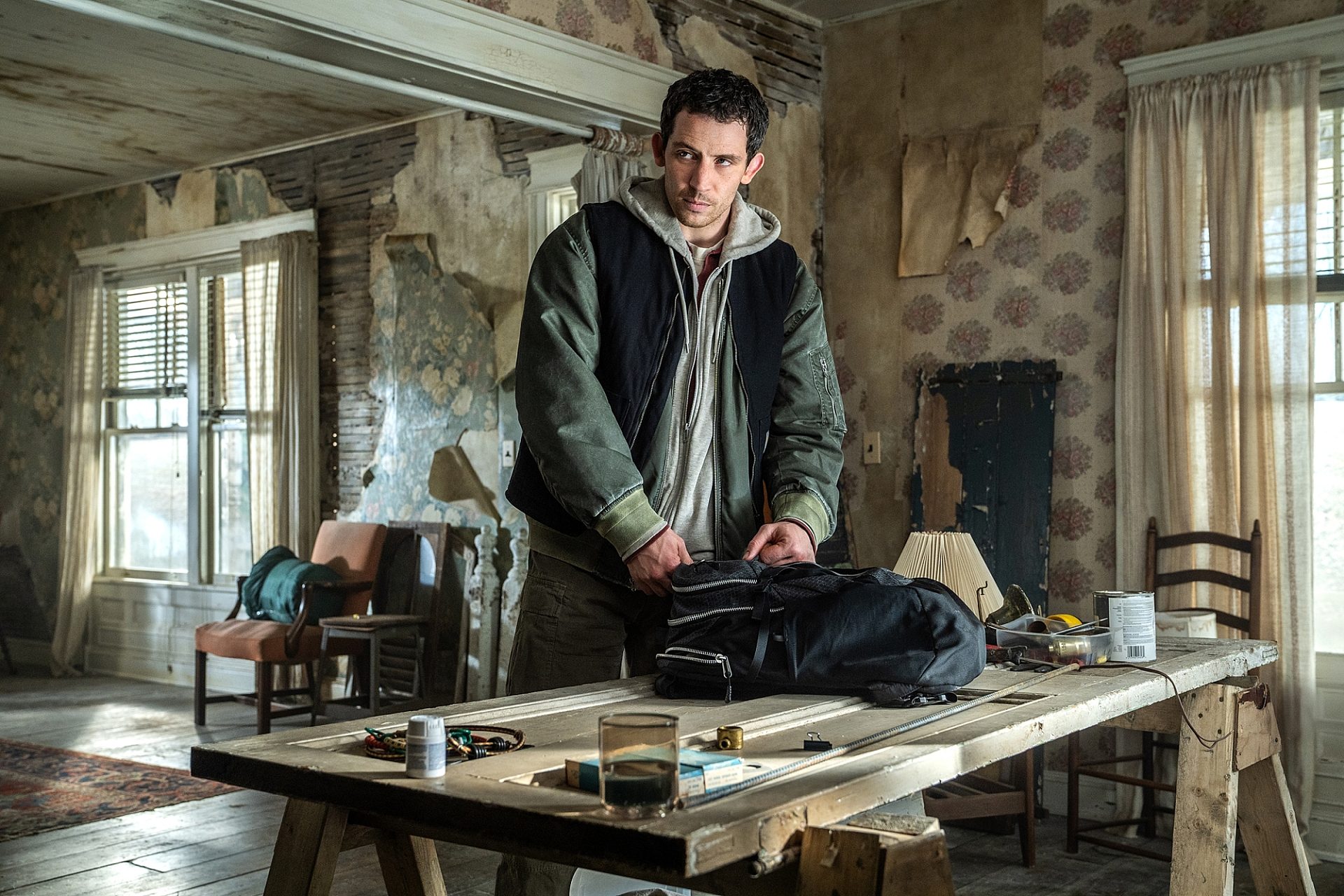
Whistleblower Josh O'Connor is on the run in Steven Spielberg's sci-fi thriller DISCLOSURE DAY. Photo courtesy of Universal Studios.
"Most of the five to six-day shoot was live photography with very little CGI," recalls Kamiński. "We shot the conversation inside the car. That was on film. They stopped at a railroad track on location. There's actual railroad track. The train was not there. The train was CGI going by, but the car being pushed towards the train was real. The car smashing the train was real, stationary.
"Then the attempt to escape from the car that is about to be destroyed, up to the top of the caboose, was done stationary, with actors attached to the train, the car being attached to the train, sparks coming out, dust, smoke, all that stuff," he adds.
"And then we just moved the ground," continues Kamiński. "Then Brian Machleit, who was the stunt coordinator, shot the scenes on the location first with the stunt people, where the train was moving at maybe 10 miles an hour. Then we sped up the train in post, and then, based on what he shot, we recreated the similar shots with Emily and Josh on the backlot, with the car attached to the train and our actors climbing out of the car, going to the top of the train and on wires. And then we blended together to make some kind of coherent representation of the sequence."
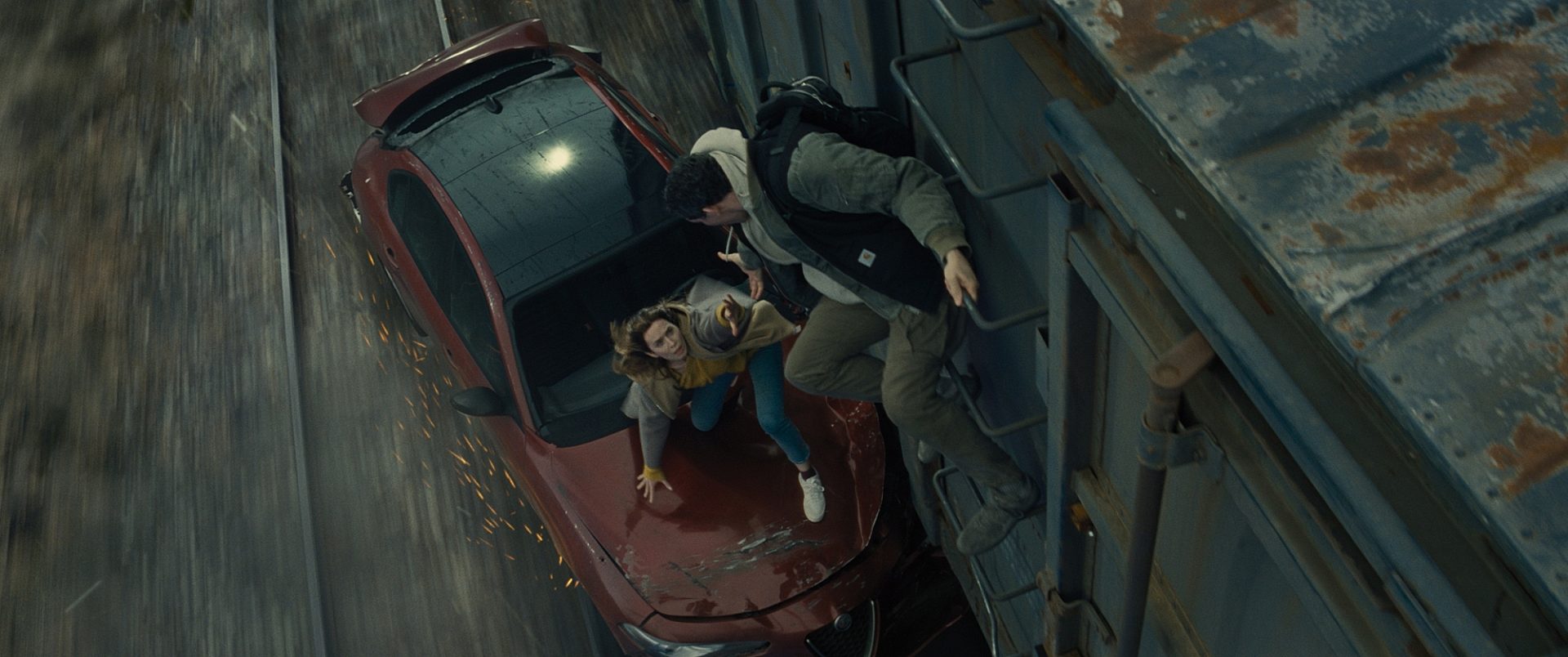
Emily Blunt and Josh O'Connor are on the run in Steven Spielberg's sci-fi thriller DISCLOSURE DAY. Photo courtesy of Universal Studios.
Since the sequence was driven by the existing lighting condition, they had to create the sense of a sun. But when they went against the train, clearly that sun was obstructed by the caboose. "But there were also moments when we could adjust some sun because we knew that the train was going to do a little curve," Kamiński says.
For the cinematographer, Disclosure Day was a further reminder of film's importance as an artistic force, especially when it came to lighting for different moods. "I think what this movie allowed me to do," he adds, "is to be as creative with choices of light and film emulsion, as I was on A.I. [Artificial Intelligence]. That was a very sophisticated movie visually, where I experimented to a great extent with film emulsions to get what I wanted.
"Here, I experimented more with lighting and trying to get us closer visually to the movies that Steven and I made in the past. I had a chance to experiment with different visual styles. With the noir [thriller scenes], I would go to contemporary film. I would look at classical Spielberg and think with fantasy, flares, and bright lights in a very traditional language that we've experimented with before. So it was a great journey, with huge set pieces and exciting action and moments that are exciting because of the actor's performance and the content of the scene."
