Shooting entirely on KODAK 65mm film, DP Hoyte van Hoytema ASC NSC FSF created a visually-thrilling sensation for Christopher Nolan's box-office hit 'The Odyssey'
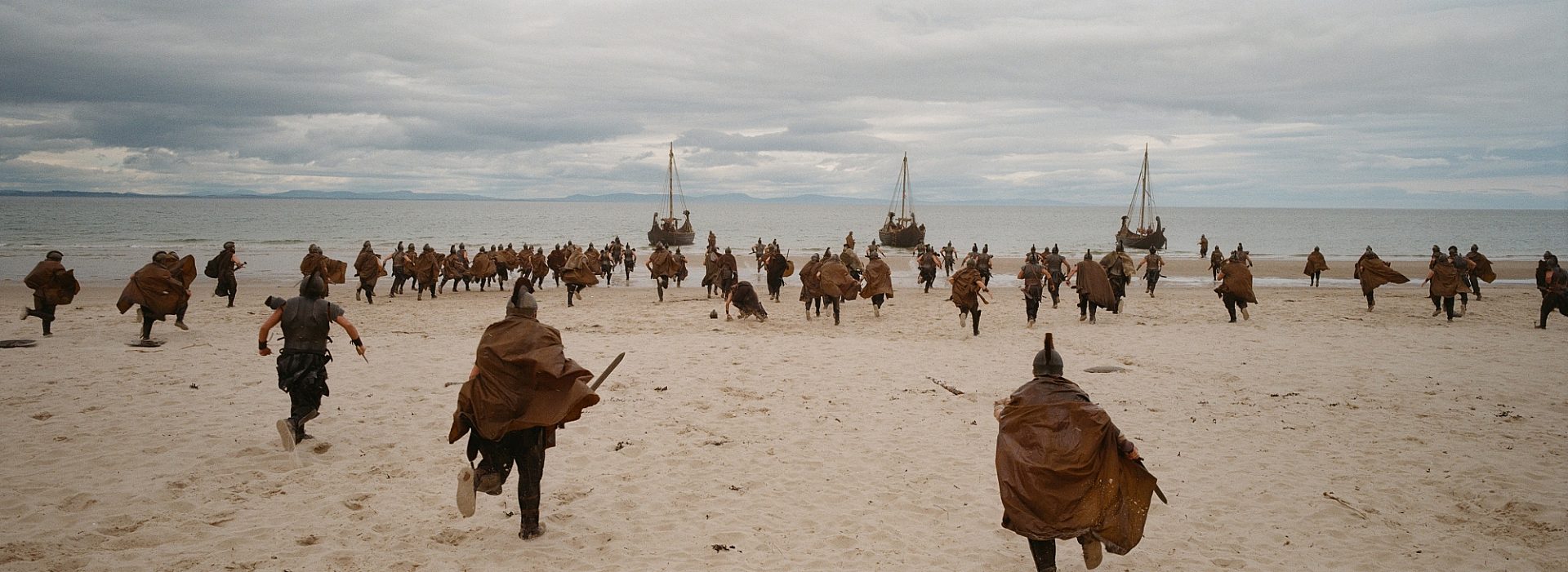
Photo by Melinda Sue Gordon. © Universal Studios. All Rights Reserved.
The Odyssey, director Christopher Nolan's big-screen adaptation of Homer's epic poem, marks a milestone in cinematographic history. It was shot entirely using IMAX film cameras, and every single frame was captured on KODAK 65mm film in 15-perf IMAX format, making it the first narrative feature to use the format from start to finish.
Shot by Nolan's long-time collaborator, cinematographer Hoyte van Hoytema ASC NSC FSF, the movie's combination of traditional filmmaking techniques, advances in camera and lighting technology, along with colossal success at the global box office, must surely plant it in the reckonings for the 2027 awards season.
The story preserves Homer's nearly 3,000-year-old, non-linear narrative. It follows the battle-worn Odysseus, king of Ithaca, as he faces a perilous, decade-long voyage home after the Trojan War, encountering mythical monsters, giants, sirens and witches along the way, before having to outwit suitors to his wife Penelope and reclaim his home.
BTS Photo by Melinda Sue Gordon. © Universal Studios. All Rights Reserved.
Starring Matt Damon, Tom Holland, Anne Hathaway, Robert Pattinson, Lupita Nyong'o, Samantha Morton, John Leguizamo, with Zendaya and Charlize Theron, the film received five-star reviews for its immersive, jaw-dropping ambition, and breezed by the billion-dollar mark at the box office just three weeks after its premiere. Fervor for the film was such that advance tickets for special IMAX and 70mm film print screenings, as well as graveyard showings in the wee small hours of the morning, sold-out in seconds. The impact of the film has also seen an upswing in book and audiobook sales of Homer's work.
The Odyssey marks van Hoytema's fifth collaboration with Nolan, following Interstellar (2014), Dunkirk (2017), Tenet (2020) and Oppenheimer (2023) – all of which were shot with varying combinations of KODAK 65mm in 5-perf format and 15-perf IMAX format. Oppenheimer was the first movie to shoot 65mm in B&W – using KODAK DOUBLE-X 5222, specially created for use with IMAX and Panavision System 65mm film cameras – and scooped seven Academy Awards, including Best Picture, Best Director and Best Cinematography.
"Chris kept this project strictly under wraps from me until about a year before we went into pre-production," van Hoytema confides. "I was invited over to his house and literally a second before handing me the script he said, 'By the way, it's The Odyssey.' "
BTS Photo by Melinda Sue Gordon. © Universal Studios. All Rights Reserved.
Van Hoytema admits to having a passing knowledge of Greek myth and legend from his school days, but says, "Just as I did with Oppenheimer, you immerse yourself in the subject matter. Homer's 'The Odyssey' is a rich and mysterious work. Chris's treatment involved horror, intrigue, jeopardy and romance, and I immediately knew it would make for a thrilling feature film.
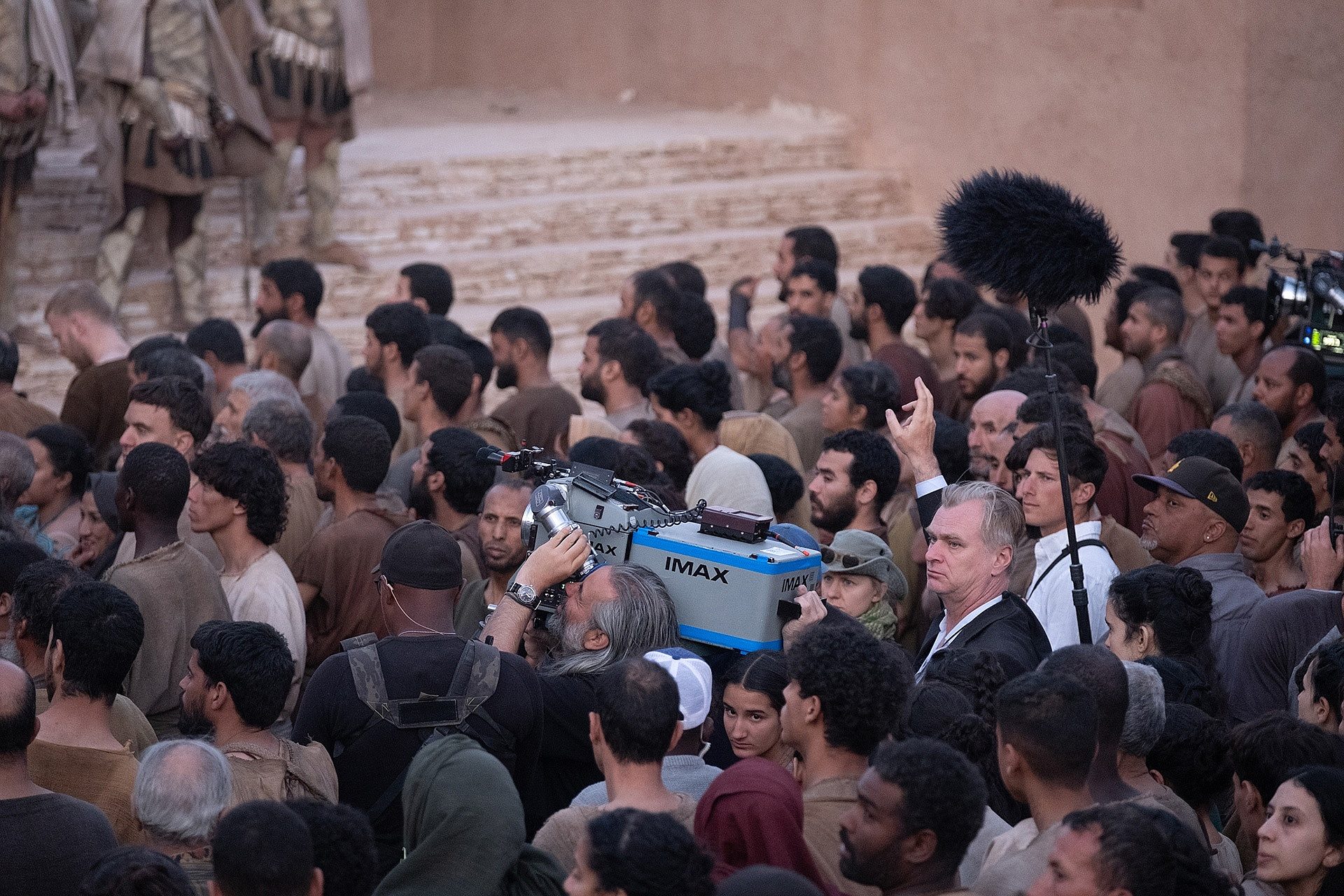
"Shooting a movie entirely using 65mm film in 15-perf IMAX has been Chris's long-term dream. But as we learned on previous productions, it has limitations, such as agility because the cameras are heavy, and being able to record sync-sound, as they are noisy too. Our solutions generally boiled down to shifting between 65mm 5-perf for dialogue and 65mm in 15-perf IMAX for establishing shots, action sequences and large-scale set-pieces.
"When I first read the screenplay, Chris was already determined to shoot The Odyssey entirely in IMAX. He got me involved early on as he knew his approach, involving close-up scenes, would need time for us to engineer, build and figure out stuff with the IMAX camera, largely because dialogue recording has been the biggest barrier to shooting an entire film in IMAX format."
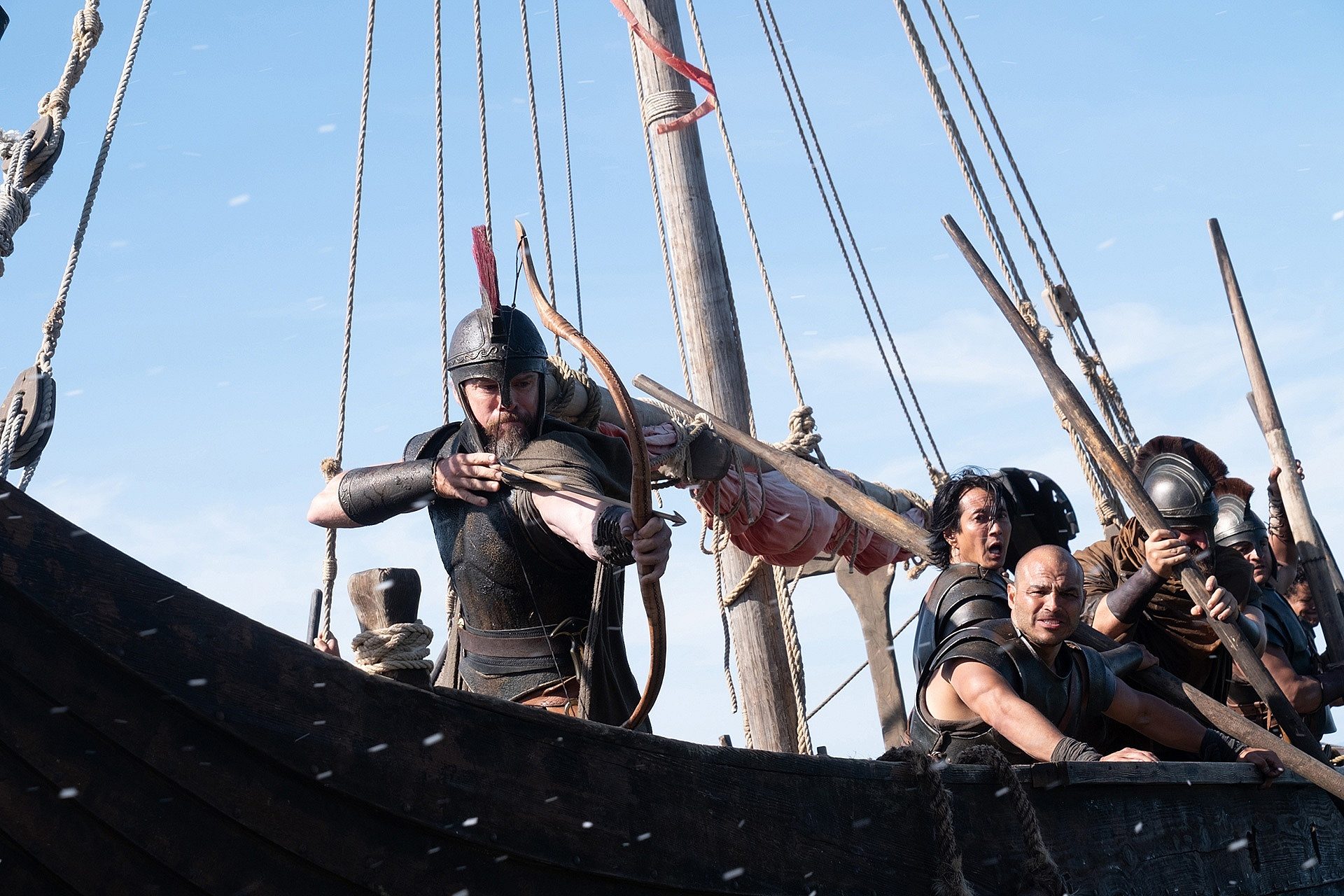
Photo by Melinda Sue Gordon. © Universal Studios. All Rights Reserved.
The DP adds, "It's no secret that Chris and I love film in IMAX 15-perf as a capture and exhibition format. No other film or digital format comes close to its resolution and depth. It brings a heightened experience for the audience, and you feel as if you are close to the characters and truly immersed in the action. However, whilst the ambition was to go IMAX all the way, when we started this production, we were not entirely sure we could pull it off."
Van Hoytema recounts that he and Nolan watched epic historical features such as Andrei Tarkovsky's Andrei Rublev (1966, DP Vadim Yusov) and Akira Kurosawa's Ran (1985, DPs Takao Saito, Shoji Ueda & Asakazu Nakai), along with Greek mythology films incorporating special effects by Ray Harryhausen.
"We never think our films should mirror references visually, nor the specific visual styles of other filmmakers. It's more about how the images feel emotionally," van Hoytema remarks. "Our motivation has always been to ground the image into a believable part of the world-building using the wide array of classic and traditional filmmaking techniques, keeping CGI and digital manipulation to a minimum. From these points of view, Andrei Rublev was interesting to us because of its sheer ambition, and how they achieved that with limited analog technology. Ran excited us, as it's an epic family story with scale, scope and warfare.
"We don't typically look at still images – such as paintings or photography – as they are often strong interpretations. Our aim is to bring an experiential, rather than an intellectual, connection to the image. It's very much about pulling people into our world and making them believe in it."
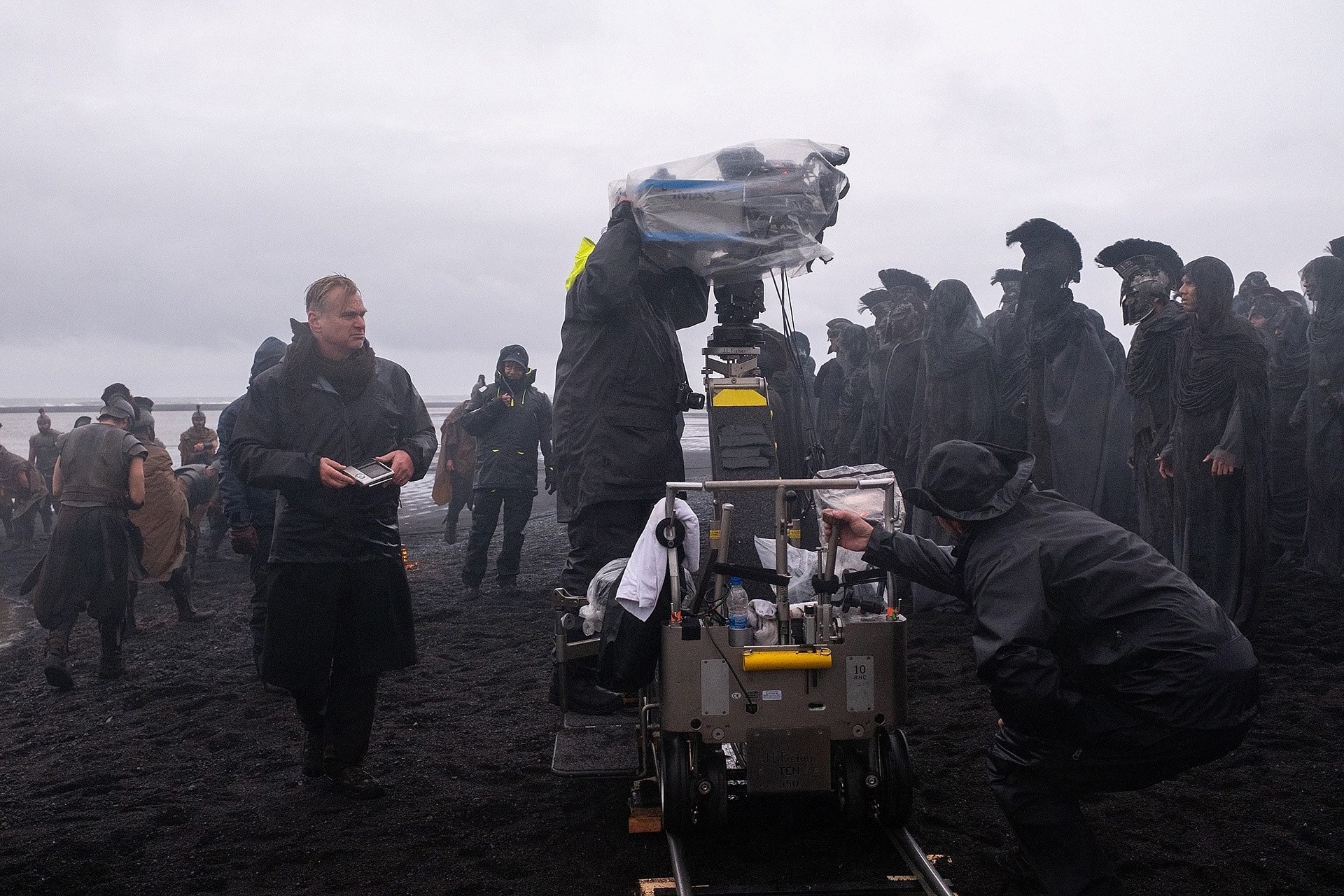
BTS Photo by Melinda Sue Gordon. © Universal Studios. All Rights Reserved.
Production on The Odyssey took place over 91 shooting days across six months, in Morocco, Greece, Italy, Scotland, Iceland, and the United States, with Nolan eager to embrace the physicality and tactile realism of real-world locations to help inform the mythical storytelling and depict how difficult Odysseus' journey would have been. What they could not accomplish on-location, they built and shot on California soundstages.
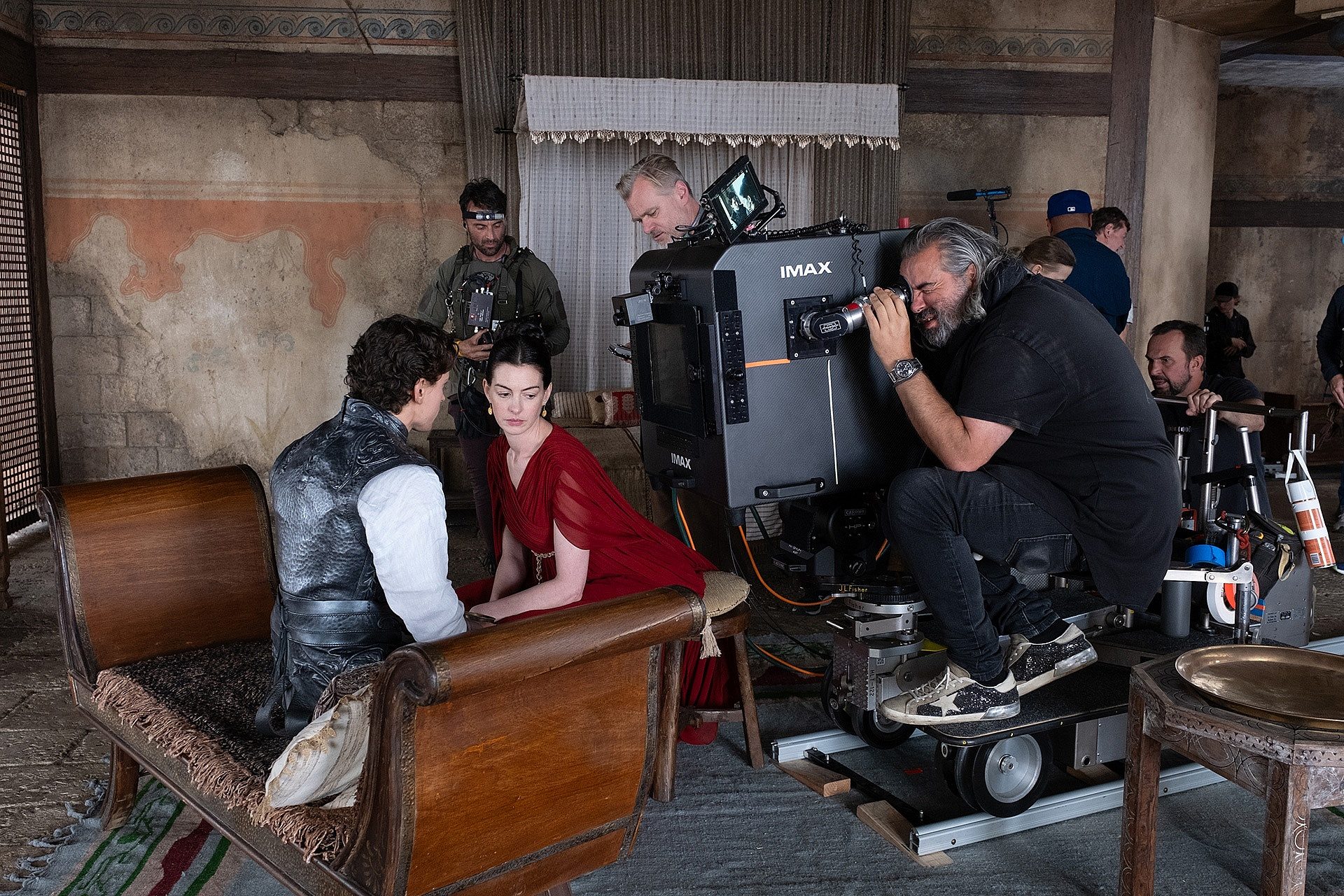
The camera at the centre of the movie's landmark achievement remained the tried and trusted IMAX MSM 9802, although Nolan and van Hoytema had to conquer the issue of its noisy operation. Typically, IMAX cameras are distractingly loud, making sync-sound dialogue scenes nearly impossible without extensive on-set sound dampening or ADR (automated dialogue replacement) in post.
To reduce decibels to acceptable levels and break the sound barrier of dialogue recording on-set, IMAX Corp tailor-made an acoustically-insulated 'blimp' housing for the camera.
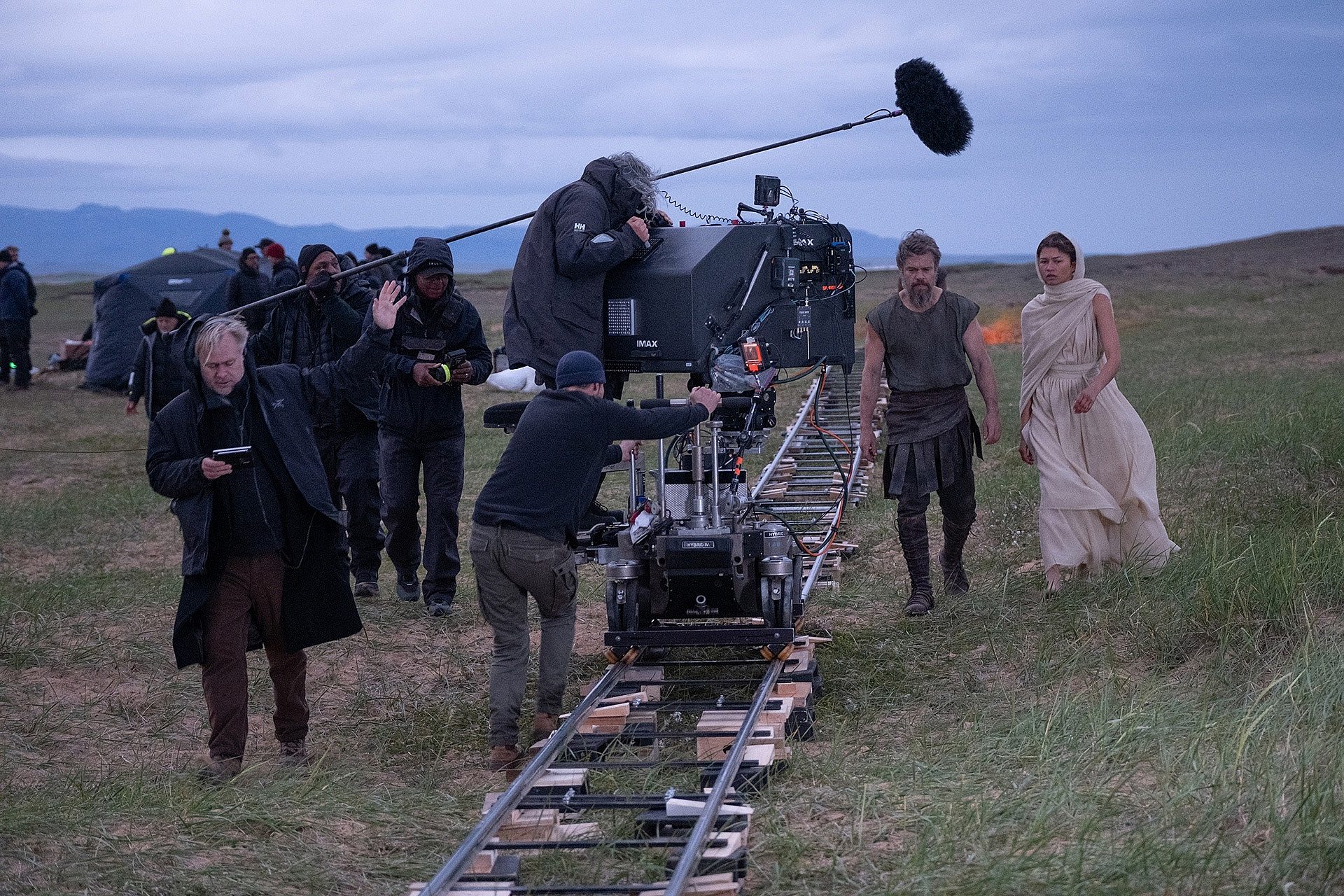
BTS Photo by Melinda Sue Gordon. © Universal Studios. All Rights Reserved.
"We began developing noise-reduction technology with IMAX Corp on Tenet, but it was never really finished, and it didn't work to our level of need," van Hoytema explains. "It took a little bit of analysis from both sides to understand why, and we decided to take a slightly different approach this time around with much simpler instructions regarding the blimp. We asked them just to build us something that did what it needed to do – to filter out the sound of the camera – without worrying whatsoever about the camera's ergonomics, nor how we were going to deploy it. Those would be our considerations."
This turned out to be a successful approach, and over several months IMAX Corp developed three prototype blimps, one of which proved the winner.
"IMAX cameras radiate different frequencies of sound," van Hoytema explains. "Some need to be filtered out by being absorbed into heavy, thick material, others by being bounced back. We settled on one design with a sort of sandwich-cake layering principle, and they delivered us a virtually sound-proofed box that made close-up dialogue recording viable for the very first time. We used the blimp mainly with the IMAX MSM 9802 camera, and it was a real gamechanger."
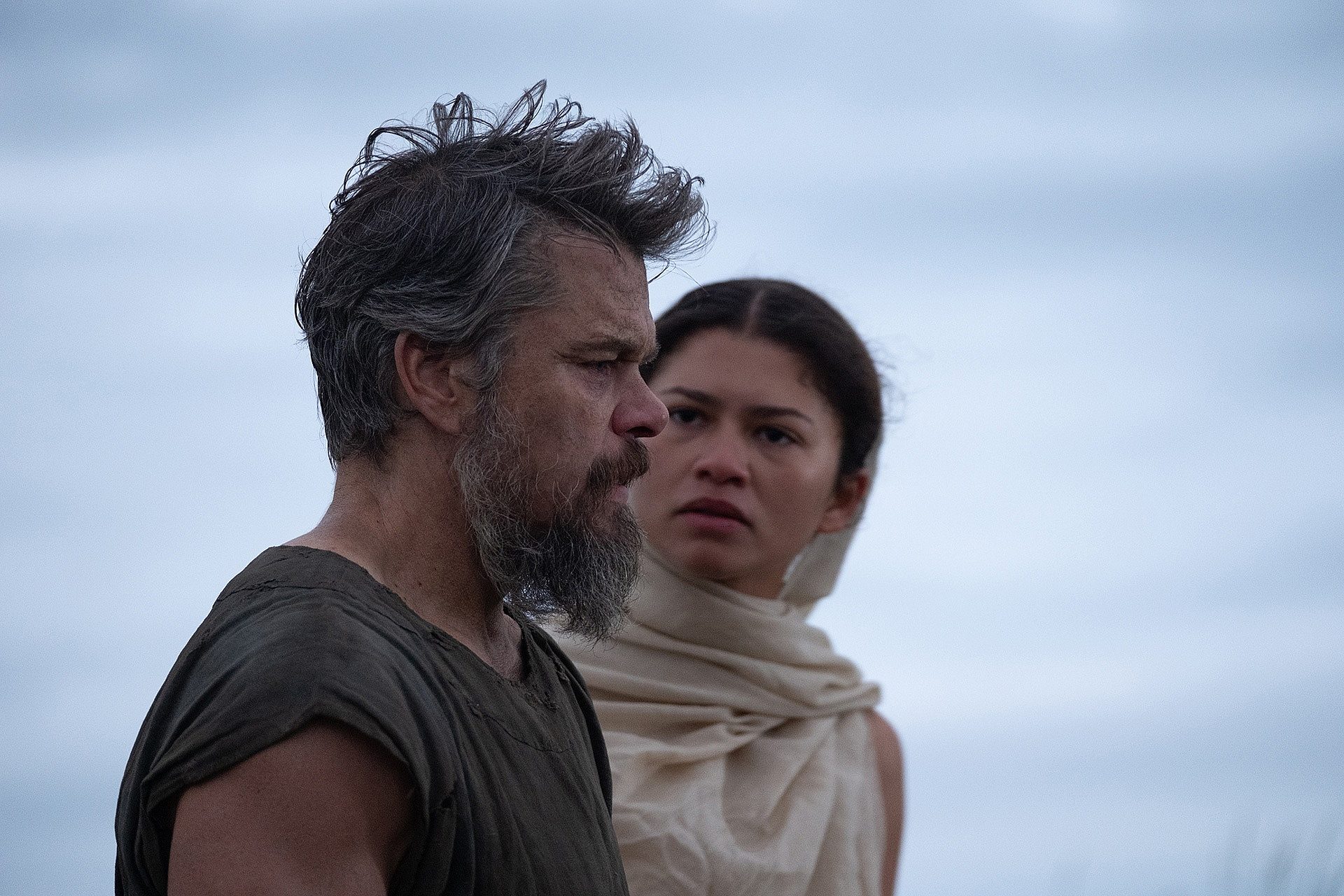
Photo by Melinda Sue Gordon. © Universal Studios. All Rights Reserved.
While the blimp helped to eradicate the issue of sound, its bulky size meant it interrupted or blocked natural eyelines between the actors standing close to the camera. To solve this issue the camera crew mounted precision mirrors, angled on either side of the camera, so that instead of peering around the bulky blimp, or playing to tape marks or objects, the actors could look into the mirrors and see their scene-partner's reflection close to lens axis.
"It's sadistic to ask an actor to put their expressions and emotions into a tape mark or an object," recounts van Hoytema. "The mirror set-up gave them true eye-to-eye contact and helped to preserve the flow and depth of their performances."
Worthy of note, The Odyssey is dedicated to David Keighley (1948 – 2025), the long-time chief quality officer at IMAX Corp, who played a key role in IMAX development over several decades, and whose specific collaborative efforts on this production resulted in the Keighley IMAX camera being used on the film. Lighter and more compact than its predecessors, the Keighley IMAX camera delivered a re-engineered film transport system making it significantly quieter than previous models.
"Sadly, David passed away after we wrapped," laments van Hoytema. "Although he never got to see the final film, David, along with his wife, Patricia, oversaw every single foot that we shot on The Odyssey. He will be fondly remembered but sadly missed as a champion of large-format filmmaking."
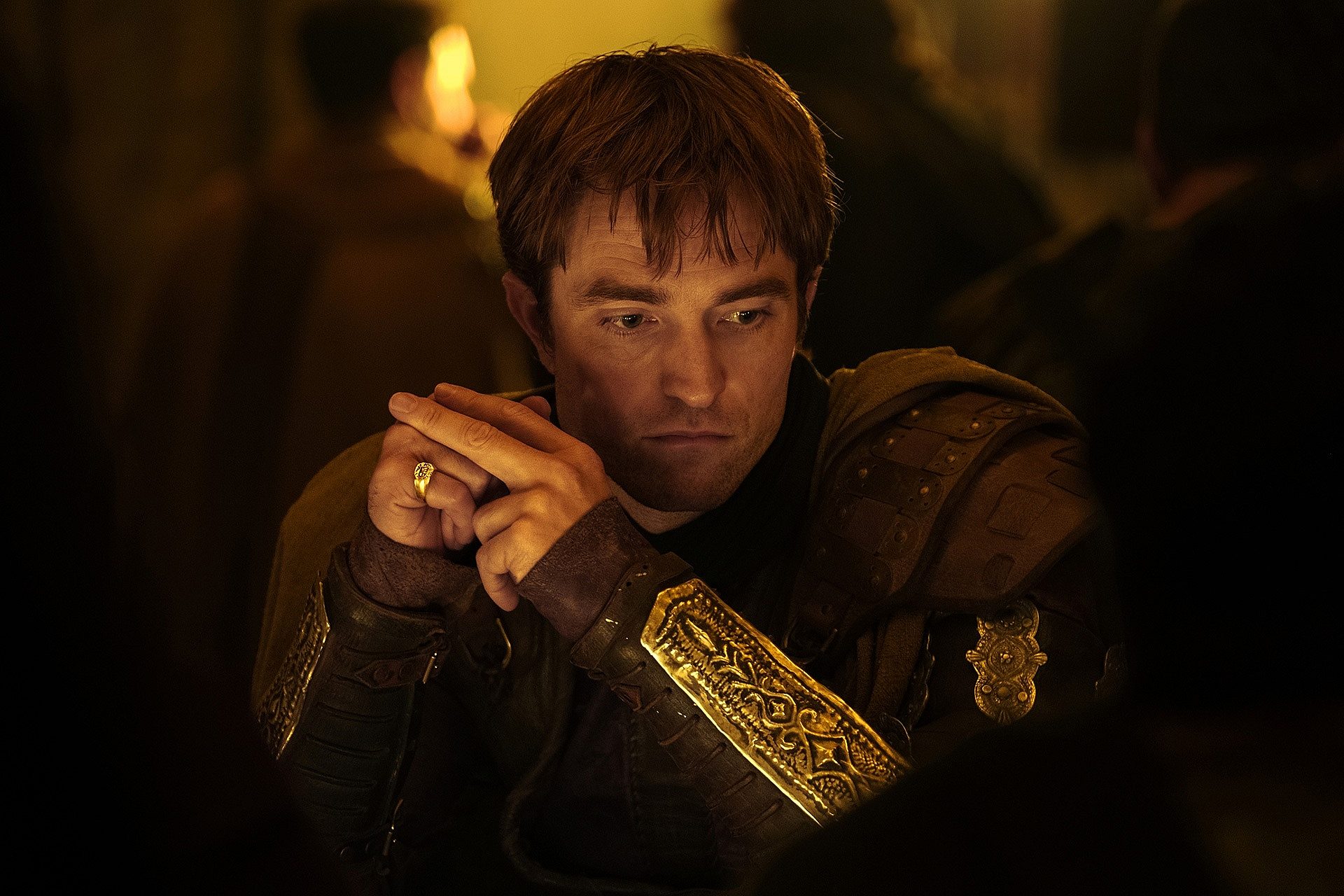
Photo by Melinda Sue Gordon. © Universal Studios. All Rights Reserved.
Lenses for the shoot were specially-developed by Dan Sasaki at Panavision, Woodland Hills, California.
"Dan is our go-to lens creator," enthuses van Hoytema. "He has helped to solve specific and practical problems many times over the years, and has crafted functional, beautiful lenses for us to shoot in IMAX. However, when you shoot in this format, it's not so much a discussion about whether your lens is pretty or not, nor about fall-off and so on. It's more about trying to diminish optical hindrances.
"For instance, Chris and I always want to go closer to the actors with lenses that traditionally can't go close. Also, I always want to widen the T-stop when shooting with real fire, or I want to shoot in darkness and need the lenses to be fast. Dan has always engineered lenses with those needs in mind."
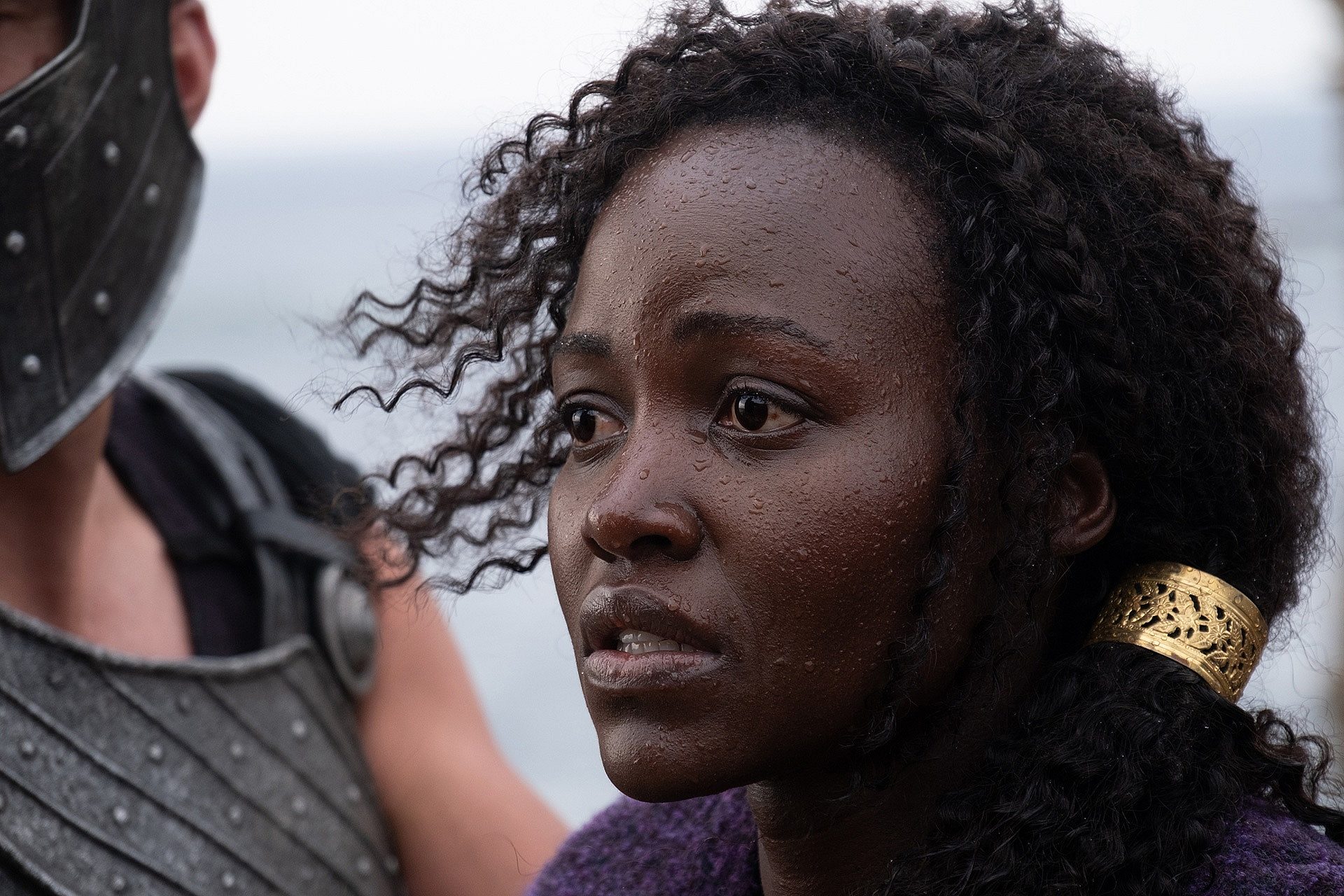
Photo by Melinda Sue Gordon. © Universal Studios. All Rights Reserved.
Delving further into the optics, van Hoytema reveals, "The focal lengths in the lens-set we use are limited, not because they are hard to develop, but because we have learned which lenses we prefer and the lenses that work best in the IMAX format.
"For example, with very long lenses, you can create a sharp image, but you just don't buy the perspective from your vantage point in the cinema, because everything gets so compressed, and the sense of immersiveness can be diminished. It's the same with some of the wide lenses, it's more like you're looking in to a goldfish bowl. So, our favorites, that we keep using over and over, are the 50mm and 80mm, with 35mm, 40mm and 110mm lengths derived from the look-and-feel those."
Residing on a platter in the projection room of an IMAX cinema, the tightly-coiled print of The Odyssey weighs in at around 600 lbs, and measures some 11 miles in length of KODAK 70mm film. Other figures reveal that the production itself consumed over two million feet (379 miles) of 15-perf 65mm negative filmstock, developed and processed by FotoKem in Burbank.
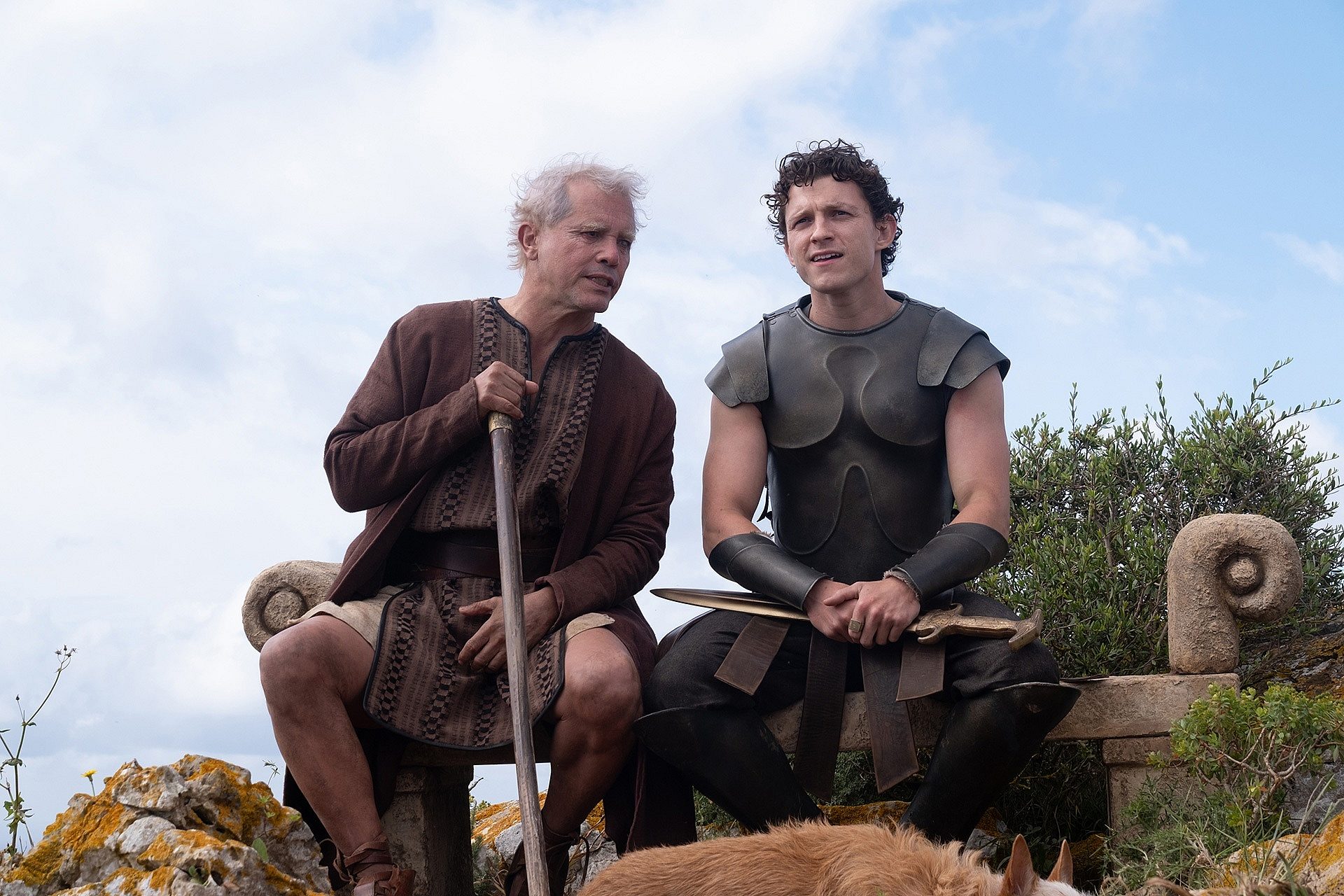
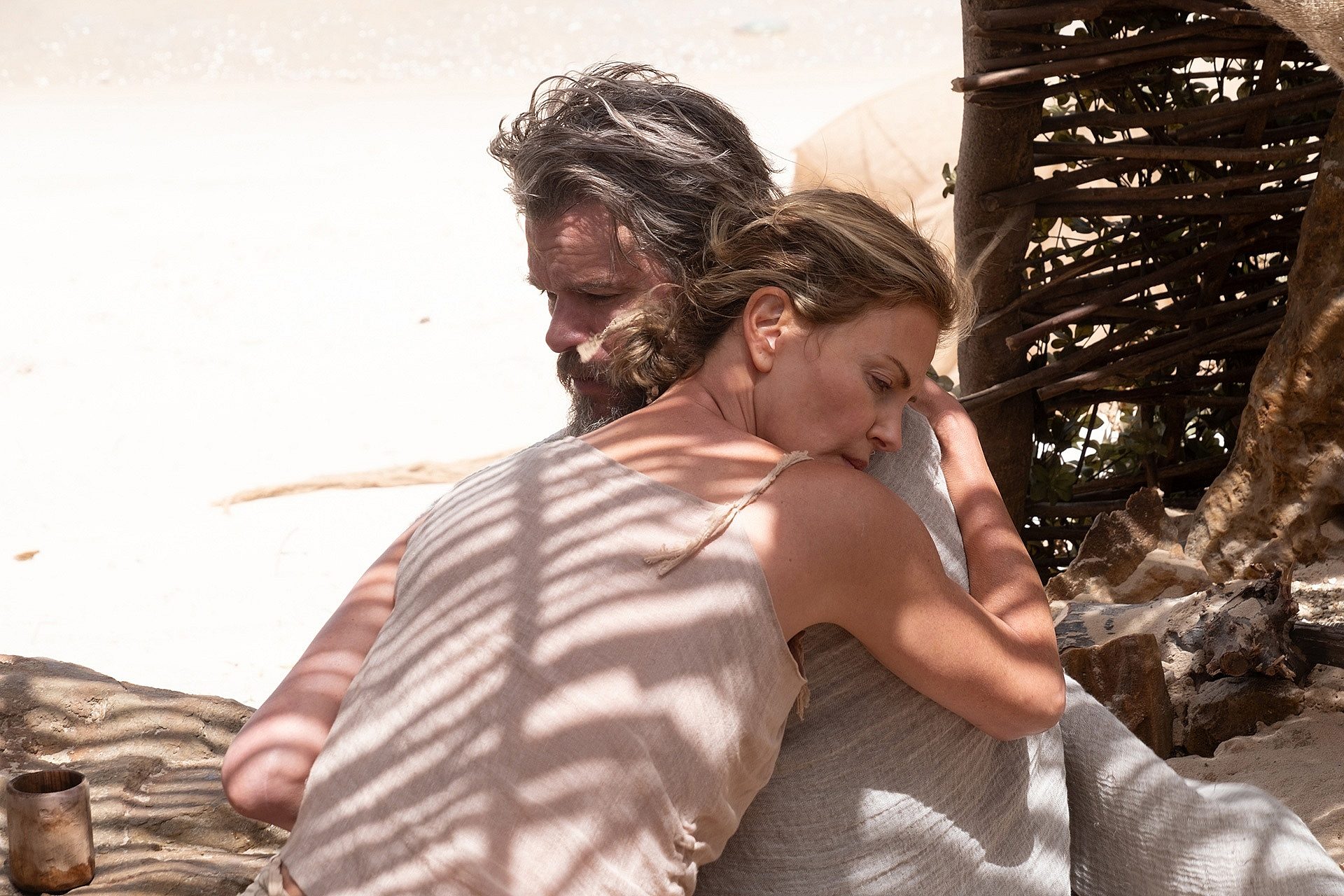
For the shoot, van Hoytema chose KODAK VISION3 250D 5207 to film day exteriors and brighter day interiors, with KODAK VISION3 500T 5219 for low-light and night scenes.
"The 250D and 500T are my sweet spot filmstocks. I love their grain structures and they're very much my functional workhorses. The way I work with lenses, NDs, daylight and lights for night scenes, falls within the sensitivity curves of both those stocks. They are both versatile too. For example, I can shoot a little bit longer into magic hour with the 250D and I don't have to resort too quickly into going higher-up in ASA."
The Odyssey was mainly a single camera shoot, except for action sequences when a second camera was introduced. Van Hoytema estimates he operated for 90% of the time during production – working either on the shoulder or from the array of camera moving and grip gear – with Keith Davis pulling focus. James Goldman was the Steadicam operator, and also worked on B-camera during action and fight scenes. Kyle Carden led the grip team. Scott Smith was the IMAX camera technician.
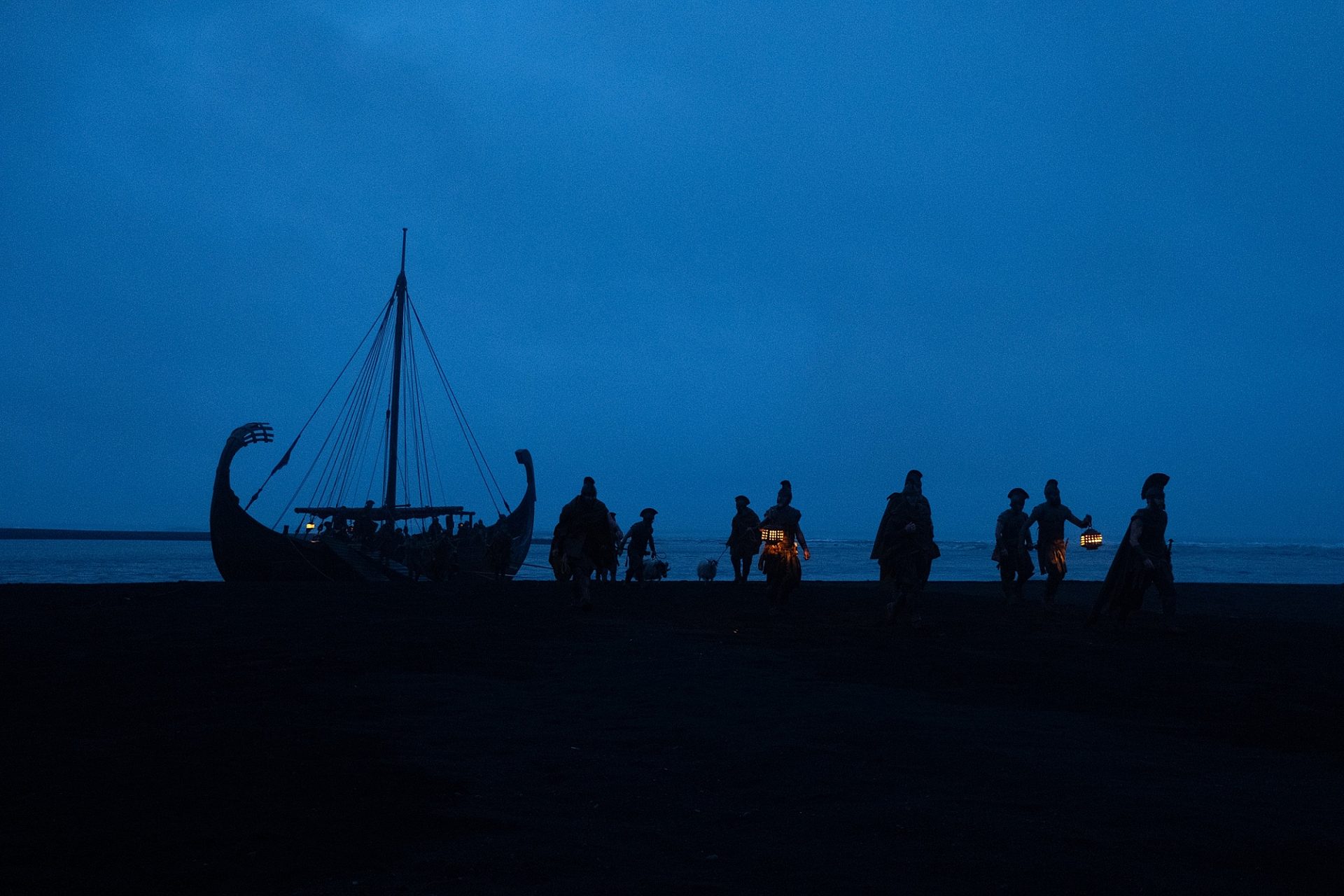
Photo by Melinda Sue Gordon. © Universal Studios. All Rights Reserved.
"IMAX cameras are like F1 race cars, in that they are not off-the-shelf items," says the DP. "They undergo a lot of stresses and strains, and need to be constantly maintained to stay in tip-top working order.
"We had six IMAX camera bodies pre-rigged and available at any one time – the blimped IMAX MSM 9802 as our preferred A-camera for dialogue scenes, the Keighley IMAX camera, one for Steadicam, a Mk IV for high-speed work, and two others for VFX and action shots on different rigs or cranes."
Of course, the blimp itself proved to be not just big, but heavy too, at around 300 lbs, making the overall camera lump just shy of 400 lbs. As van Hoytema notes, "The IMAX format doesn't lie. We needed beefy grip and camera support gear to help isolate the camera from vibrations that might show up on the big screen, such as the heavy-duty Cartoni Magnum HP, that was specially engineered to balance and secure the camera.
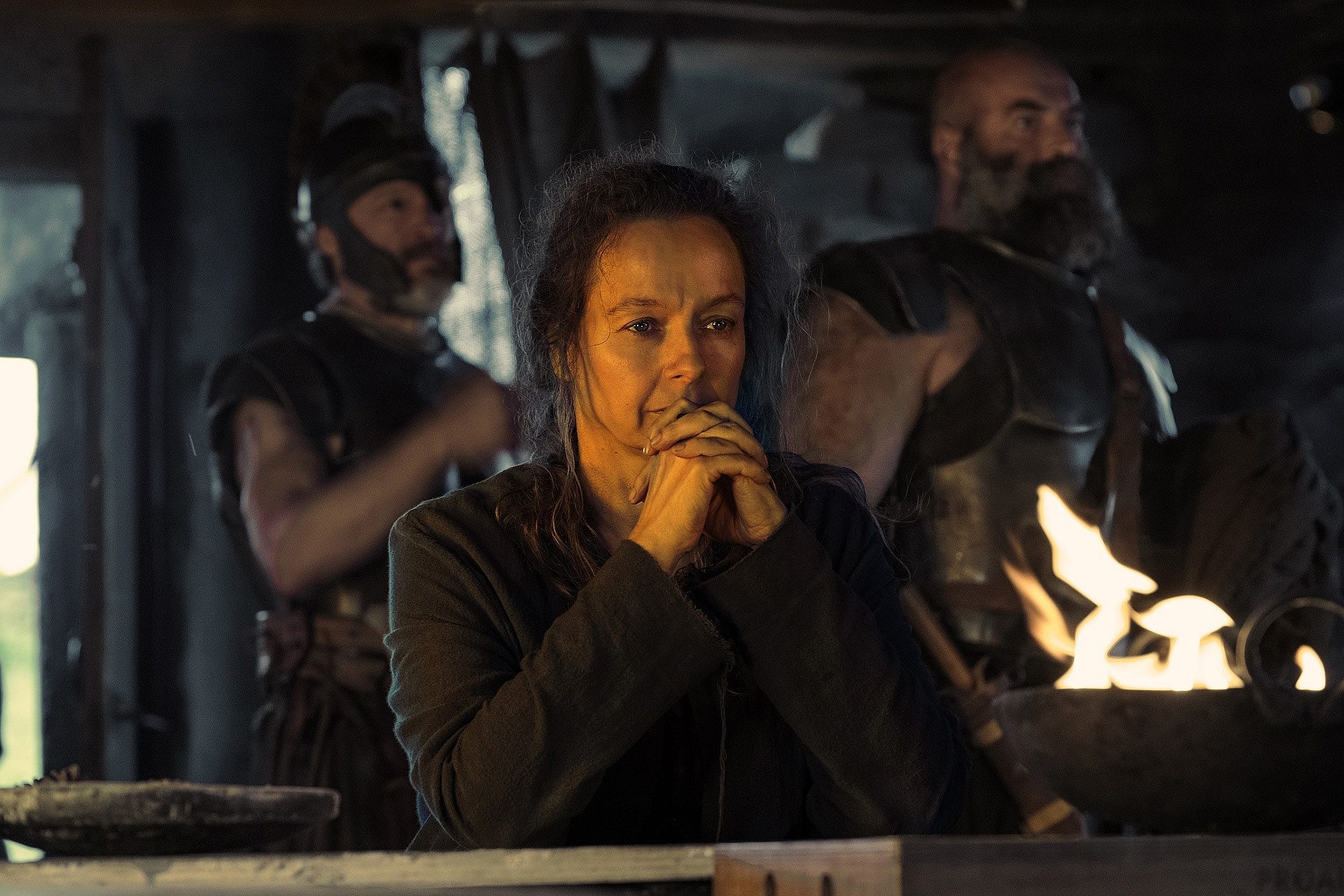
Photo by Melinda Sue Gordon. © Universal Studios. All Rights Reserved.
"We didn't want the film to feel stiff in terms of the camera movement, just because we were lugging a massive camera and blimp around. Quite the opposite, we wanted the camera to feel light, loose and dynamic.
"Over many years and all of our collaborations, Chris and I have learnt how to deploy IMAX cameras in different situations, finding solutions and workarounds along the way to make it practicable to use them on the shoulder, Steadicam, dollies, cranes, Technocranes, arms and jibs, on land, sea and in the air.
"For some of the water-based scenes, we used a special craft with a Russian arm. It's a very powerful vessel, used to supply oil rigs or service off-shore wind turbines, and it meant we were very agile and could get the angles we wanted. We also employed the HydroFlex splash bags and splash housings we developed for the waterborne sequences in Dunkirk, operated by Scott Hoffman, our underwater camera specialist.
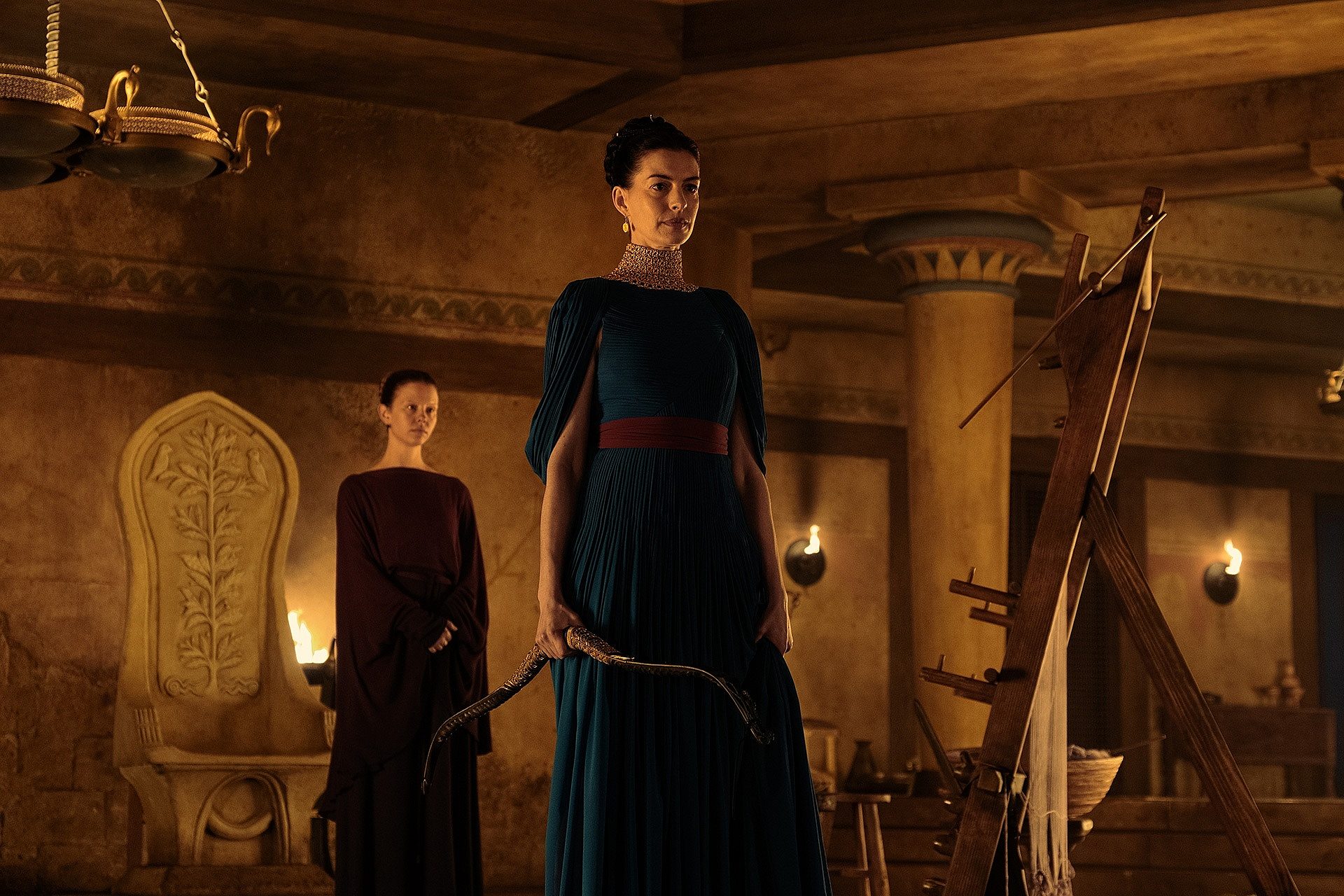
Photo by Melinda Sue Gordon. © Universal Studios. All Rights Reserved.
The Odyssey also ushered in new developments in lighting, in the form of pyrahedron LED light tiles designed, developed and manufactured in conjunction with gaffer Adam Chambers ICLS and van Hoytema's specialist R&D company, Honeycomb Modular.
Pyrahedron tiles have dense grids of LED cells and, being hexagonal and modular, could be fitted together into hemispherical domes of different sizes. With specially-prepared media playing through them, created by lighting console programmer/dimmer-board operator Noah Shain, that emulated the color qualities and randomness of real firelight, the pyrahedron domes provided Nolan and van Hoytema with new opportunities for night scenes and 360-degree camera moves, such as the sack of Troy.
"It would have been impossible to use real firelight at scale, never mind the implications that would have entailed for health and safety of the actors, stunt extras, SFX team and other crew. Nor were there any suitable lighting fixtures readily off-the-shelf," van Hoytema reports.
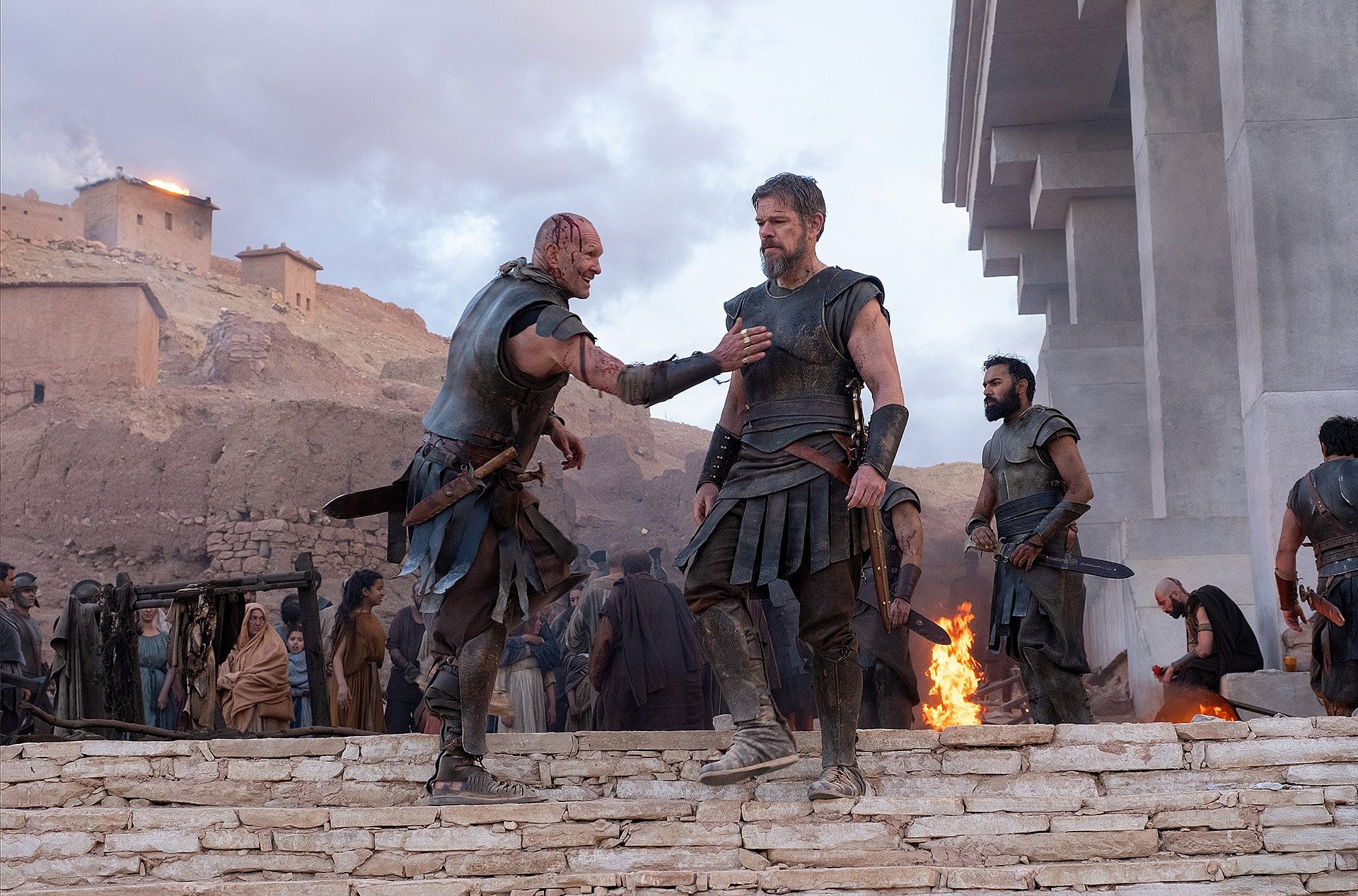
Photo by Melinda Sue Gordon. © Universal Studios. All Rights Reserved.
"The domes we made from the pyrahedron tiles were lightweight, easy to move around and organize in a three-dimensional way in-camera. What Chris and I found to be hugely advantageous, was that we could create sets in which we could shoot 360-degrees. We could place the lights up on a hill, put them under trees and have glowing fires here and there, giving scale width and depth to the image, but without losing the tactility and the reality of how a fire actually photographs. Noah Shain developed a set of different modes – such as windy, mellow and gentle. The shadows from the pyrahedrons looked very realistic, in the way the light danced around, and the lights integrated so seamlessly with real fire light too, helping us to buy into the artifice."
Analog processes were also a feature in the post production workflow, such as the dailies, color timing and editorial. While digital scans were made for the editorial team, print dailies were made to KODAK 35mm film for projected dailies viewing.
"We have always watched projected printed film dailies and done traditional color timing at the lab to achieve the final master," says van Hoytema. "The DCP is derived from the film print that has been color-timed photochemically at the lab. During our DI grading sessions, with senior digital colorist Kostas Theodosiou, we projected the roll of analog print film on the right and copied that look to the digital version on the left. We literally mimicked what the analog technology gave us.
Photo by Melinda Sue Gordon. © Universal Studios. All Rights Reserved.
"People use the DI to make their films look extremely even. But Chris and I have never been interested in things being even. Photochemical grading is by its nature a brutal and honest process because you are forced to color time on-the-fly. You cannot plaster over exposure errors that you've made on-set using windows, secondaries or other cosmetic trickery. For me it's like going back several decades to a time when that process was the norm. You get to really understand how DPs mastered cinematography back then, and I really like that."
Reflecting on his experience of shooting The Odyssey, van Hoytema concludes, "I loved every minute of it. I'm privileged and happy that I get to keep pushing the boundaries of filmmaking with Chris. It was incredibly exciting working with IMAX, Panavision and my ingenious team on the blimp, and to dress the box and the camera with the paraphernalia we needed. But the unit moves were huge logistical undertakings, especially to those which were remote or hard to access.
"I am delighted that so many people around the world have seen this film and enjoyed the experience we intended it to be. I have fought my whole career to keep shooting on film. It's the medium I love the most, and the one that is really the most beautiful to watch."
