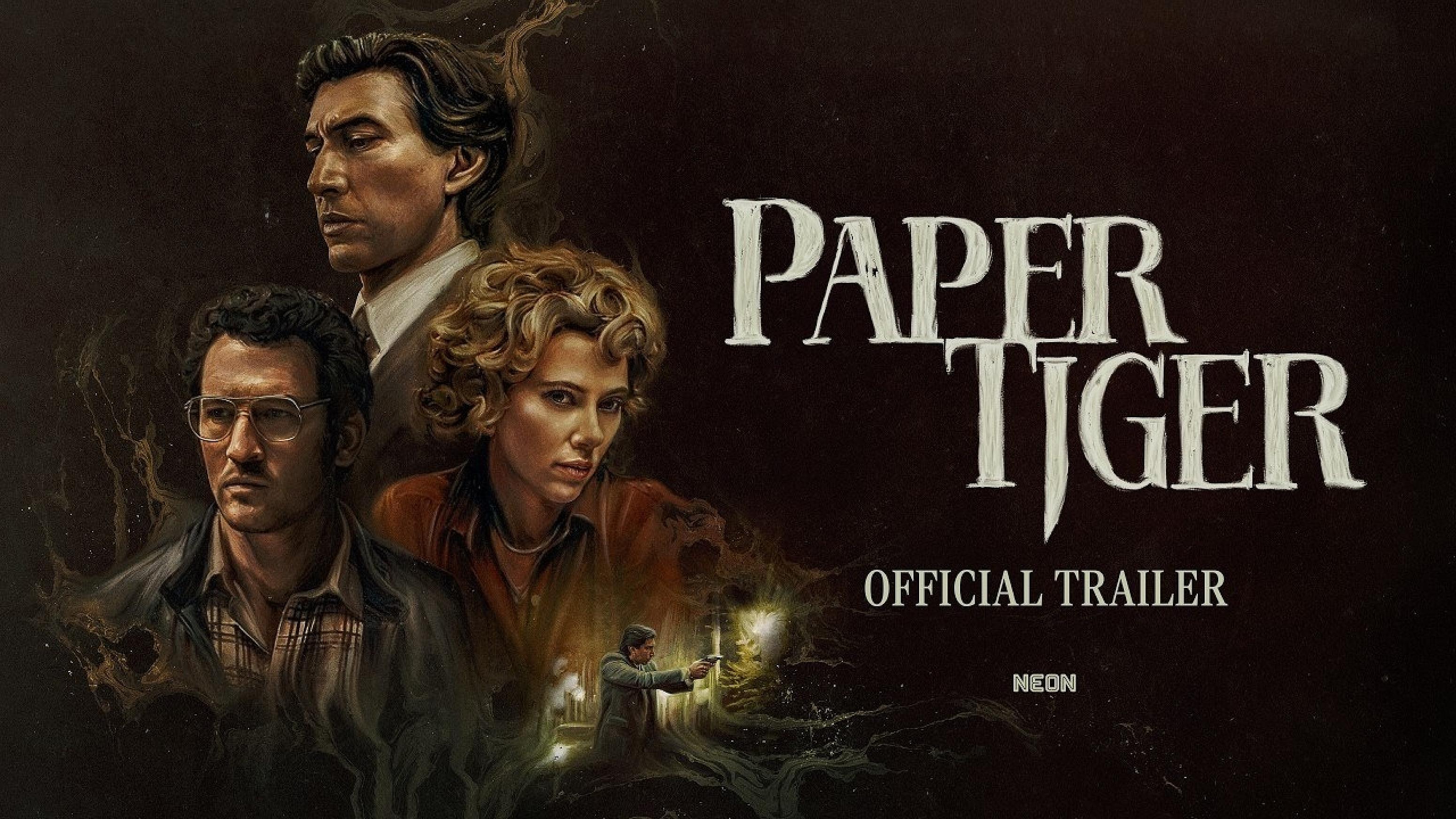
How DP Joaquín Baca-Asay captured the retro '80s look of New York in 35mm like the image was falling apart for James Gray's 'Paper Tiger'
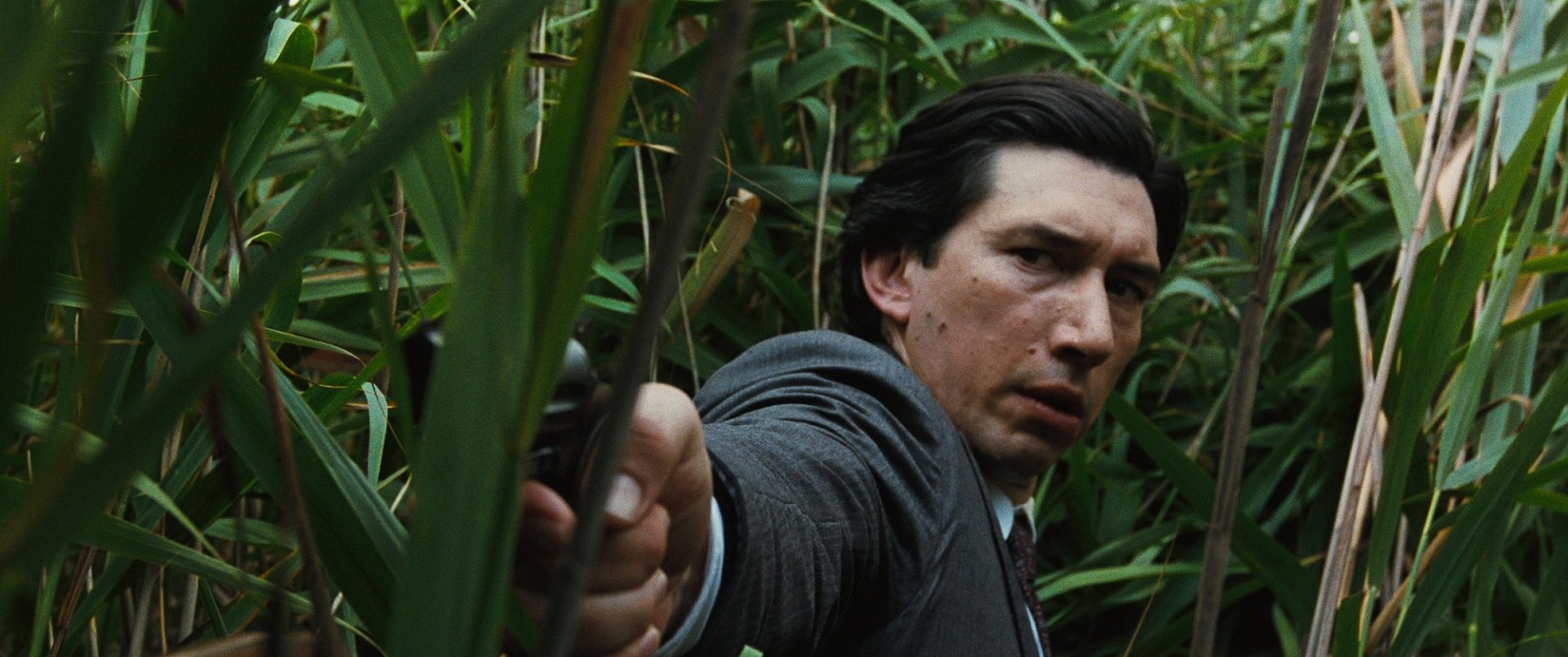
Adam Driver hides in the tall grass in James Gray's PAPER TIGER. Photo courtesy of Neon.
With Paper Tiger, writer-director James Gray revisits his favorite genre: the '80s New York crime thriller involving the Russian mob. Here, the filmmaker follows two brothers — former cop Gary (Adam Driver) and environmental engineer Irwin (Miles Teller) — who get way in over their heads in pursuing the American Dream.
Gray reunites with cinematographer Joaquín Baca-Asay (Two Lovers, We Own the Night), who both delighted in shooting 35mm for period-accurate warmth and textures. They shot on location in Queens and New Jersey.
"James asked me about shooting this movie and we were having a conversation about life in general," he says. "And then the next communication was about shooting on film. He said he really didn't enjoy working digital for his last movie. I thought that would be great — I prefer it. And then we went on about grain and not worrying about dialing everything perfectly, and not using LED lighting, just old lights [tungsten, fluorescent tubes, real sodium vapor for orange light].
"And the reality was we were trying to hit a certain kind of grain level, a certain level of texture," adds Baca-Asay. "James said two things: 'I want [the image] to almost look like it's falling apart 'cause it's about fate and death and all these things are going to happen.' And he wanted a glow from within. And the formula was film underexposed by a stop and 2-perf because that gave us a little blow up, more grain, perfect texture."
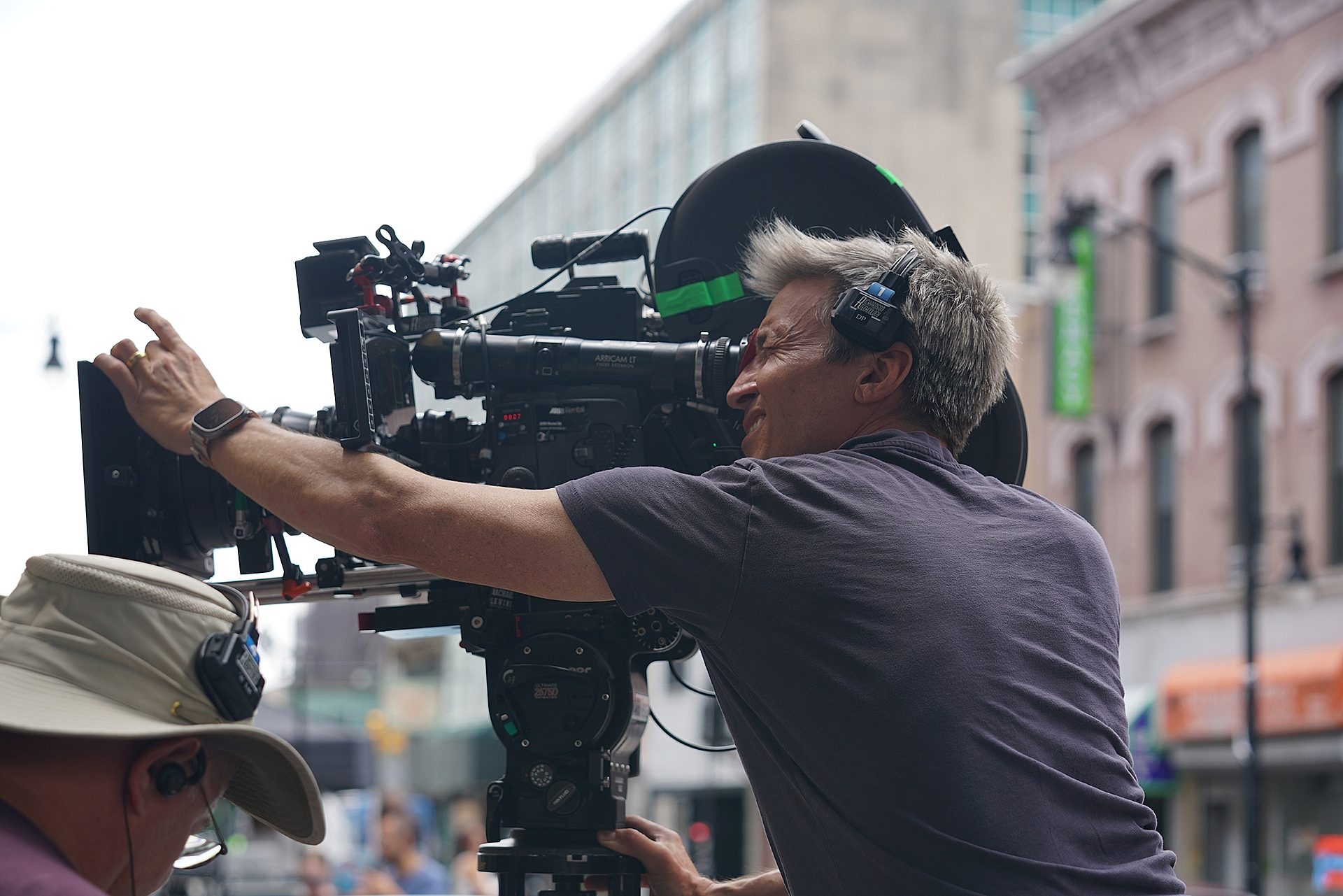
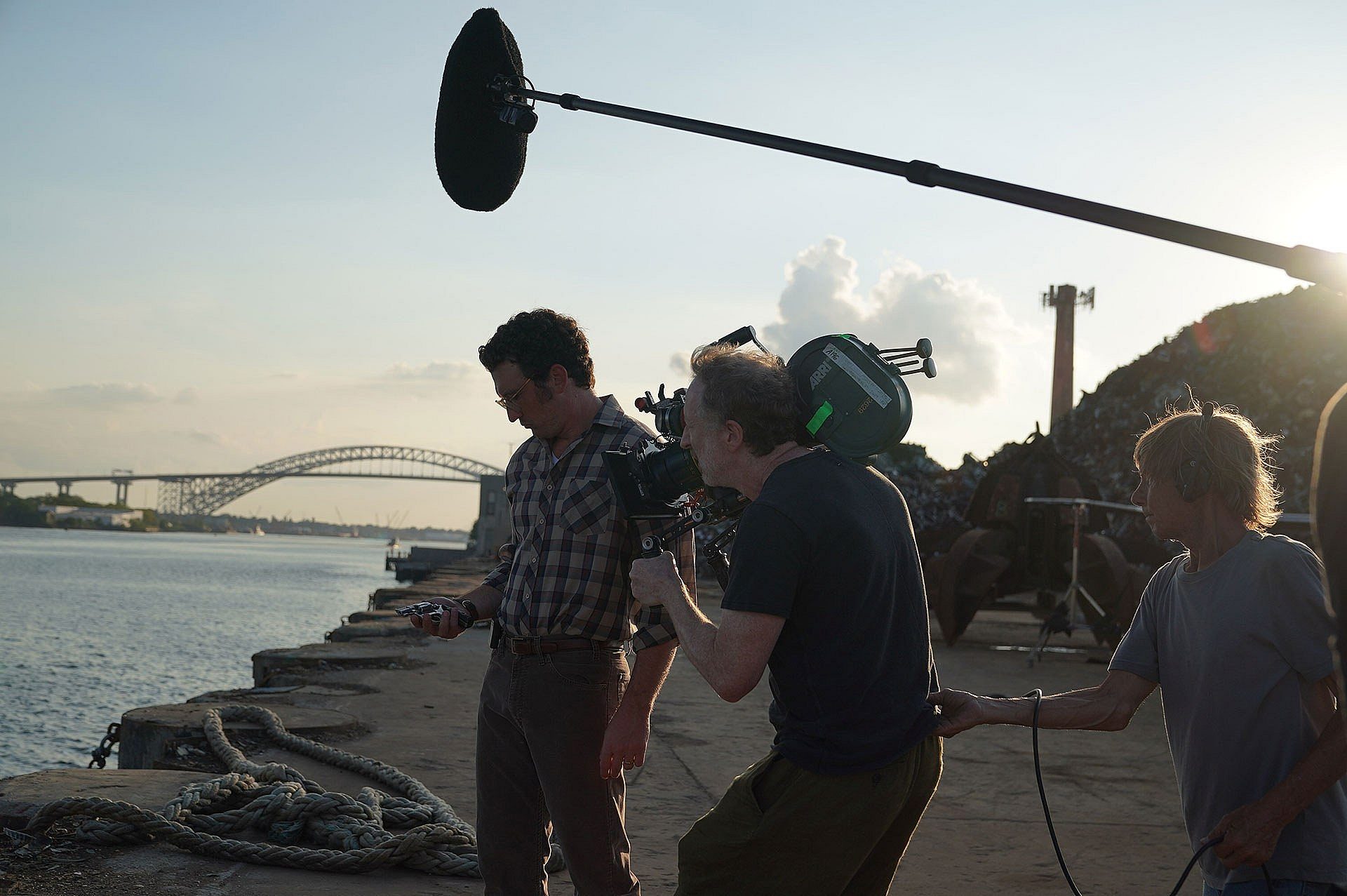
Cinematographer Joaquín Baca-Asay on location in New York in James Gray's PAPER TIGER.Photo courtesy of Neon.
They first tried 16mm, but it wasn't regal enough. So then came months of testing in 35mm. They landed on the Arricam LT and Arriflex 435 cameras, KODAK VISION3 50D 5203 and 500T 5219 Color Negative Film stock, and vintage lenses: Bausch & Lomb Super Baltars and Cooke zooms.
"James likes a warm patina," continues Baca-Asay. "Every single shot has that patina in one way. He calls it the golden aging of death: sepia tea stain. And he hates blue. And we used this yucky, green fluorescent light in some scenes. We also got cooler and I got deeper on the stop with the lenses so that they would resolve harder as the movie goes on and around Gary's story. It's not even the '80s really. It's like an interpretation of that time, but through very accurate tools."
Paper Tiger opens by introducing Irwin's family: his wife Hester (Scarlett Johansson) and their two sons, Scott (Gavin Goudey) and Ben (Roman Engel). "The very opening is a pan across the grass, which will be where things end, and the pan across the pollution, which is kind of what the movie has going underneath," Baca-Asay explains. "And then it goes into the neighborhood.
"But James had these silhouettes in mind," he adds. "The silhouette of Irwin, where at first, he's not revealed, he wanted a kind of mystery underneath. There's something odd about it; we're tracking down the alley. But then you get into the house, and you're in this warm, wonderful world. And then you meet Gary and he's very mysterious and there are extreme warning signs about him throughout the movie."
After the warmth of the dinner scene, the two brothers go down into Irwin's basement to discuss Gary's scheme with the Russian mob, and the mood turns darker. This was inspired by the surveillance workspace in Francis Ford Coppola's The Conversation (1974) and its use of fluorescent lighting. "In this scene, it's like James is having a conversation with some of his favorite painters and cinematographers: Rembrandt, Gordon Willis, Vittorio Storaro," Baca-Asay suggests.
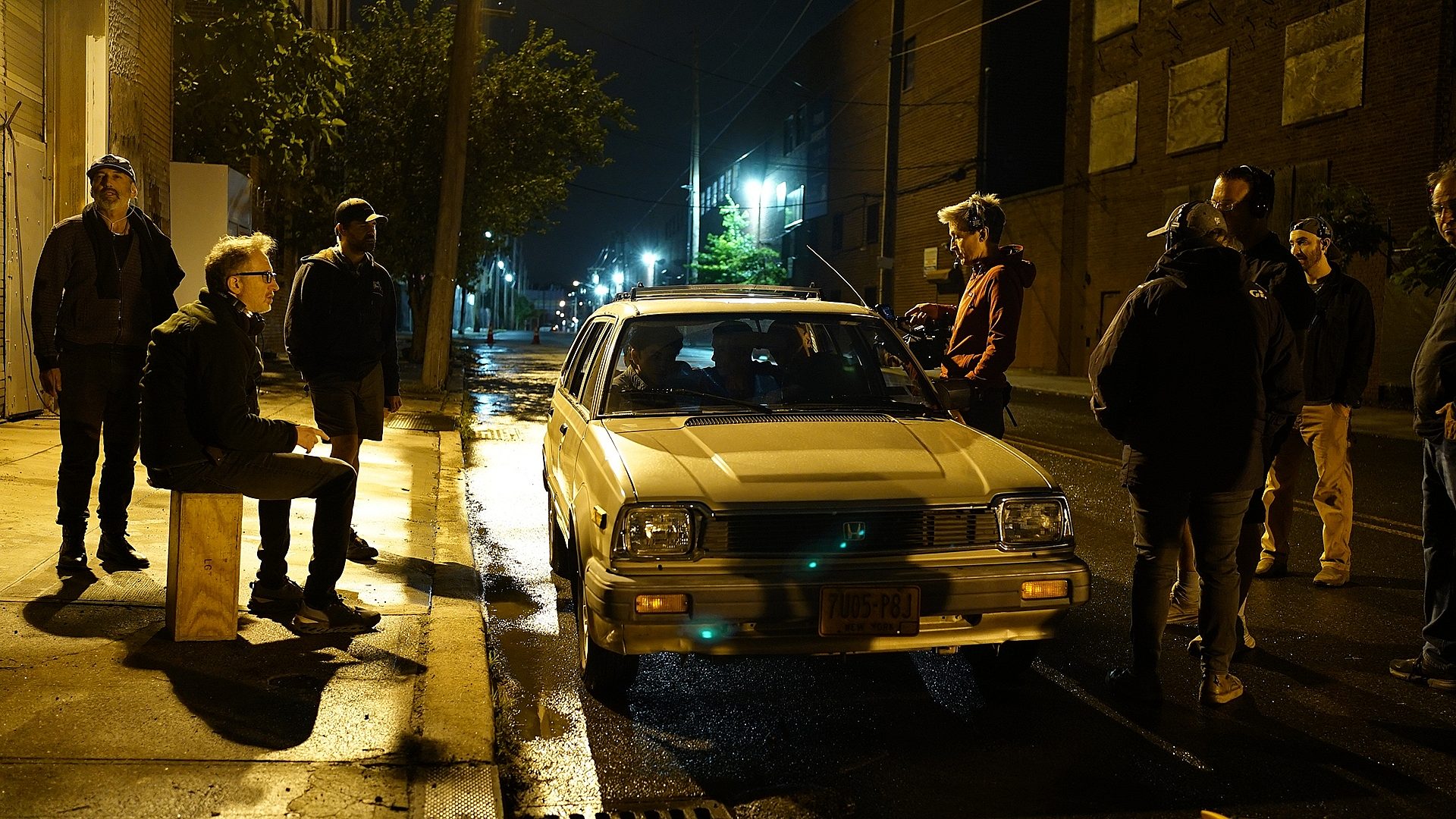
(L-R) James Gray and cinematographer Joaquín Baca-Asay on location in New York with lots of sodium vapor in James Gray's PAPER TIGER. Photo courtesy of Neon.
Likewise, Gray channels Roman Polanski's Chinatown and the surveillance photographs in Echo Park. This happens when Irwin takes pictures of problematic mob activity at Gowanus Canal, which gets him and his family into trouble. "That's a matte painting mixed with real stuff," adds Baca-Asay.
When it came to lighting Russian mob boss Bogoyavich (Victor Ptak) in his lair, for the first meeting with the brothers, they referenced paintings by Francis Bacon for a fresh look. "It's not top light where you don't see the eyes, it's a different kind of experience," the cinematographer recalls. "He's like the devil incarnate, and we kept trying to think about how to portray him. In the end, I think James was looking for a big room, and then we found this Ukrainian cultural center with chandeliers and a massive painting that reminded us of North Korea. And I wanted to dim up the lights as they walk in, which was an interesting effect.
"Also, James uses little bits of slow motion a lot," Baca-Asay continues. "Instead of asking the actor to do it slower, he'll just slow the camera down like 32 frames, and it's like a Bosch painting fading into the gloom, the different characters in the scene. And then with Bogoyavich, we didn't overdo evil light on him. The actor did it, and I think that worked in that situation."
One of the horrifying standouts, meanwhile, is the home invasion scene in the middle of the night, with Irwin standing guard on the staircase, holding a BB gun that he pretends is a shot gun. The lighting here was inspired by John Carpenter's Halloween (1978), shot by Dean Cundey.
Cinematographer Joaquín Baca-Asay on location in New York in James Gray's PAPER TIGER.Photo courtesy of Neon.
"We had to sell this BB gun shadow, which was an absurd premise," Baca-Asay suggests. "But it was critical to the story, and character-wise, this was incredibly important. All day stuff was shot at night and all night stuff was shot during the day because of cast limitations with scheduling. But that allowed me to have total control, even though it was brutal.
"So when you're looking out the kitchen windows, we lit all the buildings outside so that it's nighttime," he continues. "And I always love that because that's movie magic. And so that scene was shot with the house tented, and we were using little shop lights. But when he first wakes up in this really dark room, the curtains are all open. Why? That's his first weird thing. And then when he goes down, gets the gun, and looks out the window, we see a shadow across outside, and we know that this is bad. That was shot at the exterior house location. And we're lighting that roof to sell the outside and that shadow.
"And then the shadows downstairs were really hard," he adds. "That was actually the hardest thing of all, to get those shadows right, and to get Miles to make the right feel, and to get the right rhythm with camera movement. And then we went downstairs and we realized that we don't have a plan for where the camera goes, and Miles, who had been the victim of a home invasion, tells us what happened, and he walked through the house and looked through these different windows, and he talked us through it. And I followed this video finder that I used. And that was the shot and all of it was lit with sodium vapor lights. And it worked because of the nature of the lighting from the windows and being so flexible."
Baca-Asay's personal favorite, though, is the scary scene where Irwin's sons are held at knifepoint in their car by Russian thugs. It uses the rawness of the bad sodium vapor light for a sickening authenticity.
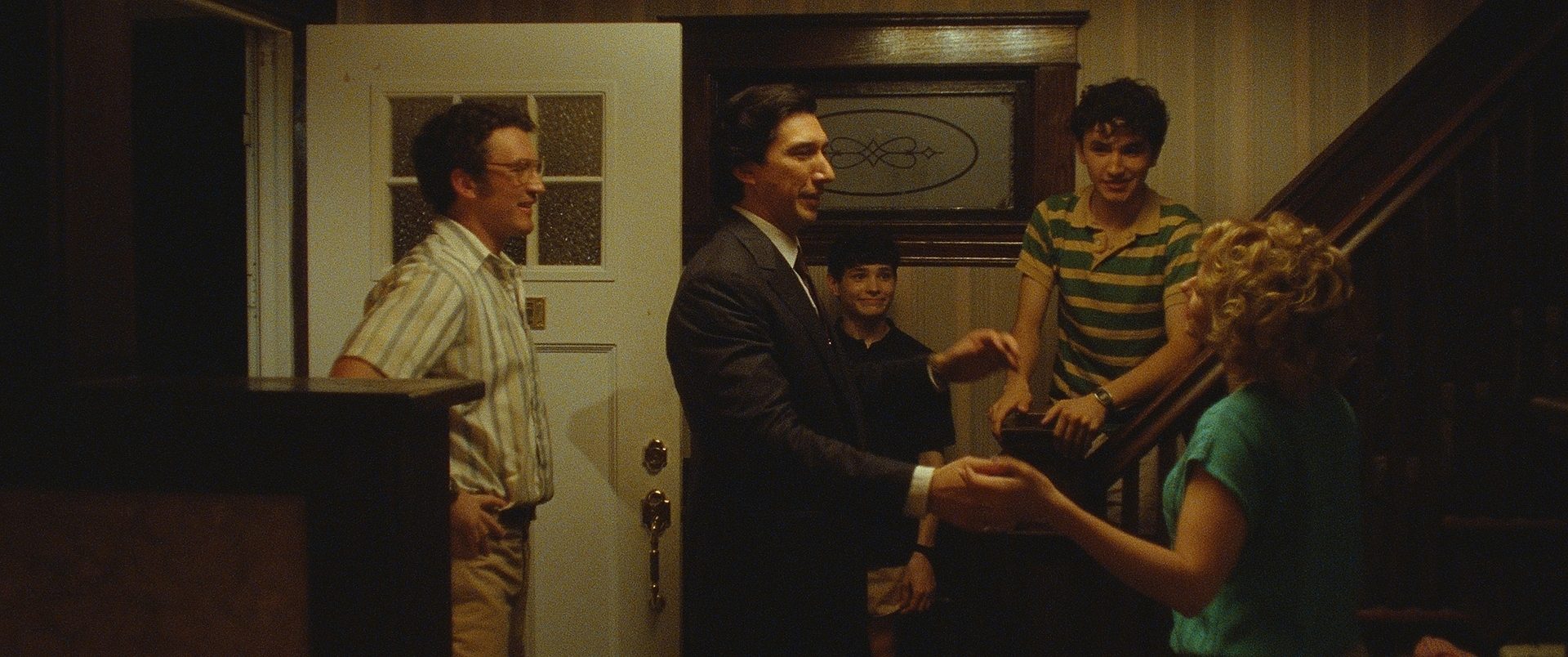
(L-R) Miles Teller, Adam Driver, Roman Engel, Gavin Goudey, and Scarlett Johannson getting together for dinner in James Gray's PAPER TIGER.Photo courtesy of Neon.
"In that scene, we were both inspired by Gordon Willis from the Godfather films," Baca-Asay recounts "But, for me, I'm speaking to The Yards, which James shot with Harris Savides. That's the vibe to me, and it was all sodium vapor from above from Condors. We had these sodium vapor car lights that had been modded by a gaffer that we could attach to things, and they saved the day because they throw light really far.
"So we were able to block run with those, and then for everything close we had shop lights," he continues. "And then inside the car I used mirrors to bounce those lights into the car and some soft bounces, but mostly it was that the windows were frosted from the steam of the actors' breath. That gave me this diffusion, and the hard light would punch through that and do this kind of silver reflection.
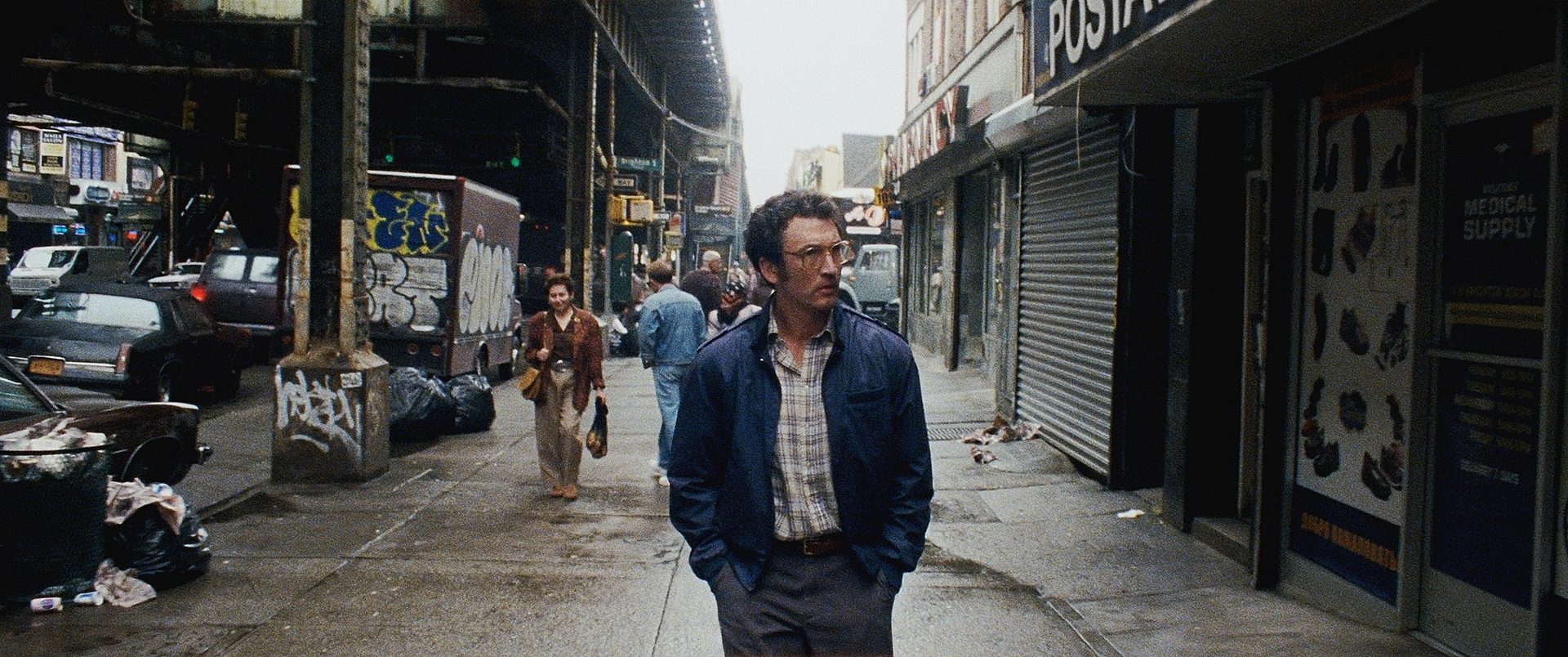
Miles Teller ponders the severity of getting involved with the Russian mob in James Gray's PAPER TIGER. Photo courtesy of Neon.
"And you can really see it on one of the kids when he's leaning back," he adds. "There's just a gorgeous, supple highlight thing. That's because he's surrounded with a frost that's running in that scene. We shot everything two cameras, including that, so we could cover both the front and back seat simultaneously. I think it's scary as hell. It was so powerful."
When Gray and Baca-Asay started shooting the movie, they used the same gray colors from the test for the first third and then made adjustments as they progressed. "But we never did any fussing on the daylights," he explains. "They just did it, so I had a very clear guide for what I was doing. And that's how we interacted with the world. And shooting on film was essential. That's how we were harkening back. So, for James, there was no reference before 1981. I'm in radical retrograde."