50-year-old 16mm archive film proves its worth for the acclaimed documentary 'Once Upon a Time in Harlem'
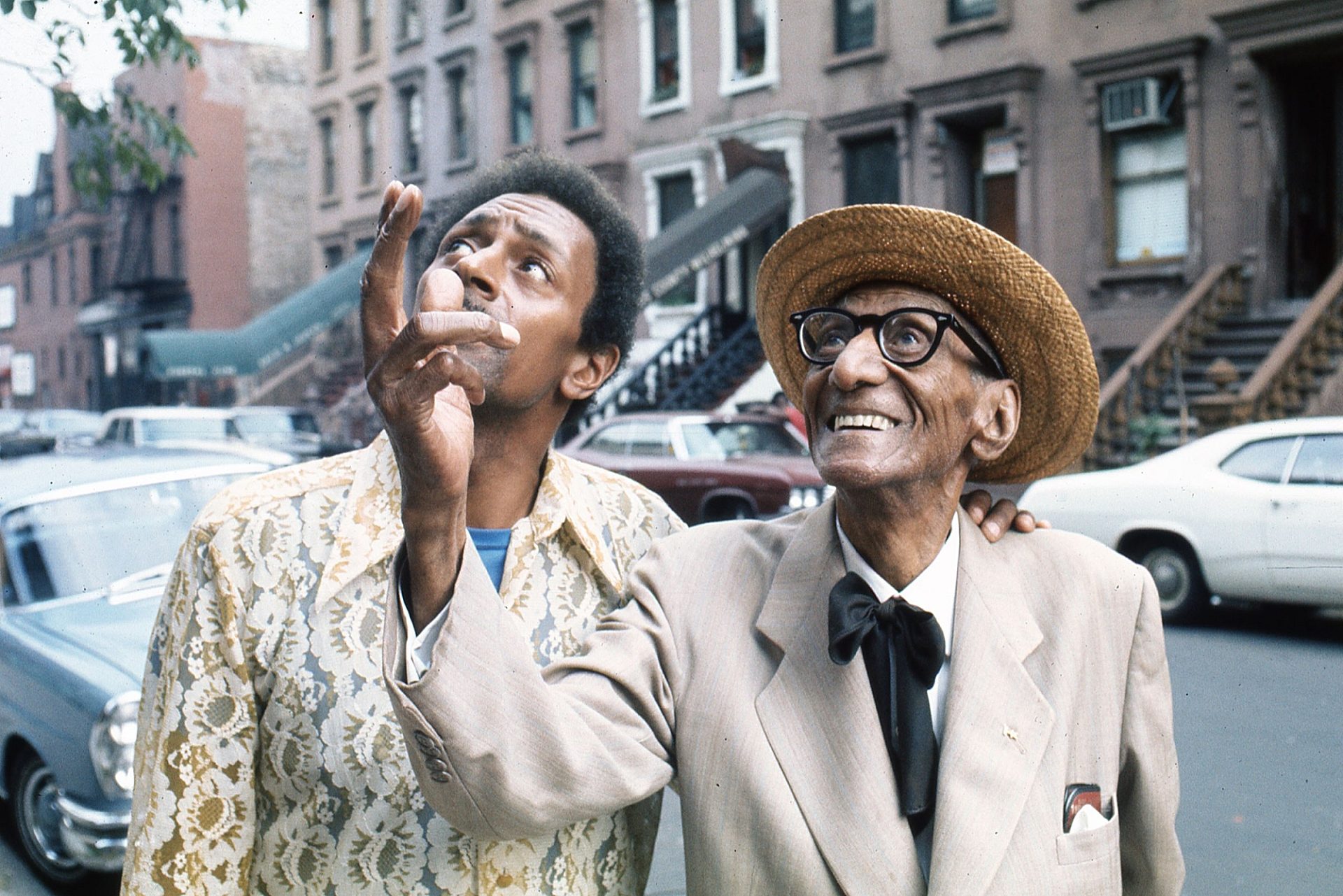
Leigh Whipper in ONCE UPON A TIME IN HARLEM. Courtesy of NEON.
Motion picture film is widely regarded as the most trusted physical format to preserve visual memories for the long-term. That's because a well-developed, properly stored print/negative can last upwards of 100 years, likely several hundred.
Film's longevity as an archival format proved crucial in producing a remarkable cultural touchtone – the highly-acclaimed documentary, Once Upon a Time in Harlem. The making of this feature-length film also represents a multi-decade mission that required a combination of multi-generational family determination, institutional funding and restoration prowess.
All the footage that now comprises Once Upon a Time in Harlem was originally filmed on KODAK 16mm film in 1972 by pioneering independent filmmaker William Greaves and his camera team. The material – around 60,000 feet – next saw the light of day some 50 years later, after it was taken out of deep storage, restored and fashioned into the much-admired project, overseen by William's son, co-director David Greaves, granddaughter and producer Liani Greaves, along with producer Anne de Mare.
As a filmmaker, producer and activist, William Greaves' work challenged systematic racism and the distorted representations of Black communities in mainstream media and culture. The 100-minute documentary covers an extraordinary salon cocktail party he master-minded at the Harlem townhouse of jazz supremo Duke Ellington in August 1972. With the assistance of former local librarians Gene Hutson and Regina Anderson Andrews, Greaves successfully gathered and filmed surviving participants of the 1920's Harlem Renaissance – trailblazing Black American artists, intellectuals, advocates and activists – many of whom had not encountered one another in half a century.
Centered in the Harlem neighborhood of New York City, the Harlem Renaissance became one of the most consequential movements in African-American music, dance, art, literature, theater and politics of the 20th century. The Great Migration drew hundreds of thousands of Black Southerners away from the Jim Crow South towards Northern and Midwestern industrial cities in order to escape racial violence and seek better economic opportunities.
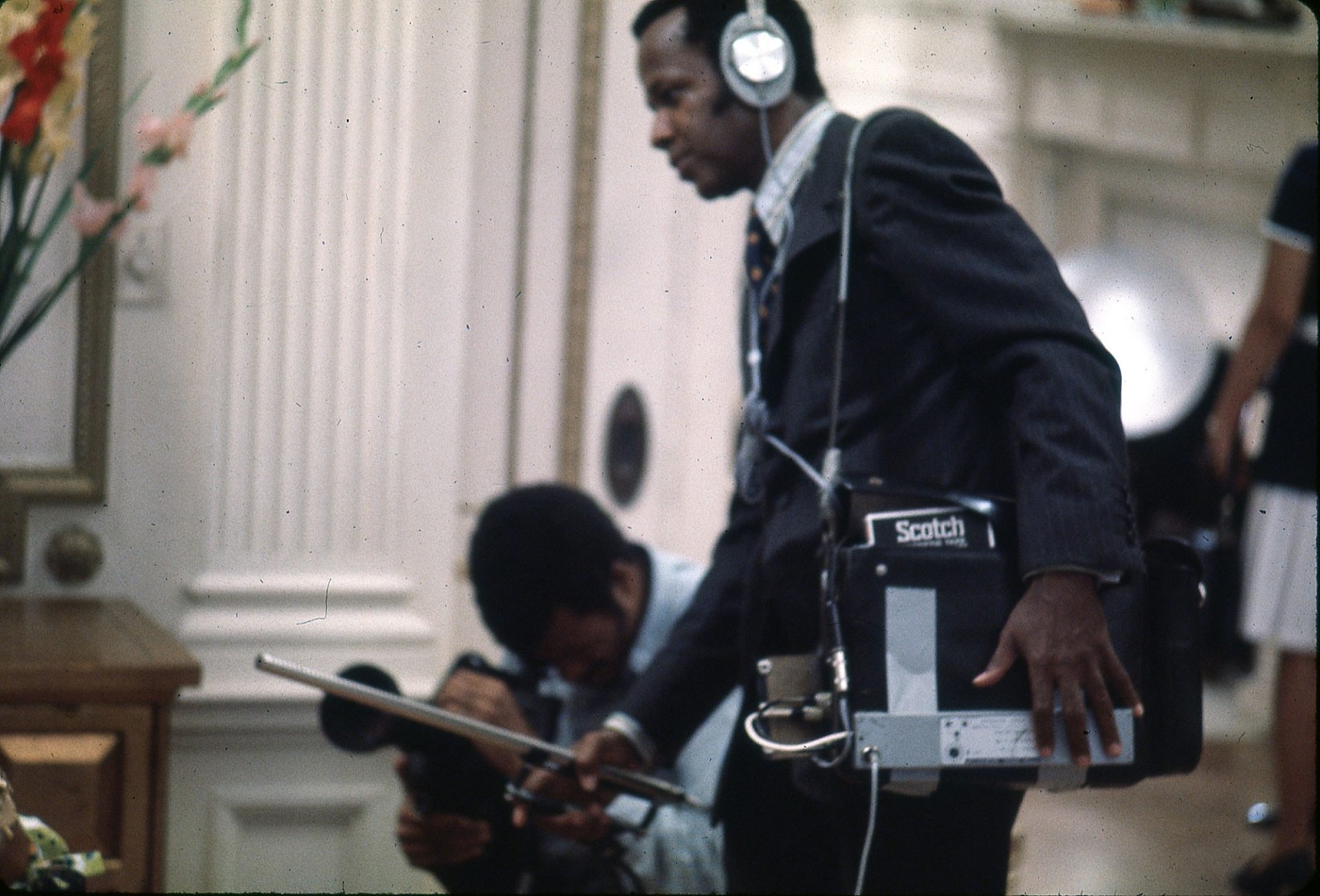
William Greaves on the set of ONCE UPON A TIME IN HARLEM. Courtesy of NEON.
Harlem represented both refuge and possibility, a place where Black identity could be openly expressed. During the 1920s and early '30s, the neighborhood transformed into a vibrant center of Black cultural expression in what became known as the "Harlem Renaissance." Black artists and intellectuals were able to control their own representation in Western high culture and established a new urban cosmopolitan identity that reached far beyond the city streets. The movement also helped to sow the social and psychological seeds for the post-WWII Civil Rights Movement.
For four hours during Greaves' get-together, the smartly attired group of Renaissance luminaries reminisced, critiqued, argued, laughed and drank together, debating their place in a rapidly shifting cultural landscape, all while being filmed on 16mm.
Guests attending the party included: Eubie Blake, the iconic ragtime musician and composer; Aaron Douglas, the celebrated painter, widely-regarded as the 'father of African-American art'; legendary photographer James Van Der Zee, whose striking historical imagery is woven throughout the film; Leigh Whipper, the 96-year-old actor reflecting on his days performing in minstrel shows; Ida Mae Cullen, widow of celebrated poet Countee Cullen, advocating for her late husband's legacy; Romare Bearden, the renowned artist and collagist; Arna Bontemps, the distinguished poet, novelist and librarian; and George Schuyler, the provocative, adversarial satirist and critic who challenged the room on the true meaning and legacy of the Renaissance.
Once Upon a Time in Harlem received its world premiere at the 2026 Sundance Film Festival, followed by screenings on the festival circuit worldwide before being theatrically released in the US by NEON. It received rapturous reviews as an indispensable treasure, and a vital historical 'time capsule,' delivering an immersive and transfixing glimpse into a unique time and place for Black American culture.
"My father knew several of the original Renaissance luminaries and came up with this incredible concept of bringing these folks together," says David Greaves. "He was friendly with the local librarians, Gene Hutson and Regina Anderson Andrews, and they helped him to connect with Duke Ellington and spread the word about the gathering at his townhouse. It rapidly became a real draw for people who hadn't seen one another for many decades to dress up and attend."
Aged 26 at the time, David was part of the four-strong camera crew his father assembled specially for the shoot, working alongside fellow operators Doug Harris, David Hoffman and Jerry Pantzer, who was also responsible for lighting the hallways and rooms of the townhouse.
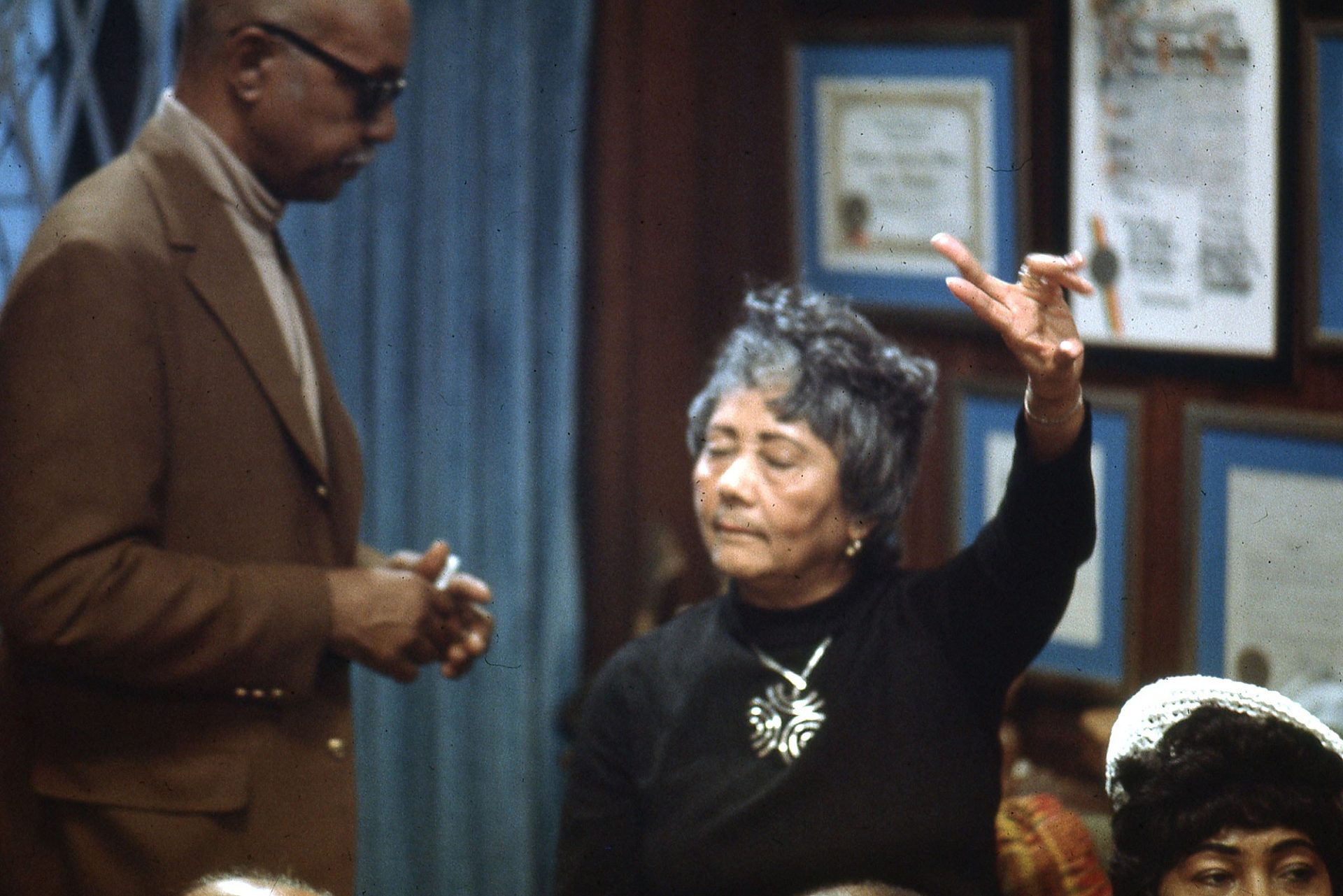
Abram Hill and Ida Mae Cullen in ONCE UPON A TIME IN HARLEM. Courtesy of NEON.
The team filmed the proceedings using a trio of Éclair 16mm NPR (Noiseless Portable Reflex) cameras fitted with 400-ft. magazines, Angénieux 12-120mm zoom lenses, plus Angénieux orientable viewfinders, which enabled the operators to pivot and adjust the angle of the eyepiece without losing a correctly oriented image. A Bolex H16 16mm camera was used as a fourth camera. Two sound recordists captured the audio to tape.
During the 1960s, the Éclair NPR camera and Angénieux zoom lenses were widely adopted by European filmmakers. In France, they were the favoured tools of DPs working with directors of the Nouvelle Vague (New Wave), commonly shooting in cinéma verité documentary style. Great Italian directors of the time, including Pasolini, Rossellini, Visconti, Fellini, Antonioni and Sergio Leone, all variously used these cameras and lenses too.
"We all had considerable experience in cinéma vérité-style filming," David recalls. "The brief from my father, who also orchestrated the guests, was to follow the action, follow the energy of their free-style interplays and conversations but without being intrusive. He told us to not be afraid to zoom-in on a face and even the eyes.
"The cameras and lenses gave us great manoeuvrability around what was a fluid situation between three rooms packed with people, but it was quite intense, as we all did our own focus-pulling. At one moment we'd be focusing our attentions on one scene before having to move quickly to cover whatever might be happening somewhere else. To make sure we had sharp images, we'd continually zoom-in, get the focus, pull-out again and roll.
He adds, "During the party itself we typically filmed conversations with two cameras, while always being conscious of when a magazine might need to be changed. Because the place was full of people, we didn't have a room for the camera equipment. So film-loading and magazine changes were done in the hallway."
The party was captured on KODAK 16mm color reversal filmstock, with David estimating the team shot 60,000 feet: around 30 hours of footage.
"As we couldn't very well be shifting lights around, taking meter readings and changing apertures while we filmed, Jerry Pantzer pre-lit each room to give an even spread of light, bounced off the ceilings and walls, so it wrapped nicely around the guests and gave us decent exposure."
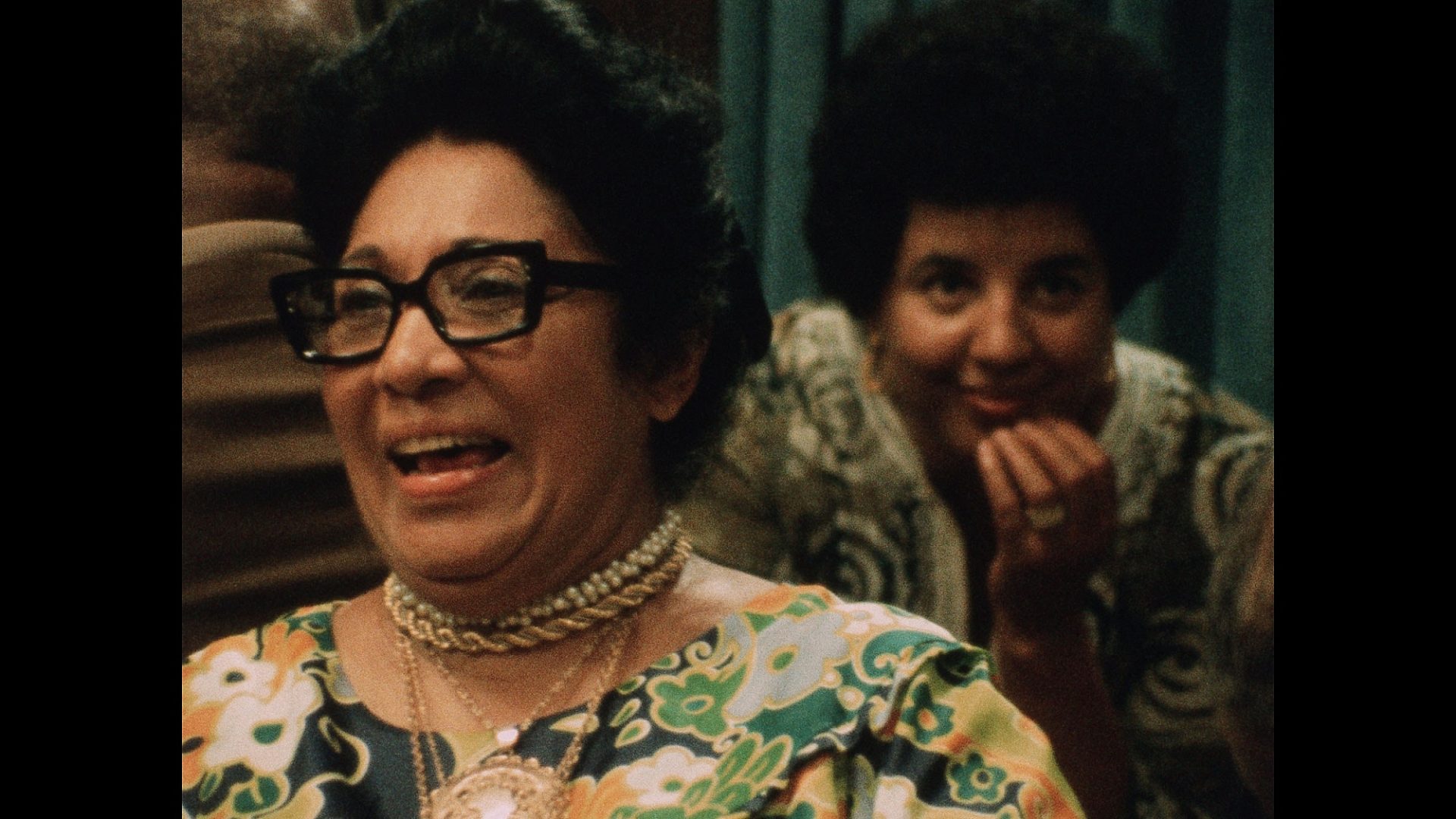
Gerri Major in ONCE UPON A TIME IN HARLEM. Courtesy of NEON.
After the shoot concluded, the rushes were processed at DuArt Film & Video, a premier New York City film laboratory and full-service media provider. Founded in 1922 the company processed and worked on iconic films including Kathleen Collins' Losing Ground (1982), one of the very first feature-length fictional dramas directed by an African American woman, along with Dirty Dancing (1987), Forrest Gump (1994) and The Cider House Rules (1999), as well as projects for Woody Allen and Martin Scorsese. It ceased operations in 2021.
Although Greaves' historic party was filmed in 1972, it took about 50 years before it became the documentary known today. During that time, the footage remained in the vaults of Iron Mountain, a renowned facility offering stable temperature and humidity conditions for long-term storage.
After William passed away in 2014, his widow and lifelong creative partner, Louise Archambault Greaves, made it her mission to preserve the footage for posterity. In 2021, she secured grants from philanthropic institutions including The Ford Foundation, plus funding from Cromwell Harbor Foundation and Mellon Foundation, to advance the project. Louise passed away in 2023 leaving David and Liani to bring it to fruition as a coherent narrative.
The pair enlisted the expertise of film preservation specialist Bill Brand at BB Optics Inc. in New York City to restore and digitize the original footage. Over the next 18 months the material was painstakingly unspooled, cleaned and chemically stabilized before being 4K-scanned and resynced to the audio, which had been previously archived at The Schomburg Center for Research in Black Culture in Harlem. The documentary was then cut together by producer Anne De Mare and editor Lynn True, with color grading by Stewart Griffin at Skyline Finishing in Manhattan.
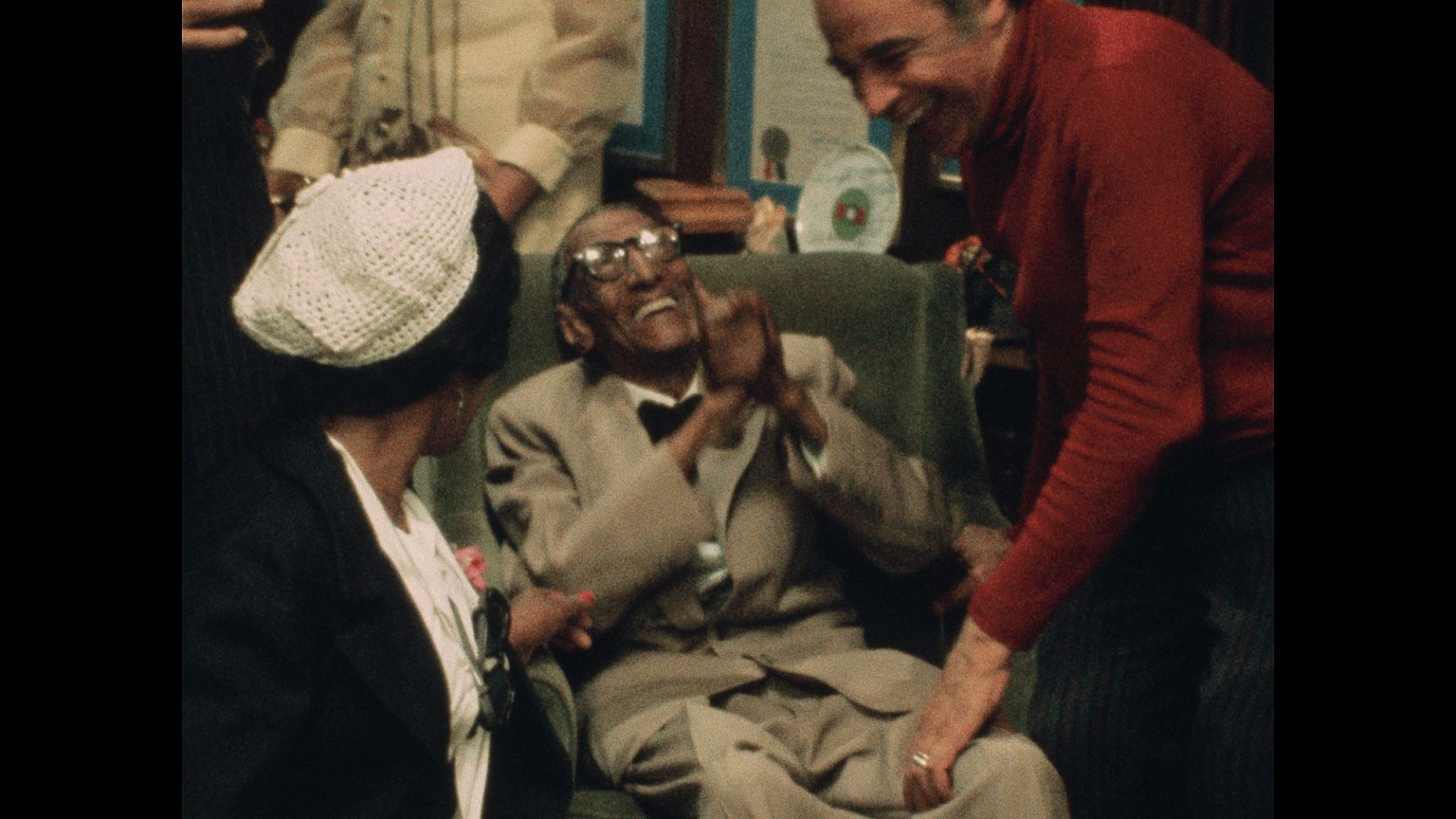
Leigh Whipper and Richard Bruce Nugent in ONCE UPON A TIME IN HARLEM. Courtesy of NEON.
"The 16mm footage, which had been in storage for half a century, was in great condition, requiring little by way of restoration, except for some hair, dust and debris that had entered the camera during the shoot," Liani reports. "Once it was color-graded, the result looked really beautiful. The richness, warmth and texture of the original 16mm really shone through. This, together with the style of the camera work that had been adopted, made it feel as if you were there at the party yourself in the same room as those iconic luminaries."
Assessing the impact of Once Upon a Time in Harlem, David remarks, "Although my father was greatly admired as a documentary filmmaker, he didn't receive the acclaim he has now. This film should cement his name among the most important chroniclers of Black American history."
Liani adds, "It was a long journey for us as a family, but the reception has been incredible and wonderful. Thanks to the stable conditions in which the original 16mm material was stored for five decades, we were able give life to the most important footage William ever shot, to fulfil his vision of showing the richness of the Harlem Renaissance and the luminaries whose work transformed Black American culture.
"You can see by their example what it was to create an impactful movement. How you can be in disagreement but be able to manage conflict through empathy and civilized discourse.
"I want everyone to watch this film. I want anyone who is interested in art, culture and creativity to watch this film. I want anyone who is interested in community-building and creating a civilized society, to watch this film. I am sure that contemporary artists, particularly Black creatives, stand to draw so much inspiration in their current and future work by looking at the past."
David and Liani are now actively working on making the full trove of Once Upon a Time footage available through a public-facing archive. As the film intentionally focused on the night of the party, several hours of additional sit-down interviews were not included in the theatrical cut. However, working with Anne de Mare, they are using a fellowship at Harvard University to transform all 60,000 feet of the restored footage into a free, public-facing educational archive.
