Jon Peter shoots Reed Van Dyk's 'Atonement' in Super 16mm to convey a fog of war authenticity
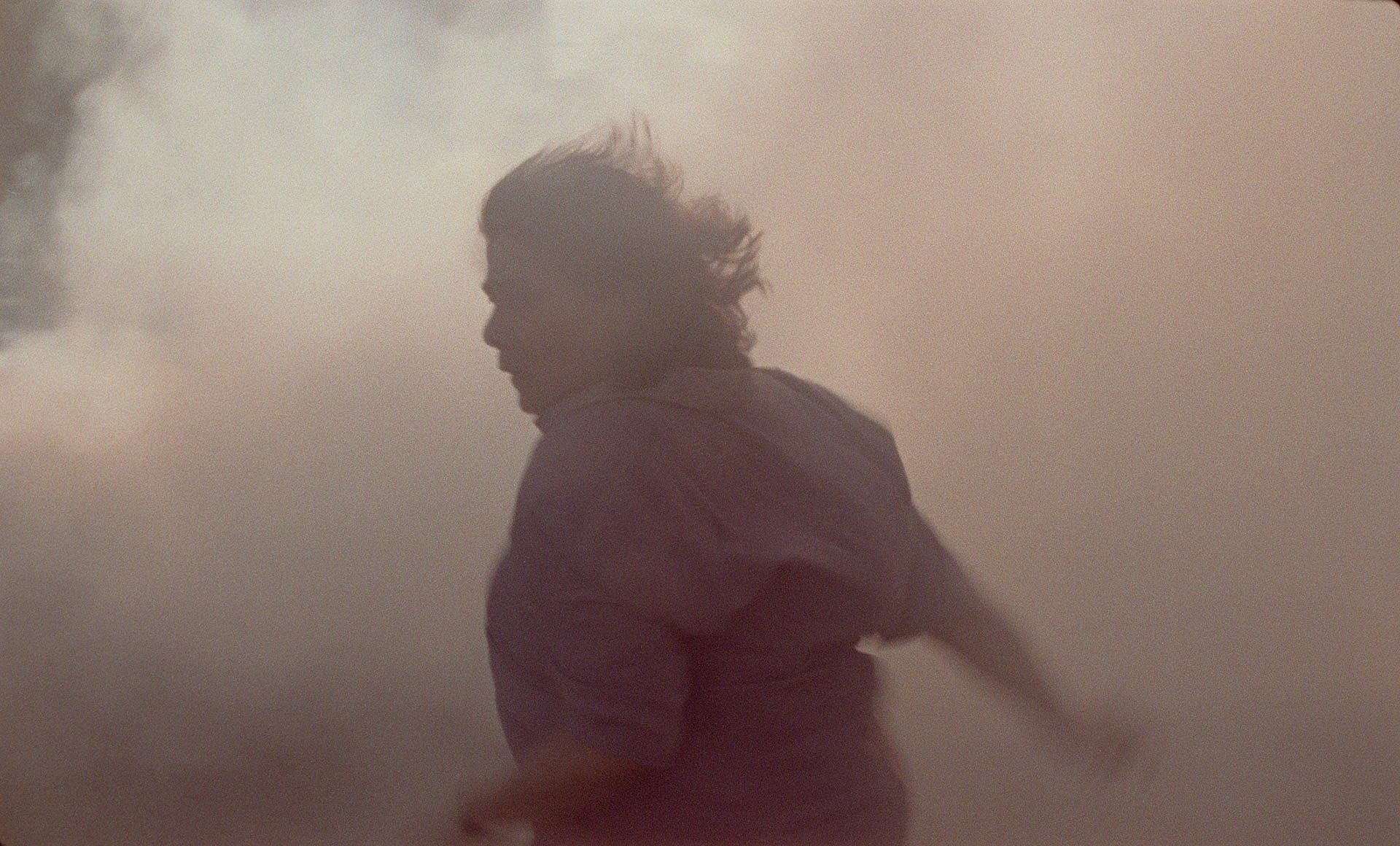
Hiam Abbass as Mariam runs through smoke in Baghdad after suffering family loss in Reed Van Dyk's ATONEMENT. Photo courtesy of Kino Lorber.
If ever a film cried out for the realism and immediacy of Super 16mm, it's director Reed Van Dyk's debut feature, Atonement, the psychological drama about the Iraq War, based on the New Yorker fact-based article by Dexter Filkins.
This has been a passion project for Van Dyk about a trio of real people: "an American marine mangled by moral injuries, an Iraqi woman hollowed out by loss after surviving his bullets, and the New Yorker reporter who brokered a meeting between them," he says in the press notes.
That is why, for such a tragedy mired in the fog of war, Van Dyk desired a look that was authentic to the narrative, devoid of beauty or poetry. He turned to his go-to cinematographer Jon Peter, who previously shot their shorts on digital (including the Oscar-nominated DeKalb Elementary), and they both agreed that it was time to embrace film.
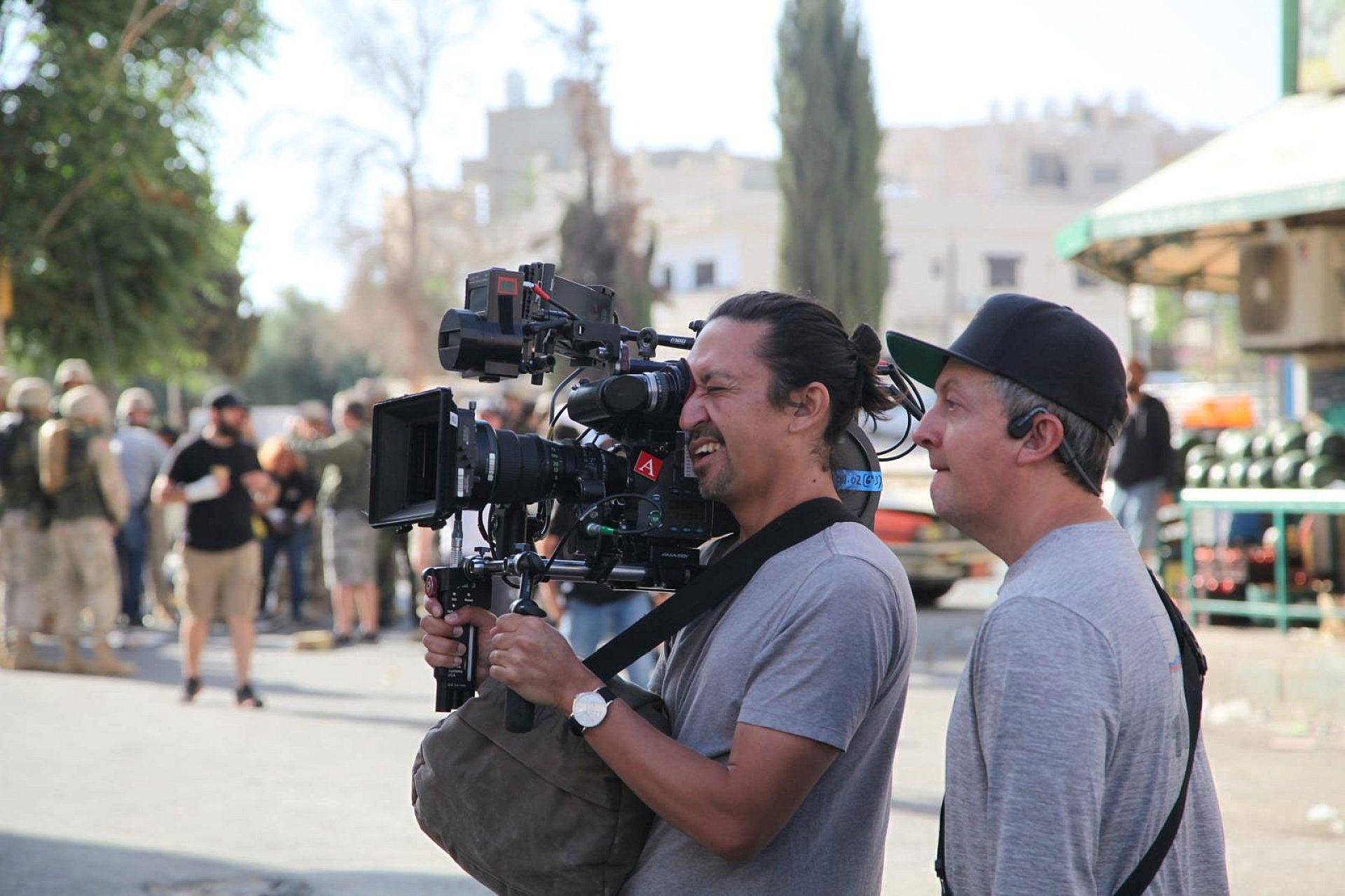
DP Jon Peter holds the ARRI 416 (Super 16mm) camera on location in Reed Van Dyk's ATONEMENT. Photo courtesy of Kino Lorber.
"We had always wanted to shoot the shorts on film, but we had absolutely no money," Peter explains. "So once Atonement came along during prep, I naturally did my due diligence by testing a bunch of digital cameras and tons of different lenses. Eventually, we also did a full day of testing on Super 16. And I remember during dailies color at FotoKem, Reed grabbed my shoulder and whispered, 'There's no way we're shooting this movie on digital.'"
Van Dyk and Peter decided on the ARRI 416 (Super 16mm) camera along with ARRI Ultra16 prime lenses and Canon 6.6-66mm zoom lenses. Since they intended Atonement to be screened theatrically, this package provided for the greatest sharpness and contrast. They performed well in the various lighting conditions they had in Amman, Jordan (for Baghdad) and Dallas (for Southern California and San Diego).
As for the Super 16 film stock, Peter chose KODAK VISION3 250D 7207 (Daylight) and 500T 7219 Color Negative Films. This best embodied a realism and texture — without artifice — that the script called for. Even though Super 16 provides a native 1.66:1 aspect ratio, they were happier with 1.85:1. It seemed unpretentious and direct.
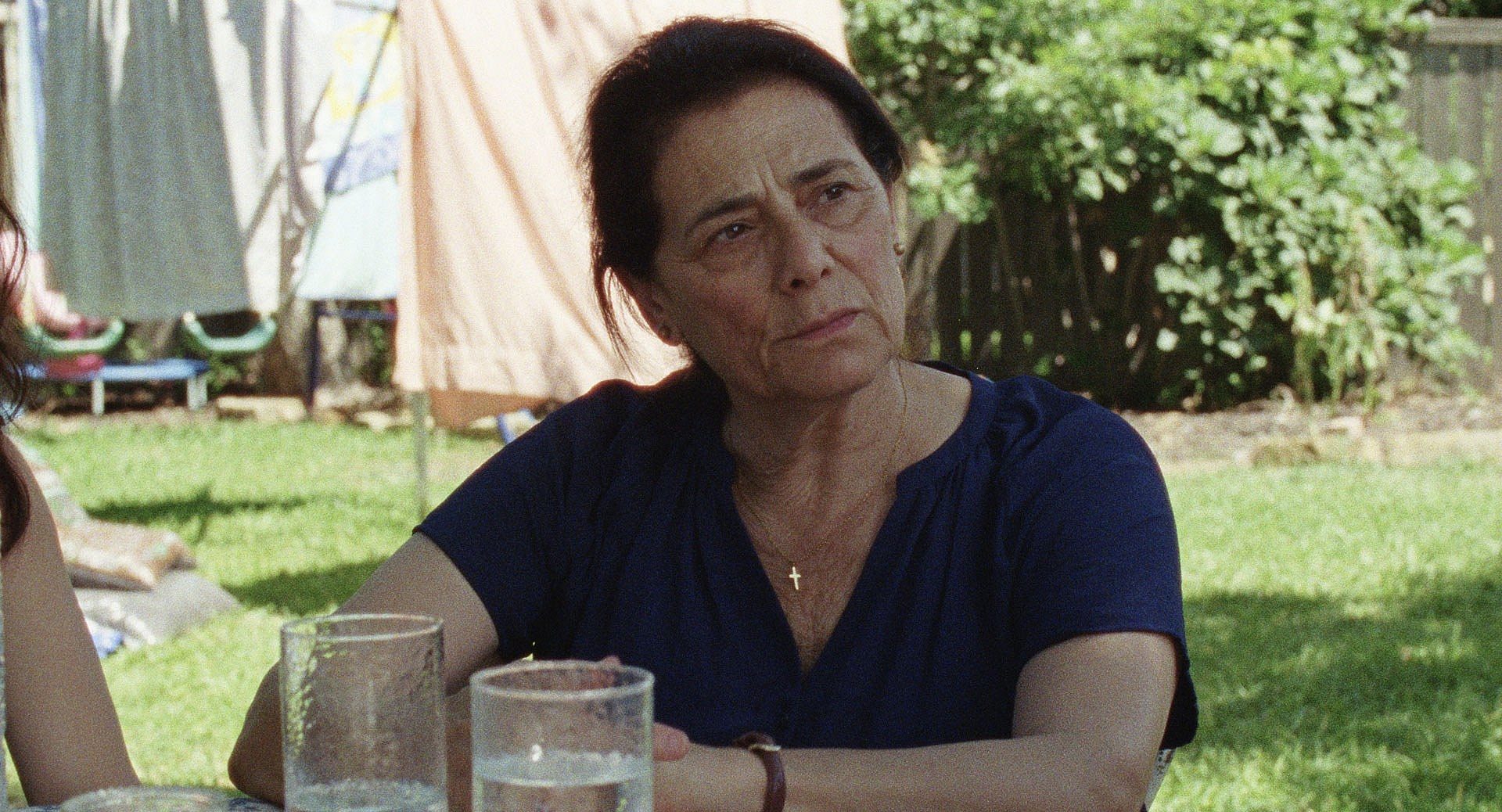
Hiam Abbass as Mariam, sits in her backyard during a meeting with Lou (Boyd Holbrook)in Reed Van Dyk's ATONEMENT. Photo courtesy of Kino Lorber.
"I would have liked to also use 50D [7203], but that adds another complication to inventory and cost," adds Peter. "And if we lost too much daylight or if we had to shoot into magic hour, then having 250D was just a better bet for me overall."
But given the very small budget and the logistical hurdles of shooting in the two locations, they needed to figure out how they were going to receive the film negative from Kodak. Fortunately, they were able to get the film negative from KODAK London for Amman and KODAK Atlanta (which ships from the main Rochester, New York, warehouse) for the Dallas portion. They also prepped their camera package from Panavision London for Amman. FotoKem Burbank, meanwhile, did the 4K processing, scanning, dailies, and final grading, which was minimal to get the balance right.
For the opening Baghdad portion, they referenced the films of Iranian director Abbas Kiarostami (particularly Taste of Cherry and Close-Up). "They convey a fullness and a proper representation of the lively atmosphere of the Middle East," Peter suggests. "Reed was very afraid of falling into that trap where things are usually portrayed as muted. I mean, there's tons of color in Baghdad. It's very green, actually. We also did a very quick, two-day stop in Baghdad to see the intersection where all of this occurred for real, so that we could bring those photos and ideas to our Jordanian production designer to make sure that some of those aspects were integrated into our set designs."
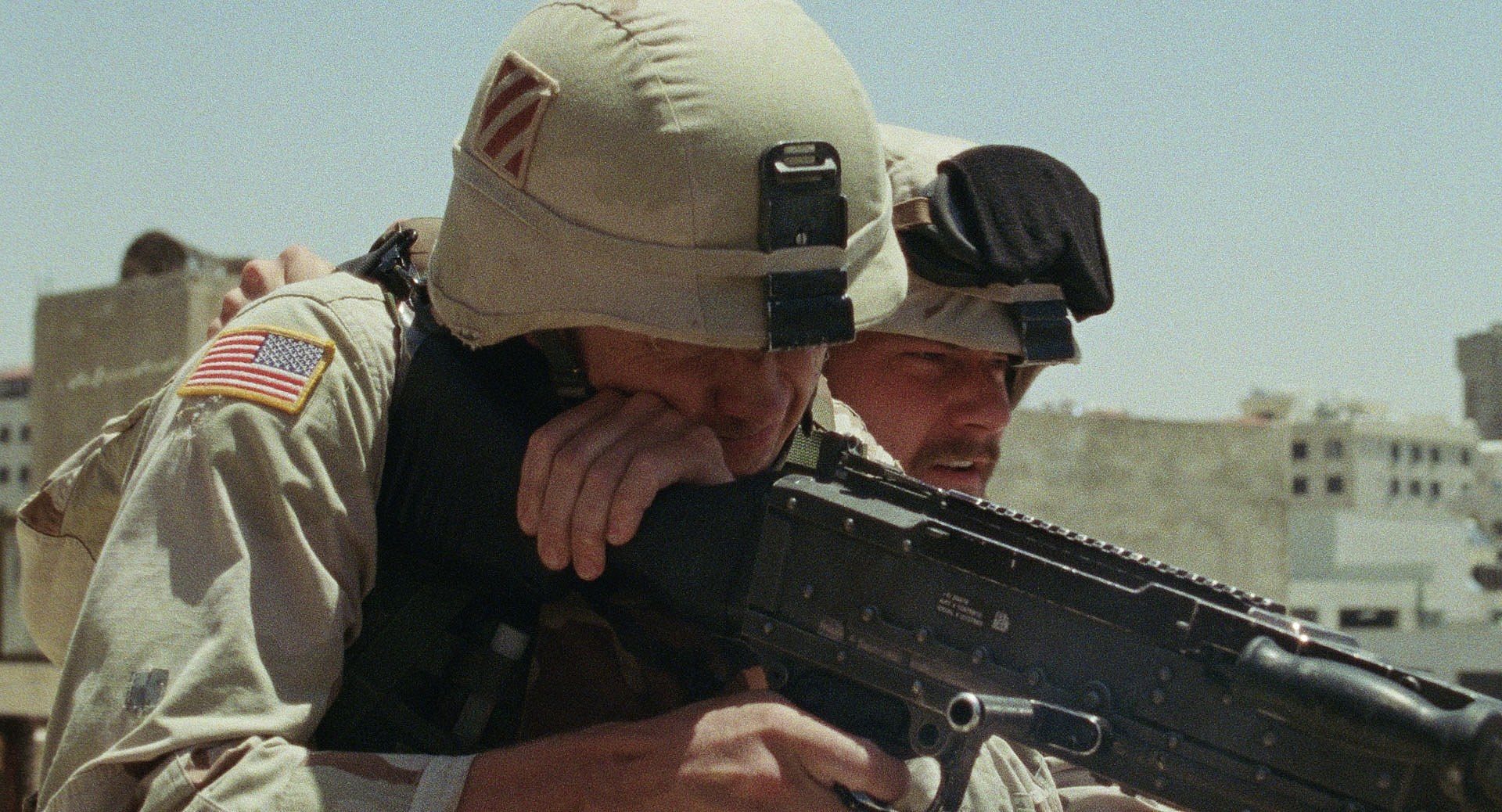
Boyd Holbrook as Lou, an American marine who fires on a civilian family during a chaotic crossfire with insurgents in Reed Van Dyk's ATONEMENT. Photo courtesy of Kino Lorber.
While navigating the streets of Baghdad during a chaotic crossfire between insurgents and U.S. marines, the civilian family’s vehicles were mistaken for hostile threats. Second Lieutenant, Lou D’Alessandro (Boyd Holbrook) opened fire on the vehicles, instantaneously killing the father and his two adult sons in front of the surviving matriarch, Mariam (played by Hiam Abbass). A decade later, the traumatized Lou reaches out to Mariam in Southern California to atone for his actions with the aid of the Middle East reporter (Kenneth Branagh's Michael Reid, a fictionalized Filkins).
Visually, Super 16 achieved the right texture, grain, and tone on Atonement. "Shooting on Super 16 was definitely the right feel for the project," Peter recalls. "I didn't overexpose for a thicker negative, I didn't rate the film lower. I just rated it as normal. It depended on the location, depended on the scene, but sometimes I would just underexpose two stops, three stops for the right scenes. But I knew that the film stocks could handle it."
Complicating matters was the use of the Cannon 6.6-66mm zoom, which is "slow" at T2.8. "We definitely pushed the film stock 1 stop to help out in circumstances where our lighting couldn't be augmented adequately and where we needed a zoom in the shot," he adds. "For example, in the night club or for some exterior shots set in San Diego."
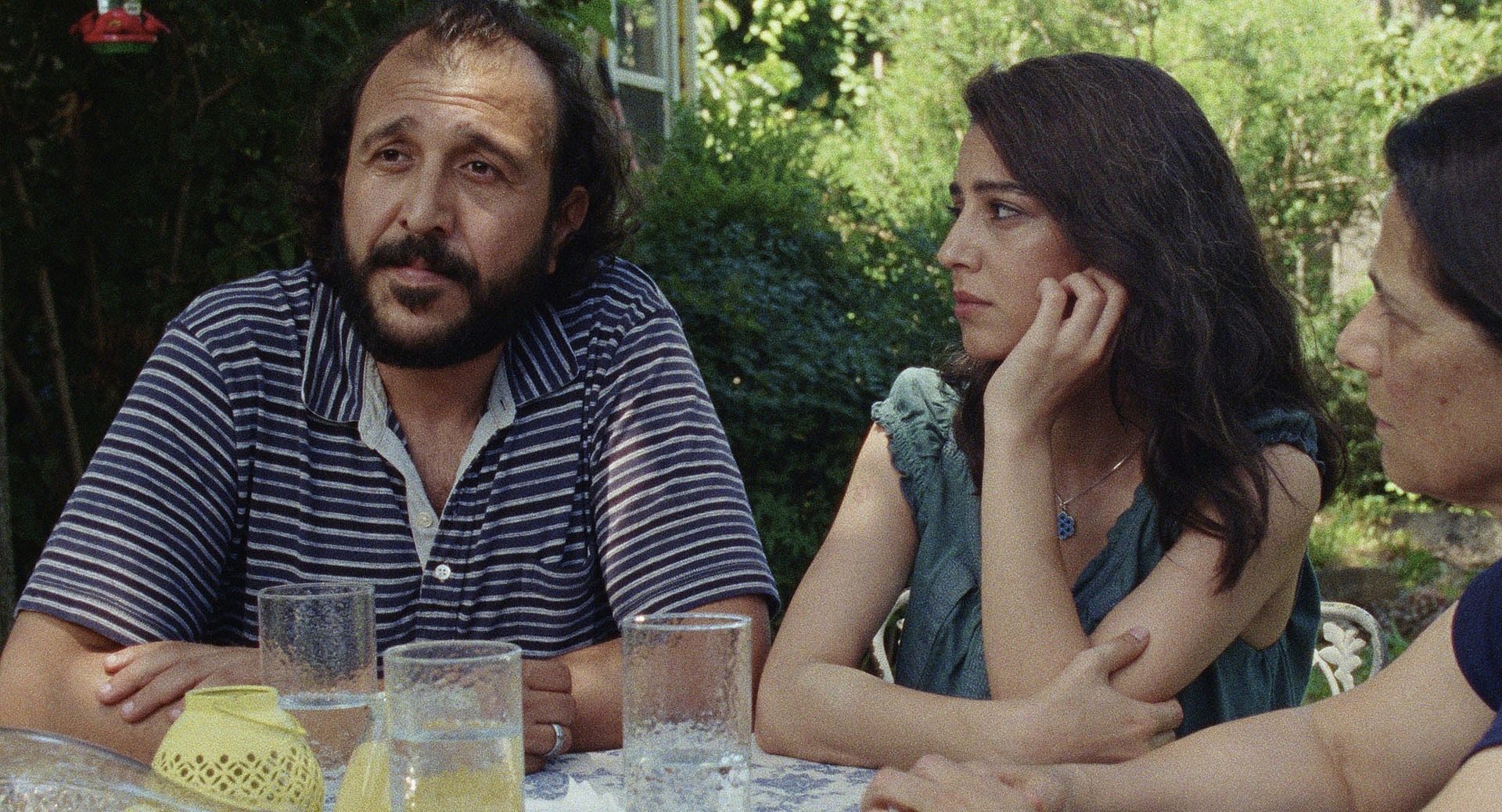
Photo courtesy of Kino Lorber.
The introduction of the Iraqi family's domestic life at home was shot as in Amman to look as natural as possible because they wanted the audience to connect quickly to all the family members, especially Mariam. To maintain lighting continuity and the feel of a single day's progression, Peter and his gaffer, Josni Al Baqa (the first two Dune movies) used some of their largest lighting units, such as an ARRIMAX and an M90.
But there's a surprise explosion, which forces them abandon the home of their in-laws and travel across Baghdad back to their own home.
"It was definitely very messy because we used all practical effects," explains Peter. "It was some type of safe powder, but setting that up for even one take took time, and it's difficult when you have a short shooting period [11 days for the Baghdad portion]. But we rehearsed and made absolutely sure that everyone was ready when we actually rolled the cameras. We had two cameras for that scene to save on takes and time."
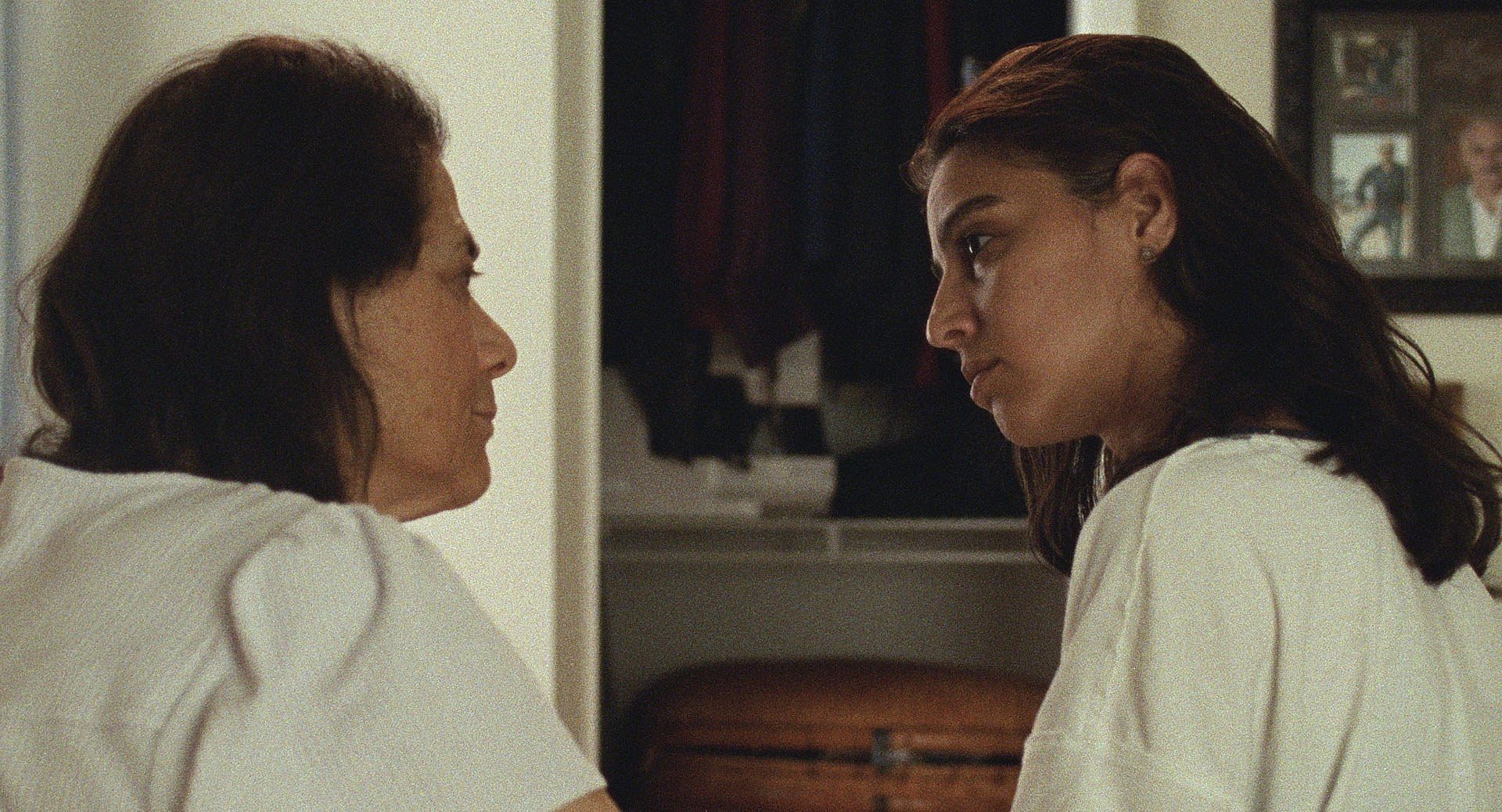
Photo courtesy of Kino Lorber.
Not surprisingly, the car work with the family was logistically tough, but they went very simple in terms of camera mounts. For the most part, it was either hostess trays shooting into the car or two CineSaddles on an assortment of Apple boxes or wedges for getting French over-the-shoulder shots inside the car.
"We did use live driving," Peter says, "because we couldn't afford a biscuit rig or something fancy like that. But probably because of that, the immediacy of the actors having to drive in the actual car, probably lended itself to make it feel as realistic and believable as possible. They did incredible work with that."
But one of the most stirring moments occurs when Mariam flees the immediate wreckage of the car and runs through the smoke to a street corner and stops to scream in grief. "That was a very involved Steadicam shot, and the part that Reed and I were most concerned with on that day," admits Peter. "Having to deal emotionally with what's happened, we didn't want to rush Hiam too much. And also, there's so many other characters in that same shot, who are also having to deal with the chaos and shock of family members that have just passed away. It was complex both from an acting perspective and a technical one."
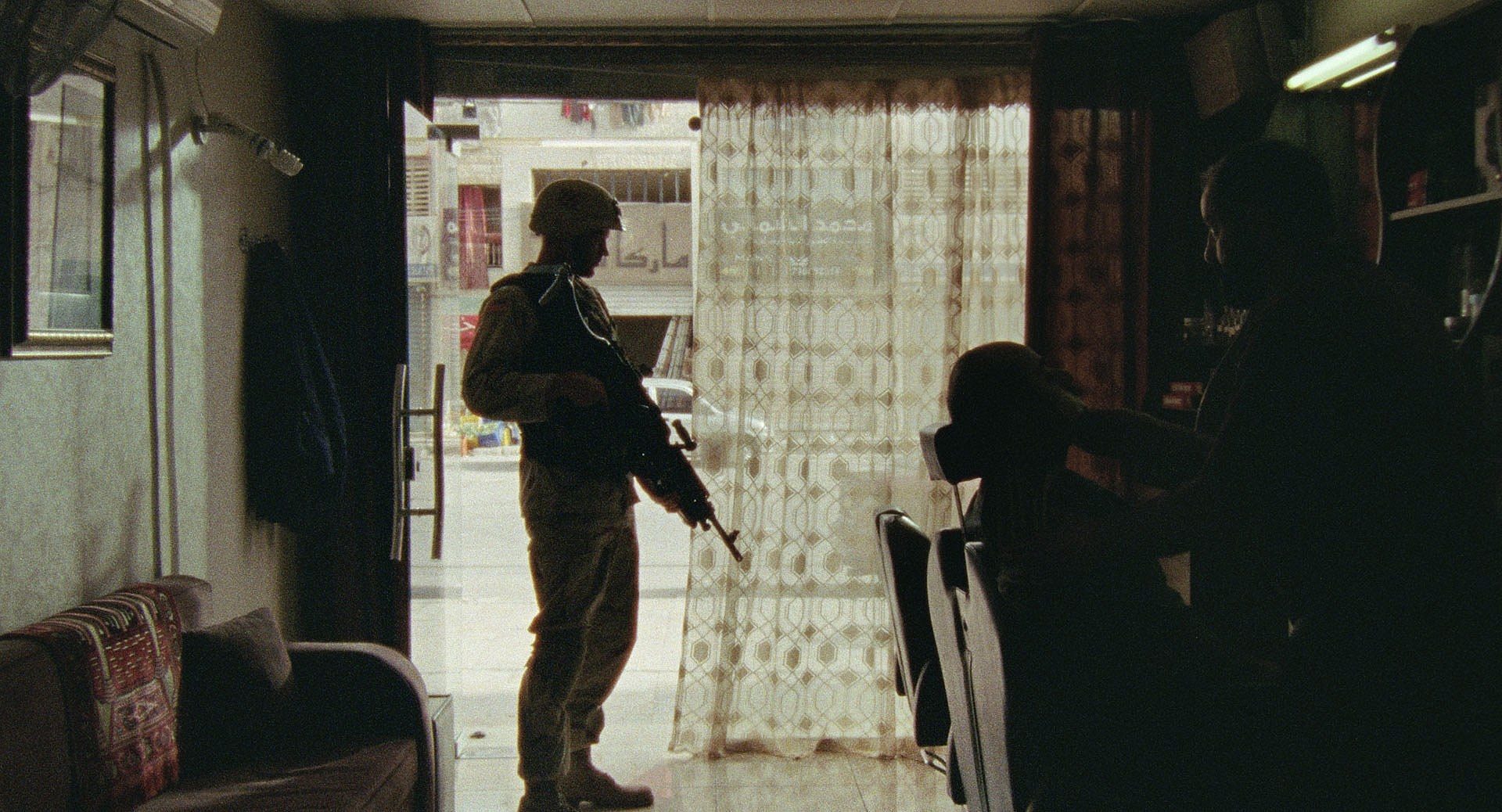
Boyd Holbrook as Lou, an American marine, watches for Iraqi insurgents in Reed Van Dyk's ATONEMENT. Photo courtesy of Kino Lorber.
When the marines arrive into town, the energy level picks up, with huge amounts of scouting prior to even official prep. They shot many photo boards on Artemis and lots of video on iPhones to be totally prepared and to be as specific as possible. "Within those maybe five driving locations, we would have to fake certain shots just to match time of day a week apart or because of resources, permits, and not trying to be too invasive to the neighborhoods," Peter continues.
"The Jordanian crew worked very hard to allow us see as far as possible in our frames," he adds. "We see across rooftops, a very large roundabout, and a very large intersection, which is how it was for real."
Then, when the insurgents attack the marines, the combat sequence descends into a chaotic, handheld, 360-degree oner. "Since we see so much, everything had to be timed to the sun, to the natural lighting," Peter explains. "There's no way I'd be able to fly enormous rigs on this production. So we had to be as diligent as possible about getting things dialed in, and we rehearsed diligently both on the day and during prep with just our iPhones. We didn't need many takes of the actual combat on the shoot day after that much preparation, and having done a lot of handheld and documentary work over the years helped enormously.
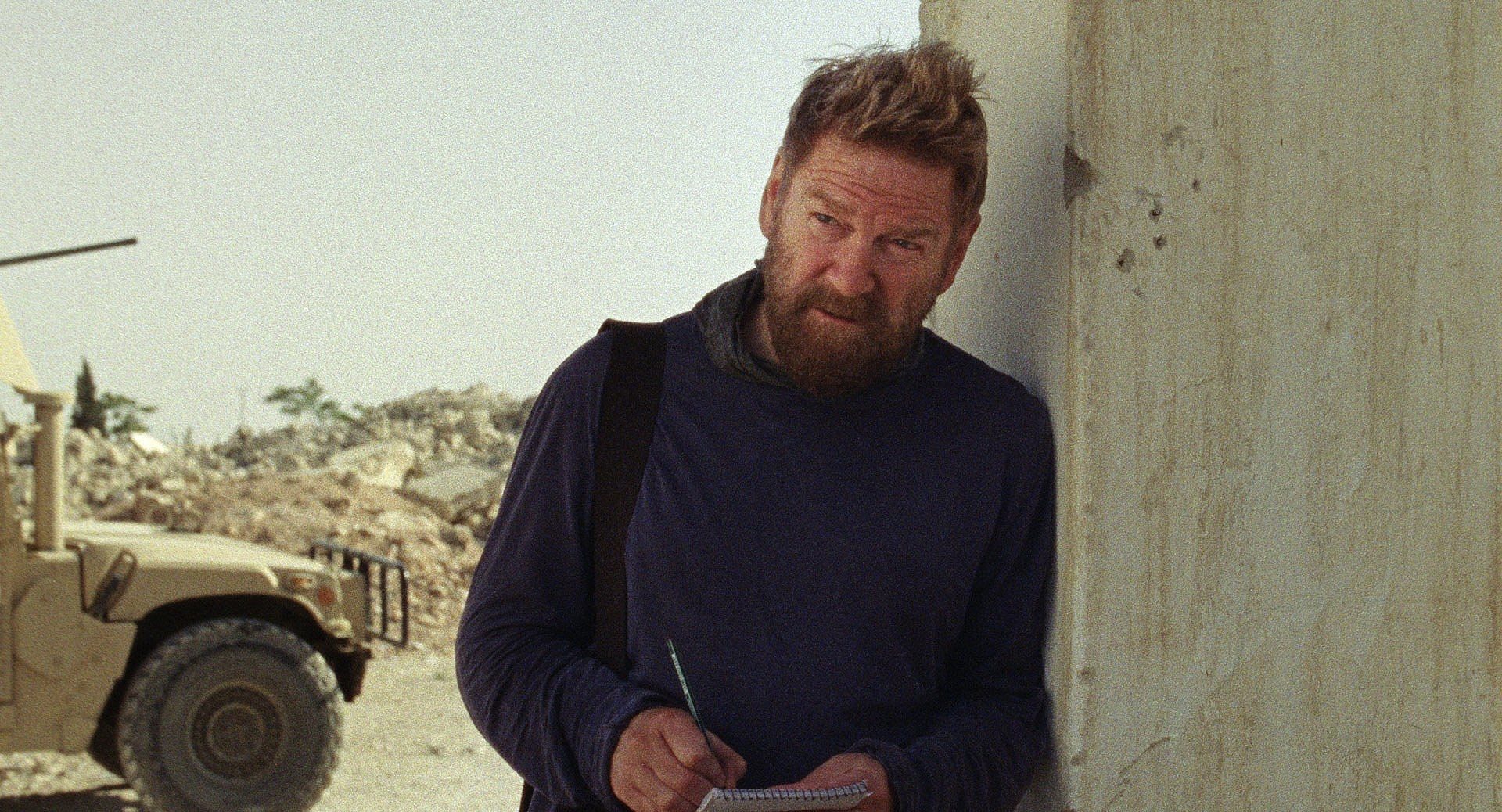
Kenneth Branagh as Middle East reporter Michael Reid, who brokers a meeting between Lou (Boyd Holbrook) and Mariam (Hiam Abbass)in Reed Van Dyk's ATONEMENT. Photo courtesy of Kino Lorber.
But Reed and Peter were also informed by YouTube of marines in combat skirmishes filmed by videographers. "There's a certain amount of reservedness," Peter says. "It's just professionalism because they're real soldiers doing what they are trained to do. But it was interesting how non-ostentatious it was."
The climactic meeting in Glendale between Lou and Mariam and her family, brokered by Mchael, was very intense. "All of the actors' emotions were understandably strained, and there was a palpable sense that this was going to be a very powerful experience" Peter recalls. "I was crying in the eyepiece during a good chunk of it because everyone was baring their soul and sharing their pain with each other."
Although the midday sequence in the living room and the garden had natural light coming in and creating heavy shadows, it contained some of the biggest lighting setups. "We had two S360s, some Vortex8s, a smattering of M18s and M40 HMIs, and maybe an Aperture 1200X coming through to create some type of shadow and mood," continues Peter. "But it was also difficult because there was a thunderstorm on at least one of those days, meaning we could only use battery power or house power, no generator, which made things difficult in terms of matching. We were only able to get some of the LEDs and S360s going on a very limited basis. But it worked out in the end."
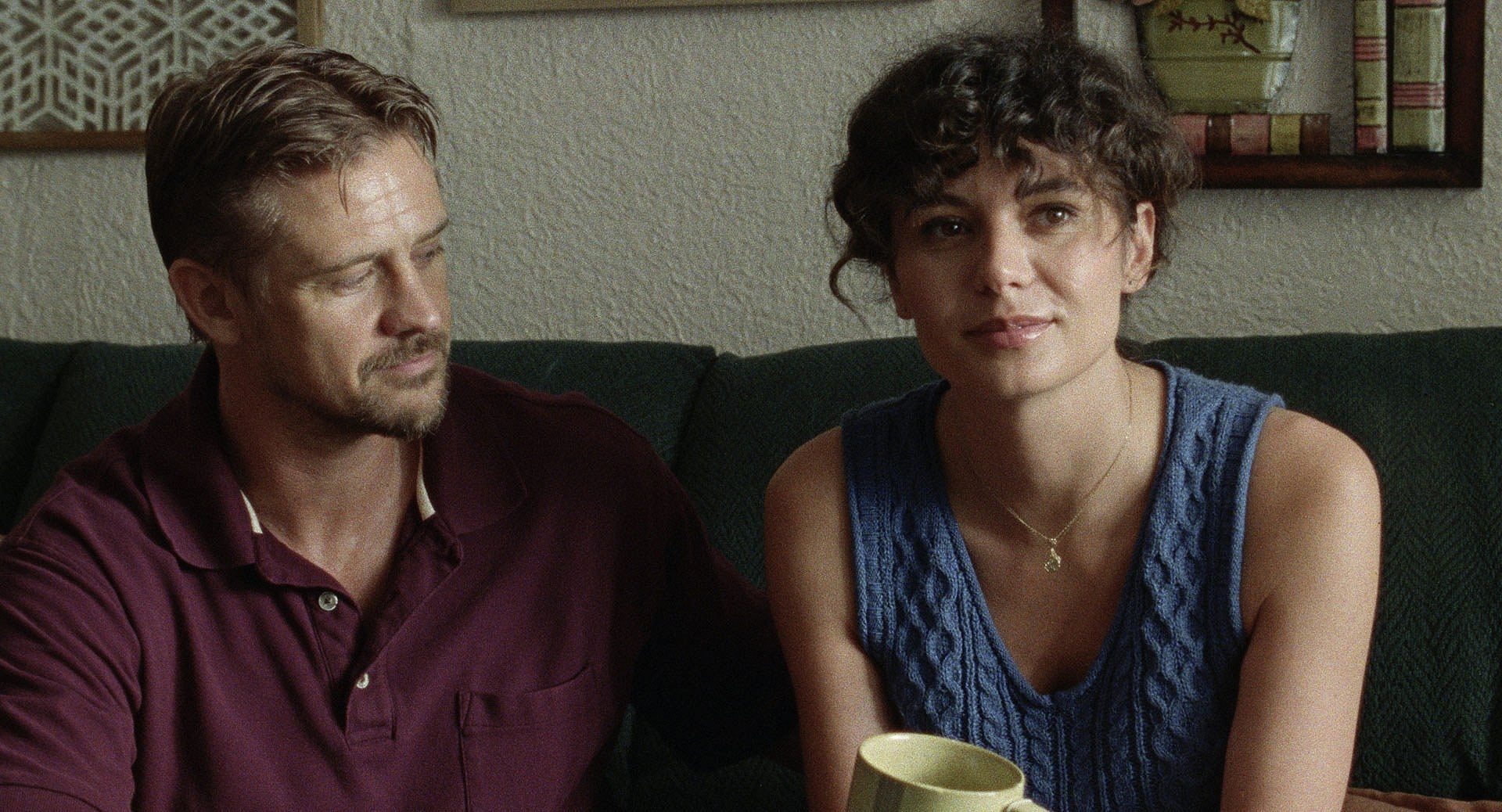
Photo courtesy of Kino Lorber.
The garden portion was mostly natural light, of course, augmented with one ARES 360. "Because of that changing weather, we'd start with direct sunlight, but then the weather would shift, like the end shot [from high above], which was very important to us," Peter says. "It was definitely raining most of that day and we were worried about not being able to get any sunlight at all. At one point, the sun did peek through, and we rushed to get the camera up on the ladder."
Peter can't wait to shoot his next movie on film. "Shooting this on Super 16 was definitely the perfect format for it because the goal was to get something that had a natural presence and evoked a memory," he emphasizes. "It's like when I'm reading Ernest Hemingway. His books are devastating to me because it's as if I'm reading about an experience that I had, as if it's my own personal memory. And that was very important to me, to try to convey on Atonement. Shooting on Super 16 allowed me to focus on the telling of the story, rather than trying to work things out with another format."
