KODAK 16mm delivers textural soul to director Theja Rio’s award-winning debut feature 'Angh'
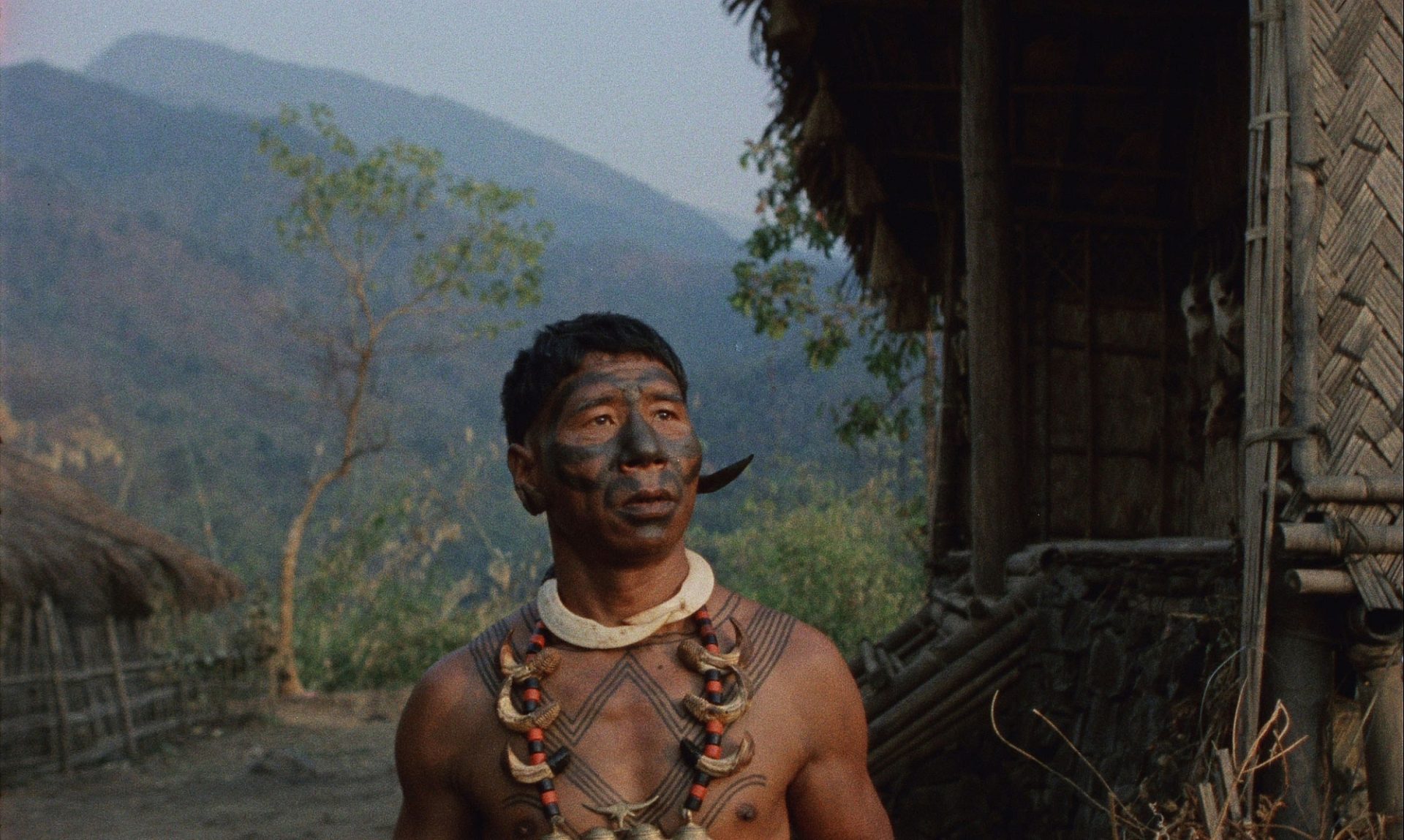
Images courtesy of Jungle Book Studio.
Filmed entirely on KODAK 16mm film, by DP Adam Pietkiewicz, director Theja Rio’s debut feature, Angh, won the Platform Prize at the 2026 Toronto Film Festival for its immersive, authentic and resonant storytelling about the erosion of indigenous cultural identity, and is set to be a contender during the 2027 Awards season.
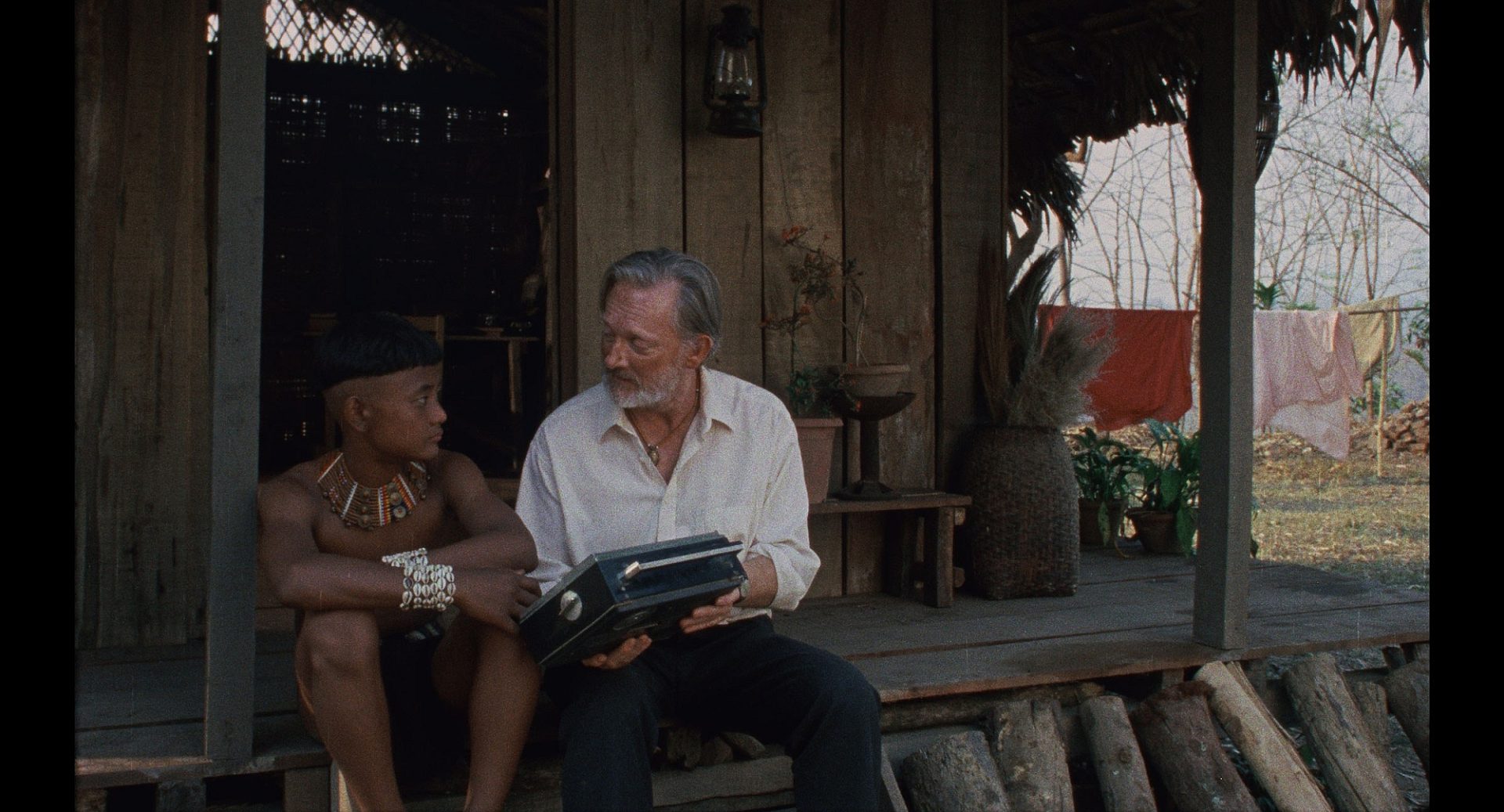
The story is based in the early 1960s in a remote jungle village in the Konyak district of Nagaland, near the Indo-Burma border, during a period of major political transition and cultural change. Spoken entirely in the Konyak language, it follows Anghbha (Anghlong Konyak), the last surviving hereditary village chief and his silent, non-speaking son Amao (Sobino Rengma), who live in isolation, resisting the spread of Christianity after the arrival of an American missionary (Douglas Henshall). Most of the villagers have left or converted, leaving Anghbha isolated from the changing world, alone with his ailing wife and son, who becomes attracted to the comforts brought by the mission.
Following its world premiere, Angh earned widespread acclaim for its neutral, insider-perspective on the quiet, irreversible eradication of ancient spiritual and cultural traditions. It also garnered plaudits for Rio’s vision, tenacity and courage in tackling such a complex historical narrative, and the textural soul of Pietkiewicz’s disarmingly-simple cinematography on 16mm film.
Angh is the first Indian film to win TIFF’s Platform Prize, providing it with a direct pathway to consideration for Best International Feature Film at the 2027 Oscars. Cinematographer Adam Pietkiewicz won the Artisan Award at TIFF 2026 for his work on the production.
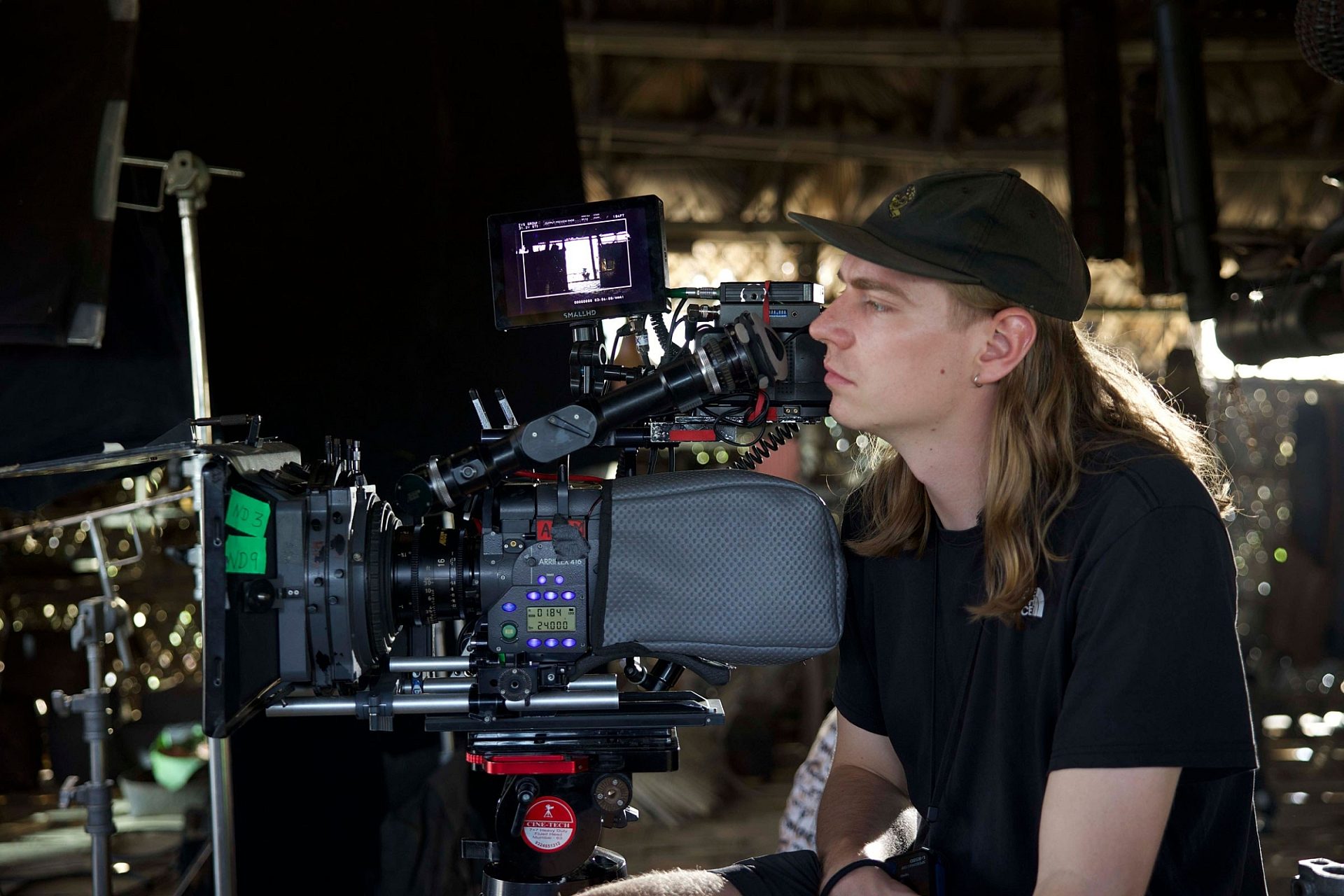
DP Adam Pietkiewicz during production on ANGH.
Pietkiewicz started his journey into cinematography at the Krzysztof Kieślowski Film School, in Poland, before taking an MA in cinematography at the National Film & TV School (NFTS) in London. He worked as a camera operator on various films and TV shows, including Netflix’s Baby Reindeer (2024), before shooting his first longform as a DP, Wrooklyn Zoo (2024,dir. Krzysztof Skonieczny), which received a nomination for the Golden Frog(in the Polish Films Competition) at the 2024 Camerimage Festival.
Connections and camaraderie are always important to careers in filmmaking, and Pietkiewicz’s acquaintance with Rio began at the NFTS.
"Theja came to study at the NFTS from Nagaland, where he was born and raised," says Pietkiewicz. "We quickly realized that we shared the same kind of passion for minimalistic, indie-style cinema. I remember him saying this story was going to be his first feature film. He already had the script ready-to-go, but needed to secure the financial backing.
"He made a short version of Angh (2021, DP Vincenzo Condorelli) before attending film school. He applied to NFTS with this film and showed it to us during his studies, although he went on to shoot a different film for his graduation project. Having had such a great time together at film school and spending so much time hanging-out, he eventually decided to make his very first feature film with me. He was looking for a partner-in-crime who would be ready to take on a tough adventure together.
"I knew this full-length feature, about a disappearing culture and traditional way of life, would be a special and meaningful project, and I actually turned-down a more lucrative offer to work with Theja on this project. He wanted to adopt an observational style of photography to depict the story from the inside-out, with minimal camera and lighting set-ups, and minimal coverage. We would only have 20 shooting days, plus a lot of night-time sequences, so the prep we had was necessarily very detailed."
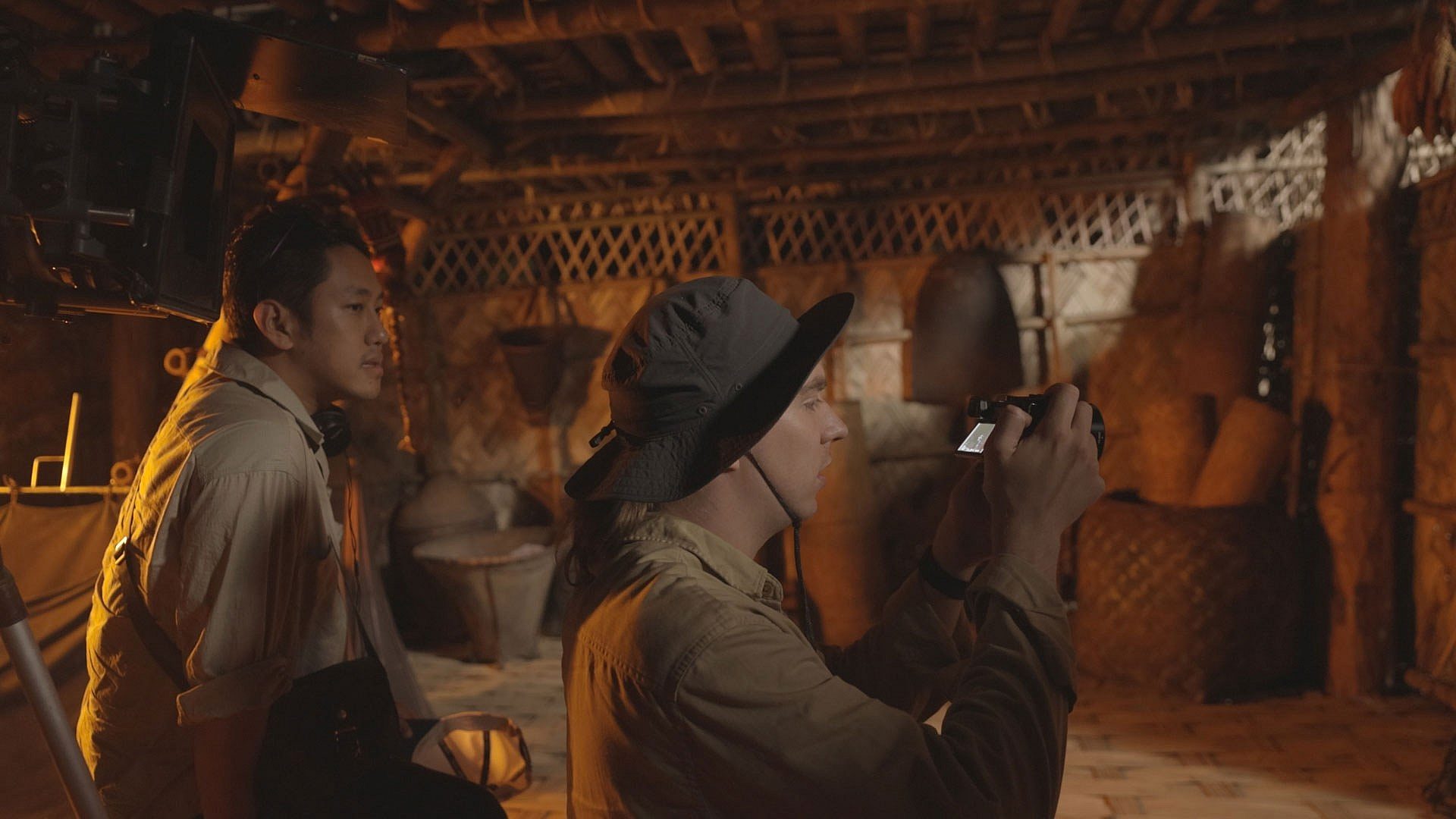
Director Theja Rio and DP Adam Pietkiewicz during production on ANGH.
The decision to shoot Angh on 16mm film was never in doubt, as Pietkiewicz explains. "Every project Theja has made has been captured on film. Indeed, he wrote ‘This film needs to be shot on 16mm," on first page of the script.
"For me, it was a dream come true to shoot this story on 16mm for him. I knew it would be the perfect format to travel back in time to capture Nagaland in the early 1960s, with things like film grain and imperfections such as scratches, dust and dirt, all adding texture and atmosphere to connect the fictional story to the historical reality of the Naga community. Digital would have looked far too modern and clinical."
Chief among Pietkiewicz’s visual references was an array of documentary film footage of Nagaland from the 1960s and '70s, that Rio presented to him.
"I became obsessed with that archive material, because the cinematography was so amazing – wonderful compositions and observational camerawork, beautiful close-ups, all shot in natural/available light. These became quite a talking point, and our ambition was to give our images the feeling of an archival record."
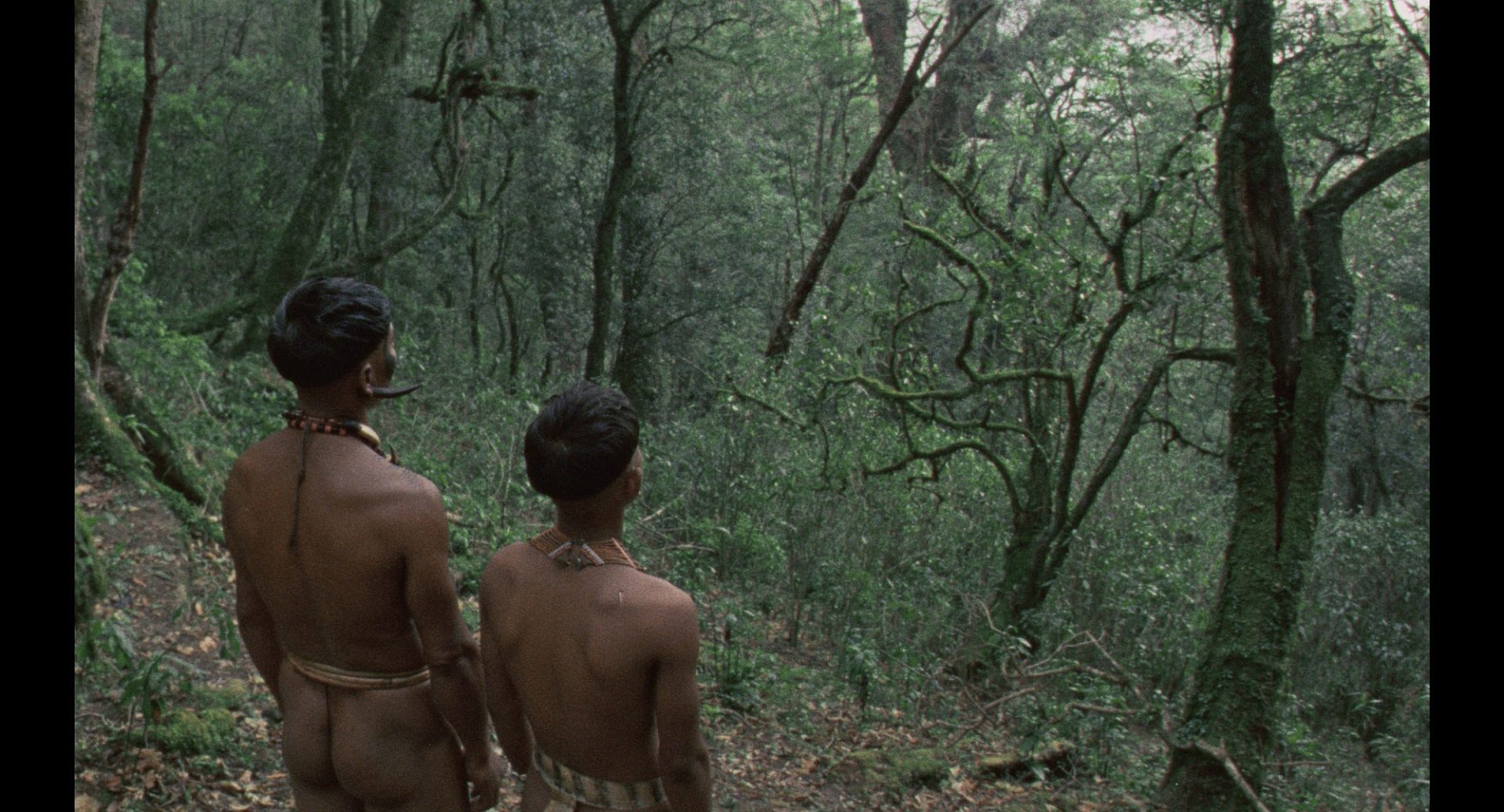
Images courtesy of Jungle Book Studio.
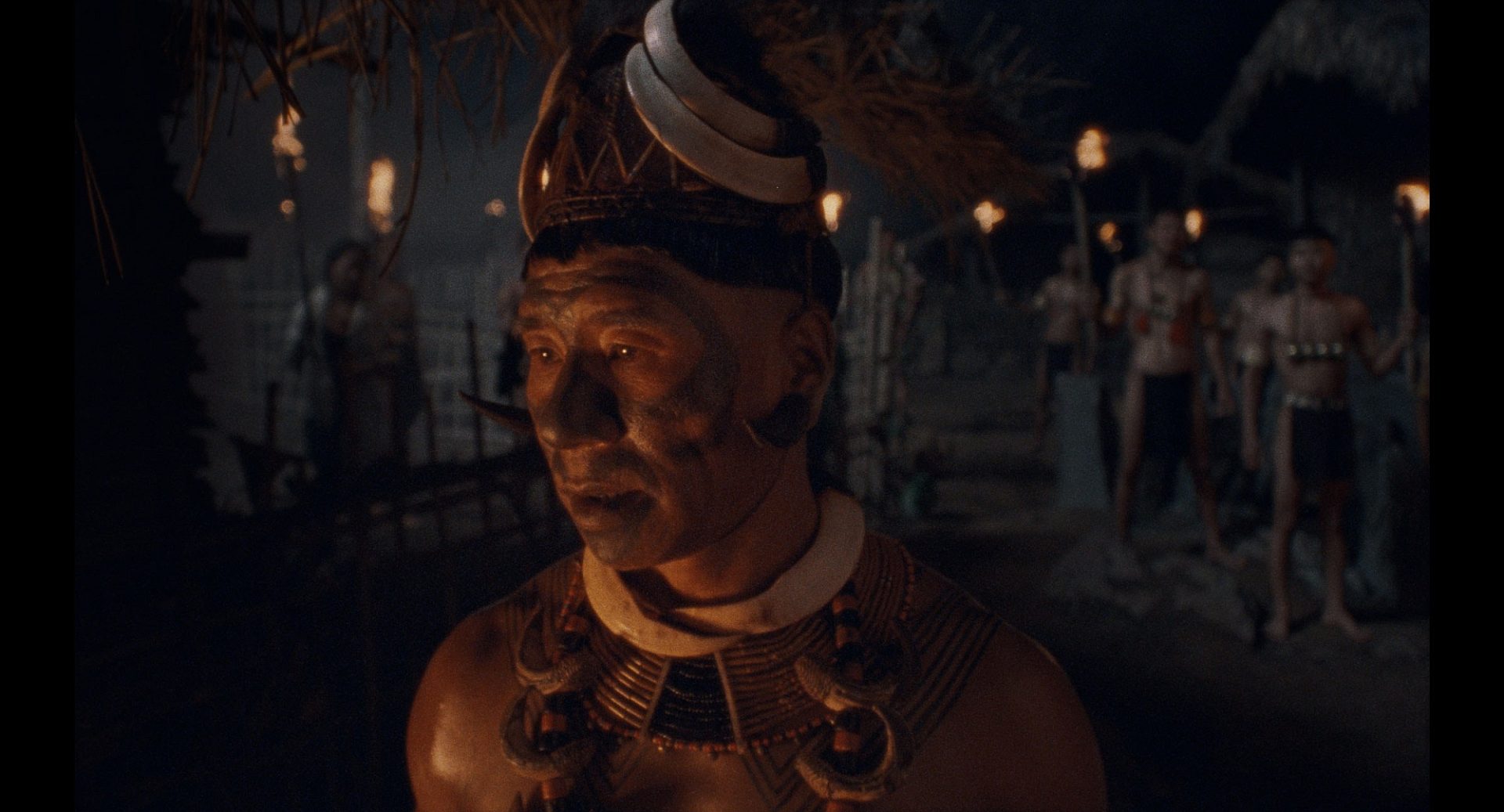
The pair also discussed the lighting styles and use of chiaroscuro in artworks by Carvaggio and Rembrandt to create dramatic depth, with Pietkiewicz recalling, "We weren't afraid of high contrast, and really wanted firelit tattooed faces to loom out from the darkness, for the blacks in the set and costumes to remain black, nothing grey or milky."
Movies by Béla Tarr, thevisionary Hungarian director and a foundational figure of the slow cinema genre, whose films are renowned for their bleak, existential themes, hypnotic visuals and long, choreographed takes, also came into their visual reckoning.
During extensive recces in Nagaland, Pietkiewicz and Rio visited several old villages, looking for inspirations for the set design, textures and lighting.
"I took hundreds of photographs of the places and the people, studying their homes, clothing and skin tones. These stills formed part of a book that we created called ‘The Bible Of Angh’, in which we gradually detailed the breakdown of every single scene in the film – where we should put the camera and lights, the length of the shot, the framing and how the camera should move.
"It was quite a puzzle, figuring-out what we felt would be best. During production, the book became a very helpful guide, not just for us, but also for the rest of the cast, most of whom were non-actors, and the crew, so everyone could understand our intention and the cinematic grammar."
Images courtesy of Jungle Book Studio.
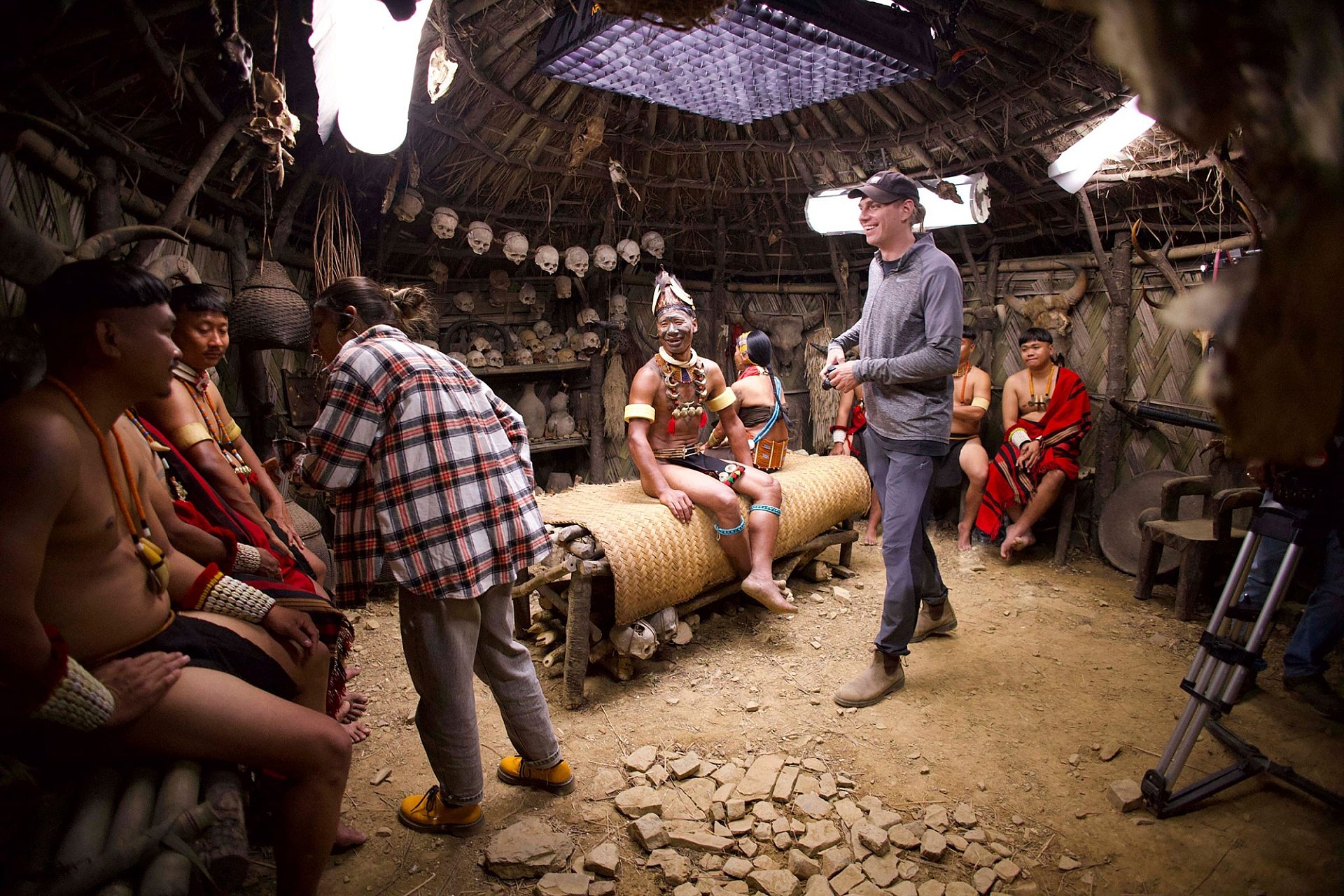
Production on Angh took place over 23 days shooting days during March and April 2025 in the Mon district of northern Nagaland, India, amongst the Konyak, the largest Naga ethnic group that area. Two authentic villages – Anghbha’s and the Christian mission – were custom-built with the physical help of locals, who Pietkiewicz’s remarks, "opened their hearts and their homes to us."
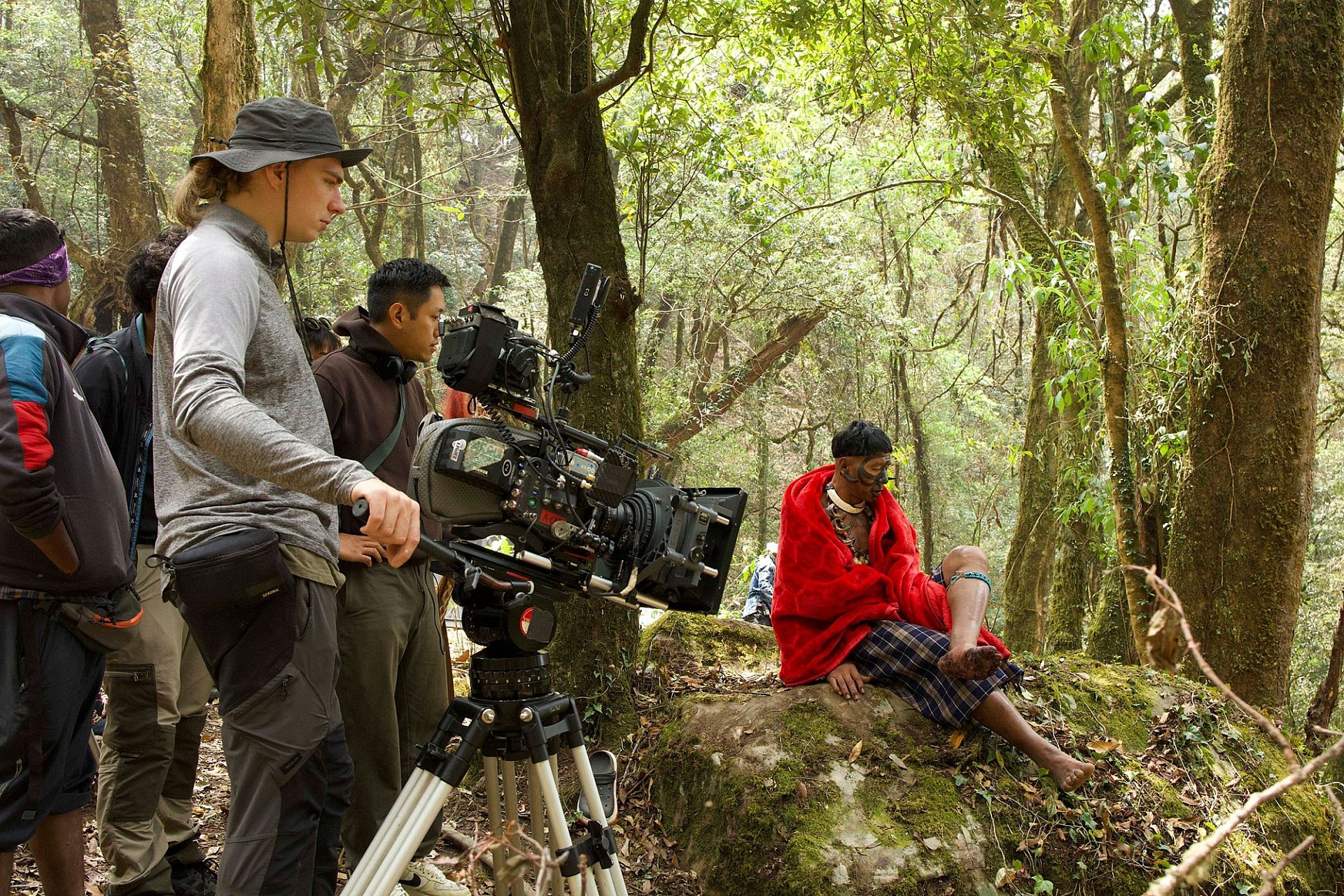
Pietkiewicz framed Angh in 1.66:1 aspect ratio – the native, open-gate Super 16mm film format, often called ‘European widescreen’ – shooting with an ARRI 416 16mm camera and ARRI/Zeiss Ultra Prime lenses.
"Open-gate Super 16mm is one of my favourite formats," he says. "It’s very photographic, and gives the image a nostalgic feeling. It also provides a versatile middle ground where I could balance intimate character framing with enough width for environmental context, without the subject looking confined by the frame.
"We took just one ARRI 416 camera body. It was a big risk, as if it had broken-down, we would have been screwed. But it’s well-engineered, exceptionally reliable and was properly maintained during production by the obligatory personal assistant/technician who came with it from the rental house.
Images courtesy of Jungle Book Studio.
"I went with the Ultra Primes, as they deliver crisp images with high contrast that remain sharp even when shooting wide-open. The full lens set was supplied by two different rental houses in Mumbai, and each was accompanied by the mandatory service technicians."
Pietkiewicz shot Angh using two filmstocks – KODAK VISION 3 250D 7202 daylight-balanced for day exteriors/interiors, and KODAK VISION3 500T 7219 Tungsten-balanced for the film’s night and low-light scenes. Film processing was done at Filmlab India, now Monsoon Colour Lab, part of Harkat Studios. The rushes were scanned at 2K, followed by 4K scans for final editorial, at Prasad Film Labs in Chennai, with color and picture finishing at Prasad Studio, with Mahak Gupta doing the final grade.
"We wanted a rough and raw look that suited the 1960’s Nagaland setting, and the two stocks worked well together in that respect, along with delivering lovely color rendition and separation. The 250D produced a relatively clean daylight image, but retained the characteristic texture of 16mm, whilst the 500T gave me more exposure latitude for our low-light and nighttime scenes."
From the very start of the project, Pietkiewicz was fully-aware that the logistics of working in a remote part of India were going to be the hardest part of this project.
"Everything had to come from Mumbai, and it took a week for the camera and lighting trucks to get there. This meant we had to be extremely well-organized, especially when it came to getting the film developed.
Images courtesy of Jungle Book Studio.
"Sending the rushes to Mumbai via plane was too expensive, so we employed a separate team of three or four people who travelled regularly back-and-forth from Nagaland to Mumbai by road and rail, carrying the exposed film during the entirety of the shoot. It was stressful imagining what might happen if the cans were damaged, lost or stolen. And, with a six-day turnround on the rushes, I had many restless nights before I saw the first results.
"Even though I had done rigorous tests and knew that the camera, lens and magazines worked perfectly, and despite there being a B&W video tap on the camera, you still want to see the actual rushes.
"When got the scans came from the lab – which we watched on a large TV screen at Rio’s house via Google Drive links – I was incredibly relieved and deliriously happy. The pictures looked great. Knowing everything was working perfectly, we could continue as planned. We held regular screenings for cast to show them the results. It was reassuring for them, as most, apart from Douglas, were non-actors. They got the chance to see the results, assess their performances, and the team became even more focussed and passionate about the project."
Angh was a single-camera shoot, with Pietkiewicz operating, assisted by Satyanarayana Chary as 1st AC/focus puller. The loader was Balamurugan S, with Bhushan Pal working as the cinematographer’s assistant/translator. Siby Joseph performed the combined role of gaffer/grip.
Images courtesy of Jungle Book Studio.
"I always operate whenever I can," Pietkiewicz declares. "For me, it's one of the most important roles on-set. We didn't want the camera to interfere with the world of our characters, rather to remain as an outside, objective observer. No matter the character, the camerawork would be non-judgemental, thereby leaving any judgement to the audience.
"As we only had 23 filming days, the challenge was really about depicting scenes with as few shots as possible, and the breakdowns we had worked-out in The Bible Of Angh proved a great help. In the main the camera was either locked-off or involved slow pans, and these were a great way to portray Anghbha’s grief and anxiety.
"When we needed to follow a character, the camera moved at its own pace, rather than religiously keeping-up them. We sometimes used Steadicam, but also went old-school. As we could not afford a regular Fisher, Pee Wee or Chapman Leonard dolly, we put the camera and tripod on a basic wooden platform on wheels, adding sandbags for weight, which was then pushed along the tracks by our gaffer/grip."
Alluding to Rio’s original remark about the production being a tough experience, Pietkiewicz remarks, "I had a really nasty bout of typhoid just before the shoot, which delayed our actual start by a few days. During production, I stayed at Theja’s house which was about an hour from the location, and then worked a 12-hour shift, followed by an hour’s drive back – so the days and nights were long.
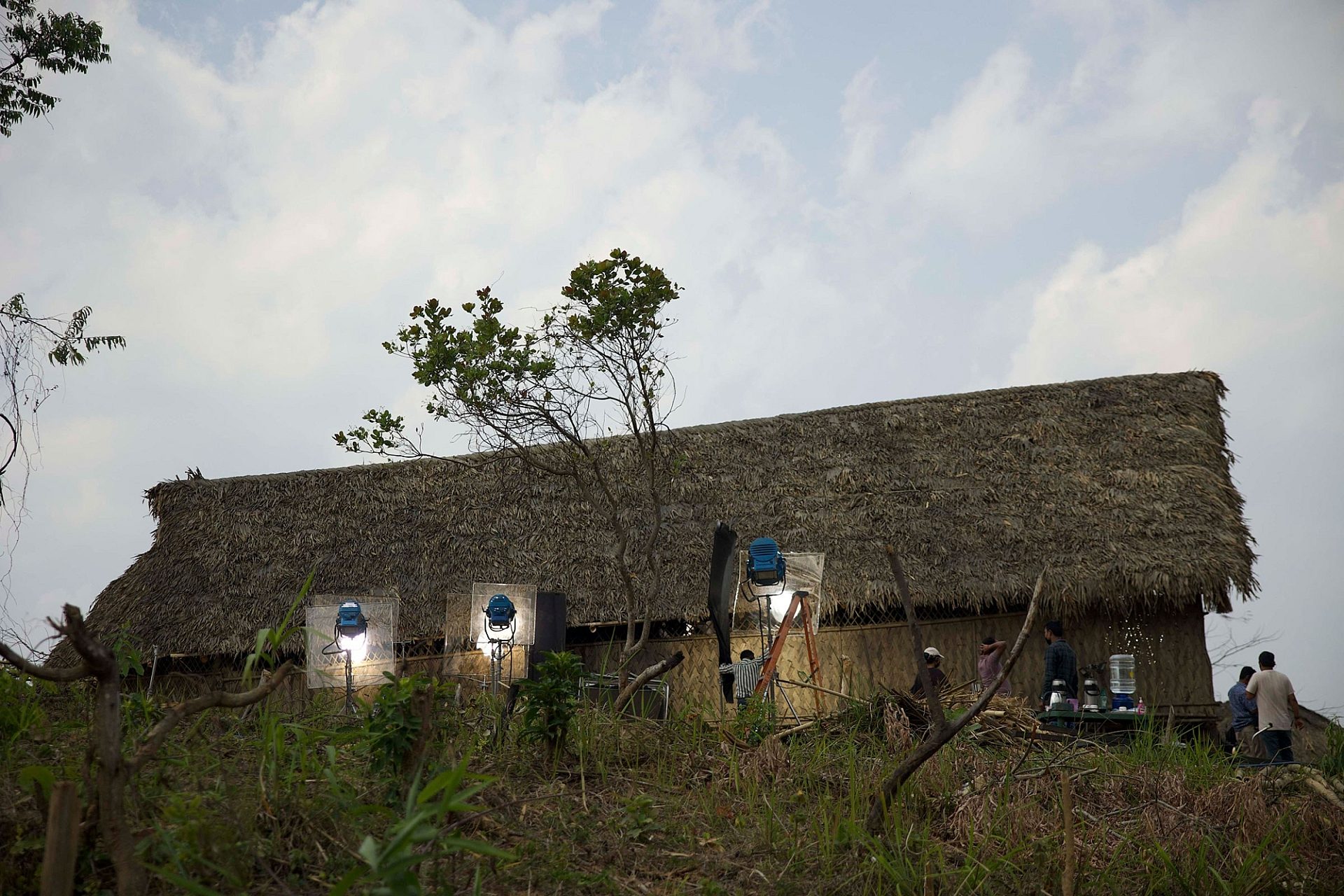
Images courtesy of Jungle Book Studio.
"Along with mosquitoes, there was lots of dust. This meant we had to make a special clean-zone in the minibus to house the camera, lenses, magazines and filmstocks, and the assistants maintained the equipment during every lunch break and evening."
Speaking about his approach to lighting the film, Pietkiewicz says, "We didn't have enough money for grand lighting set-ups, and it was too expensive to transport equipment by air. So, everything came by truck, and the lighting package was not extensive.
"On day interiors, I used Astra tubes with custom softboxes made by Siby Joseph my gaffer. We controlled all the LED fixtures using the Blackout app on an iPad, which allowed us to adjust each light individually. For the top light, I also used an Aparo inflatable mat. Throughout the production, I additionally used Nanlux Dyno 1200s, Nanlux Evokes and ARRI Sky Panels, combining them with various HMI lights to achieve the desired lighting set-ups.
Lighting with authenticity proved quite a challenge, especially the night scenes, as the only sources of light in Nagaland in the 1960s were fire and moonlight
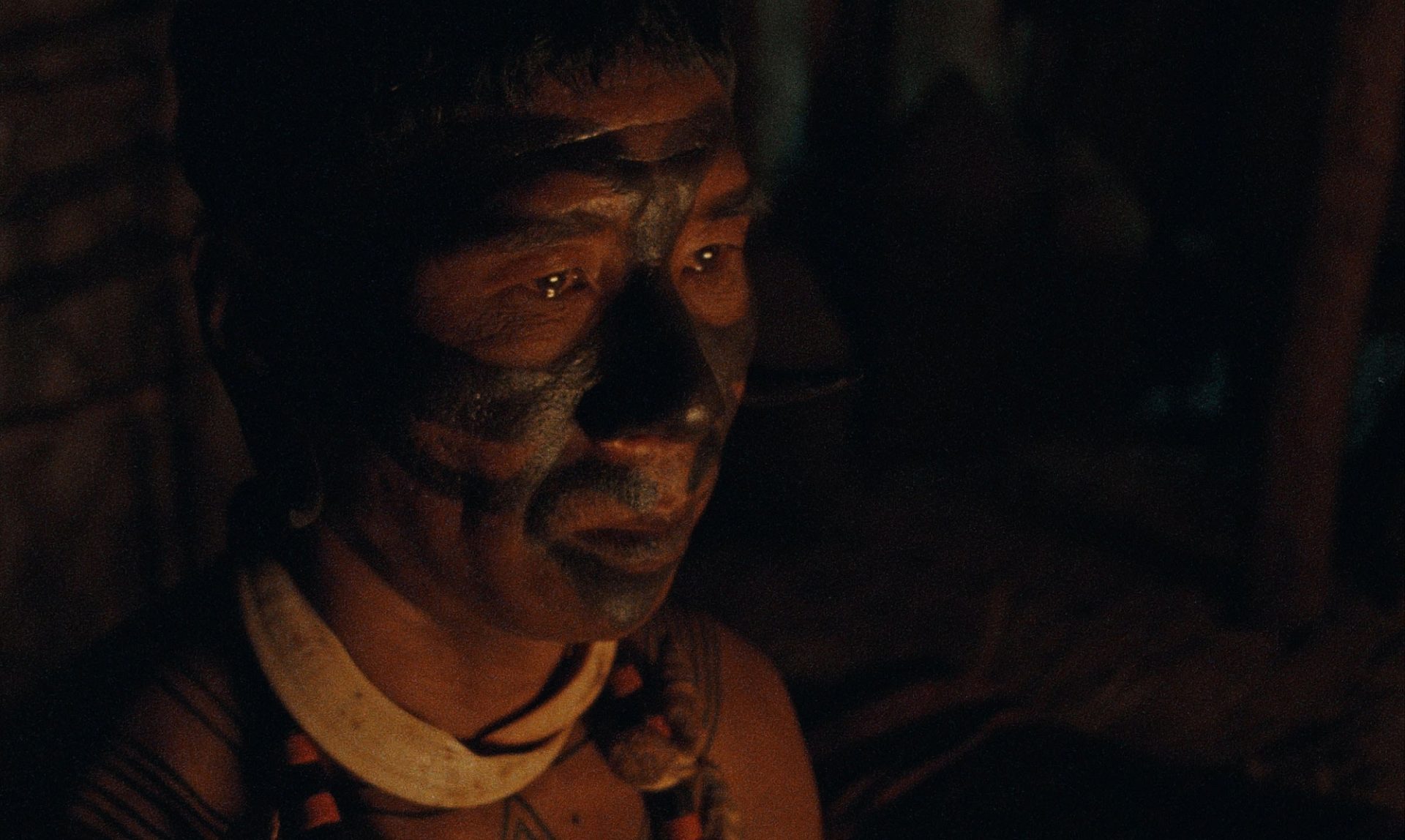
Images courtesy of Jungle Book Studio.
"During prep in Mumbai, I conducted tests with different LED fixtures, such as ARRI Sky Panels, Creamsource Vortexs and Astera tubes, to see which had the best fire-light effects. In truth, I was not fond of the results, so we didn’t use any of them. Regular fire-torches wouldn’t give me enough exposure in the dark. This led us to making reusable fire-torches that, when applied with a special flammable liquid, would burn longer and brighter to give me enough light, which looked particularly good on faces.
"We also went old-school by building wooden fireboxes, containing either nine or twelve Tungsten bulbs, which were hand-painted in different shades of red, yellow and orange, with a layer of gold/amber gel and diffusion over the opening. We connected them to a traditional flicker box and the result looked great. We also rigged a gas pipe set-up with bespoke flame bars around Anghbha’s house to augment or simulate real fire light.
"On the dark nighttime scenes, I overexposed the 500T by one stop, setting my light meter to 250 ASA. This also helped to mitigate against the image being too grainy and losing detail, especially in the shadows."
Reflecting on his experience of shooting Angh, Pietkiewicz says, "Theja is a talented director, and I loved his vision for this production. The crew were great, enthusiastic and empathetic to the narrative.
"It proved to be a great adventure, and I learned a lot about being well-prepared, being bold and going old-school, like building your own lights. I also truly love film as a production format – the texture, color separation and color reproduction of the 16mm were extraordinary and brought fundamental value to the honesty the production."